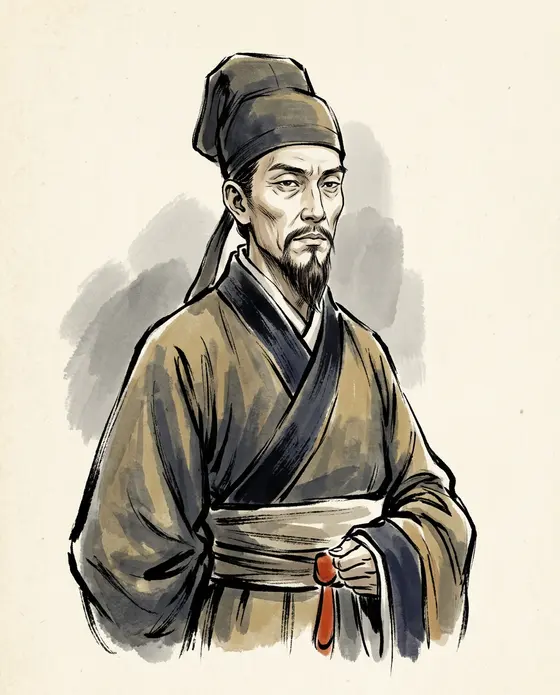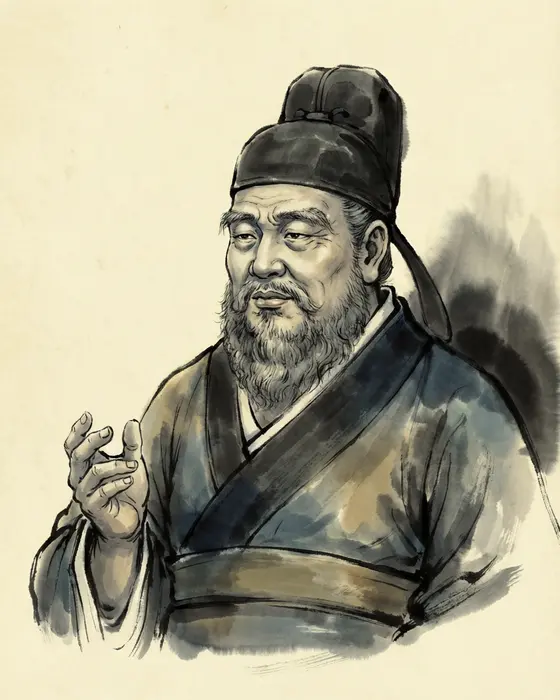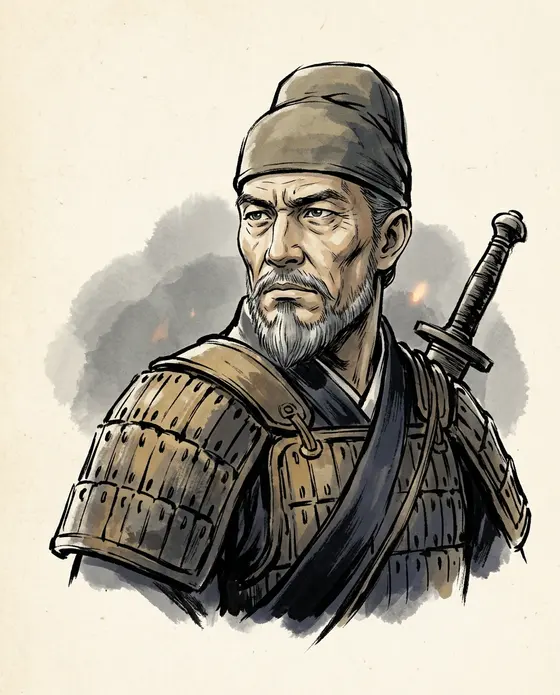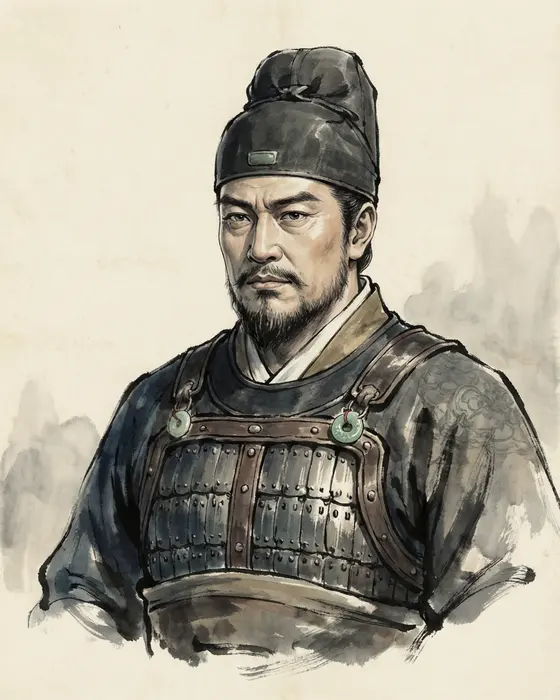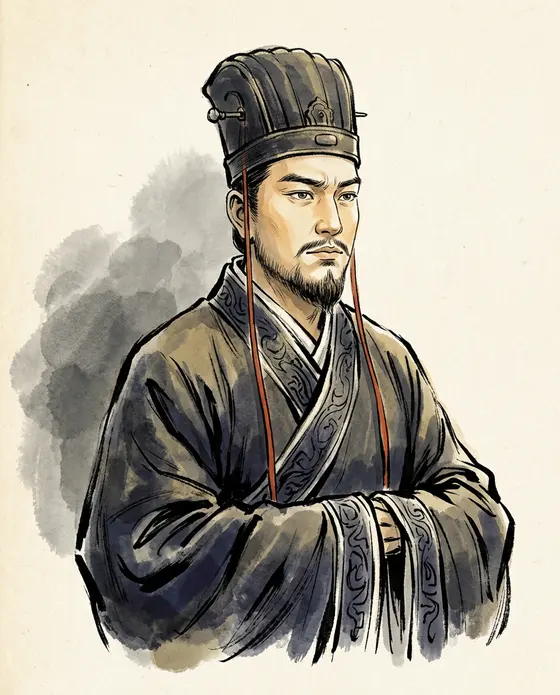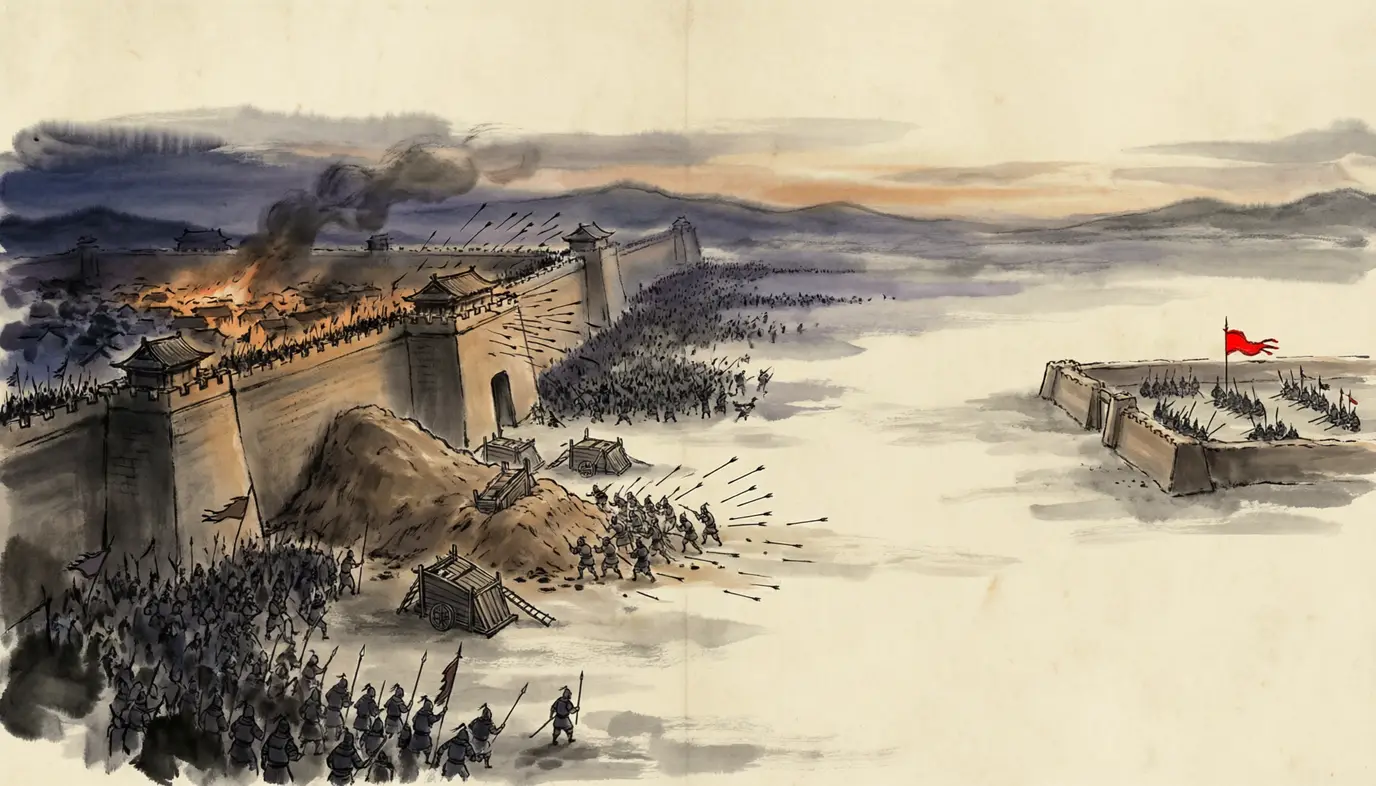
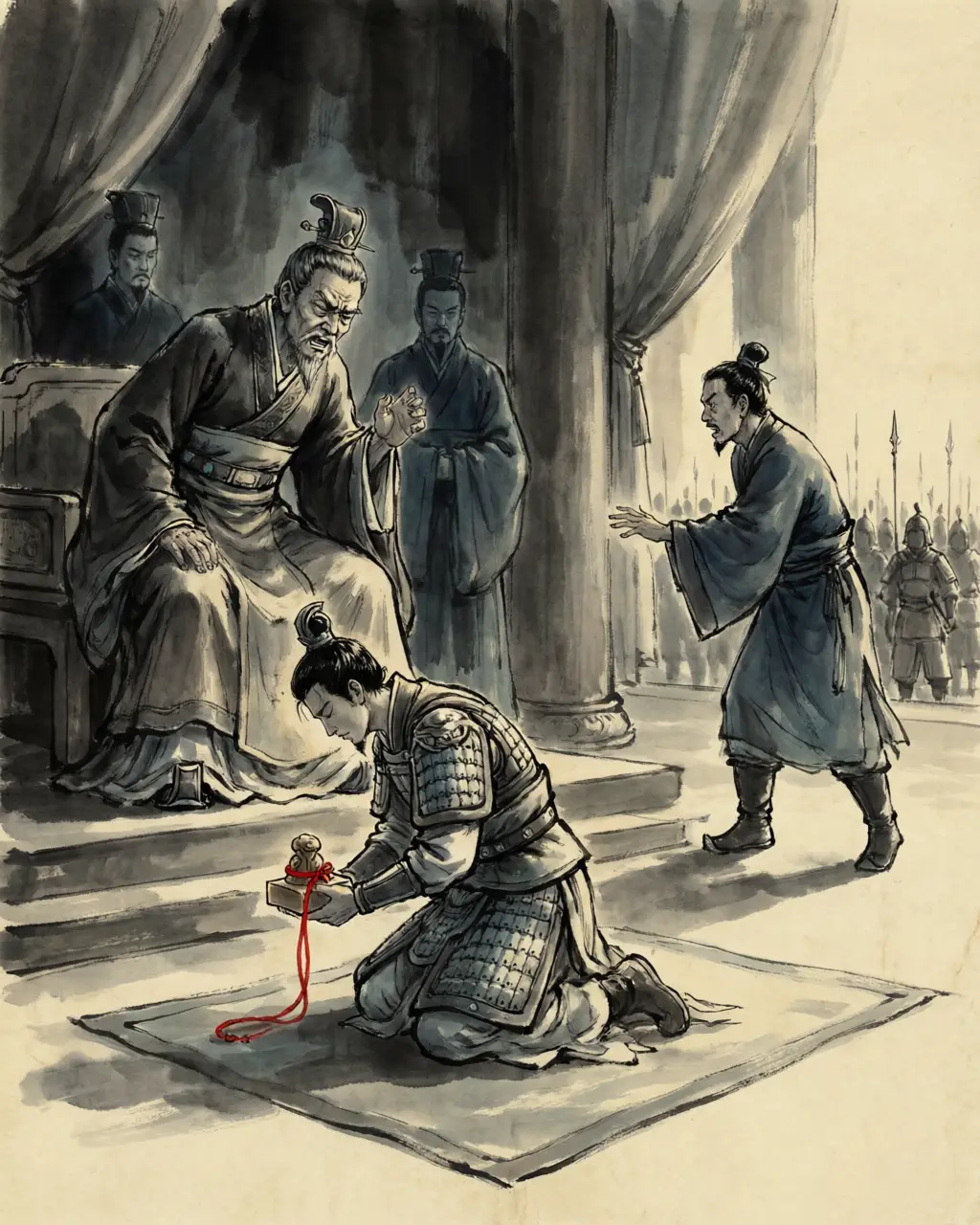
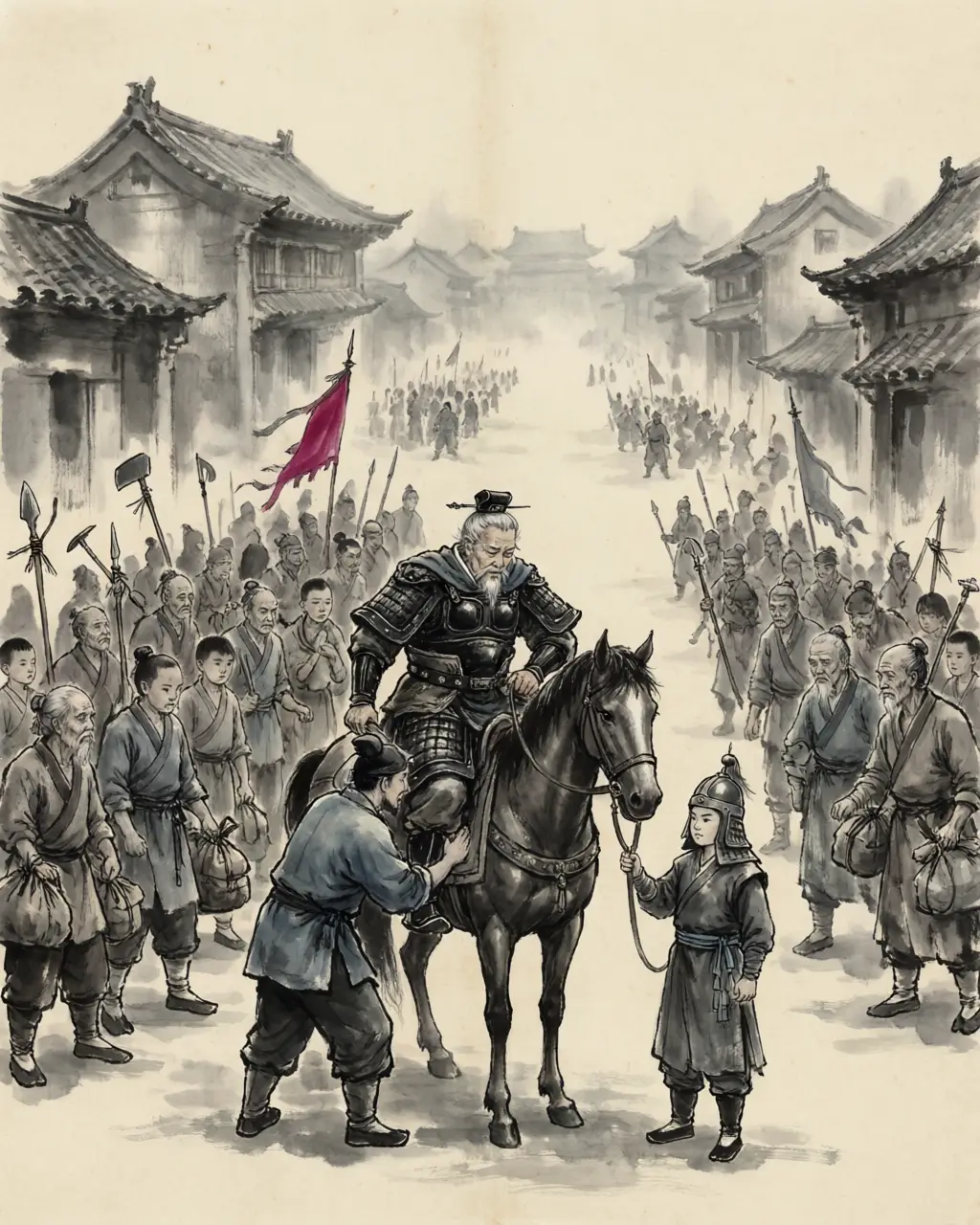
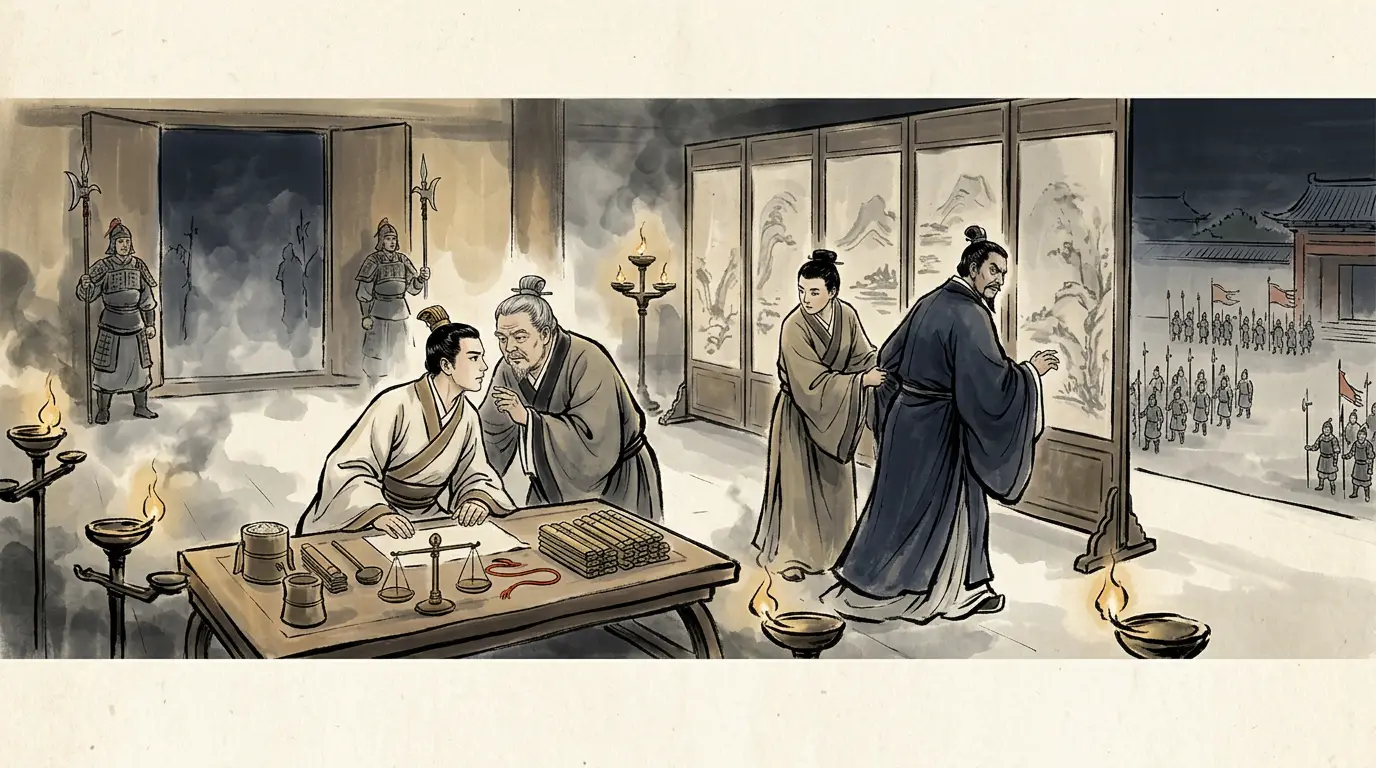
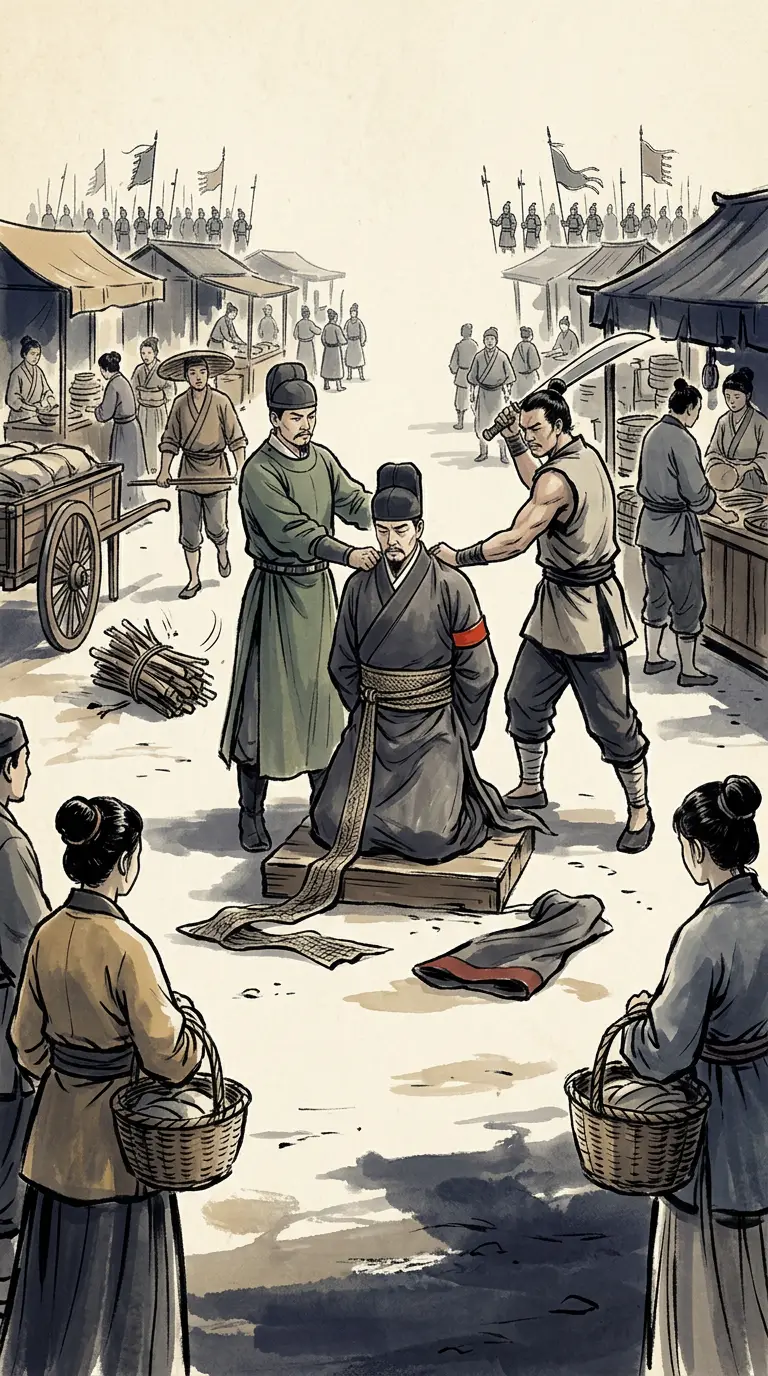
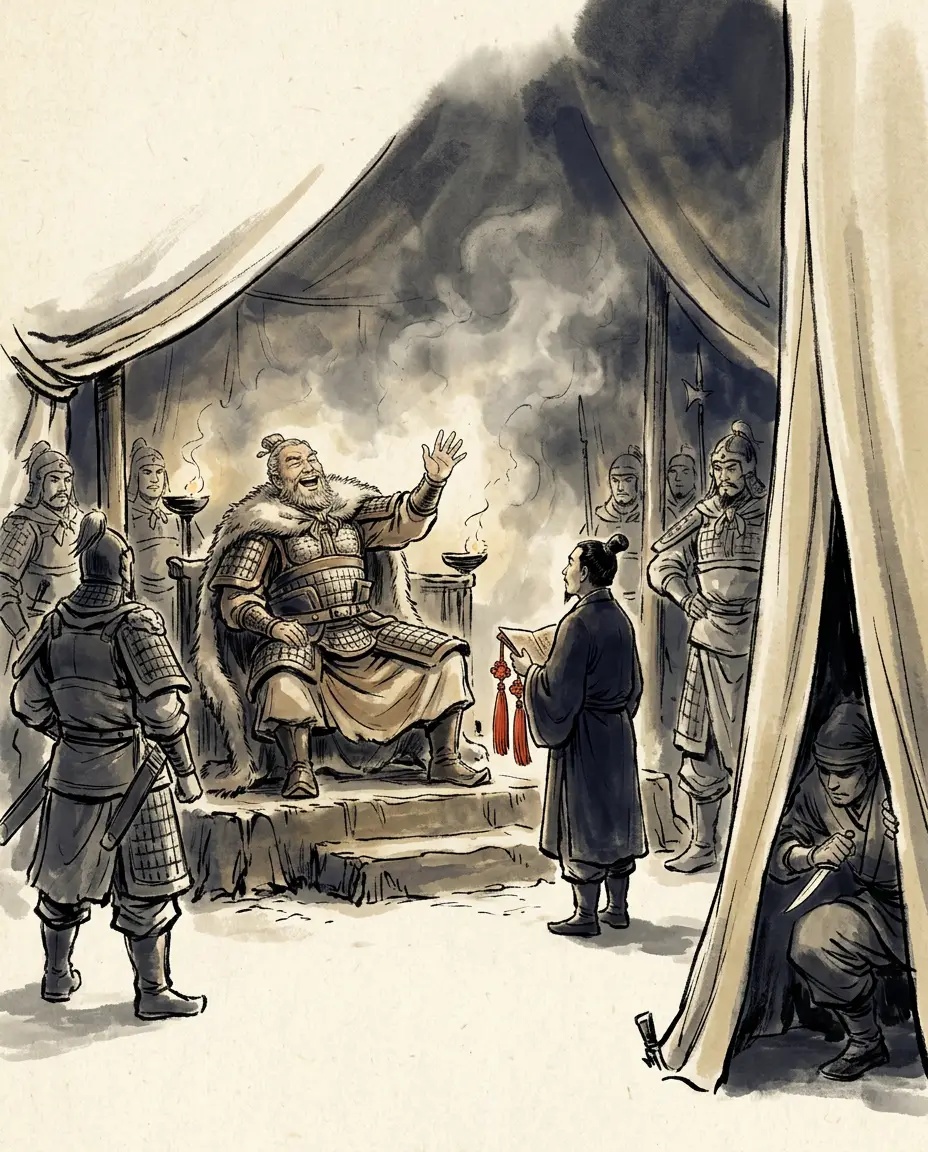
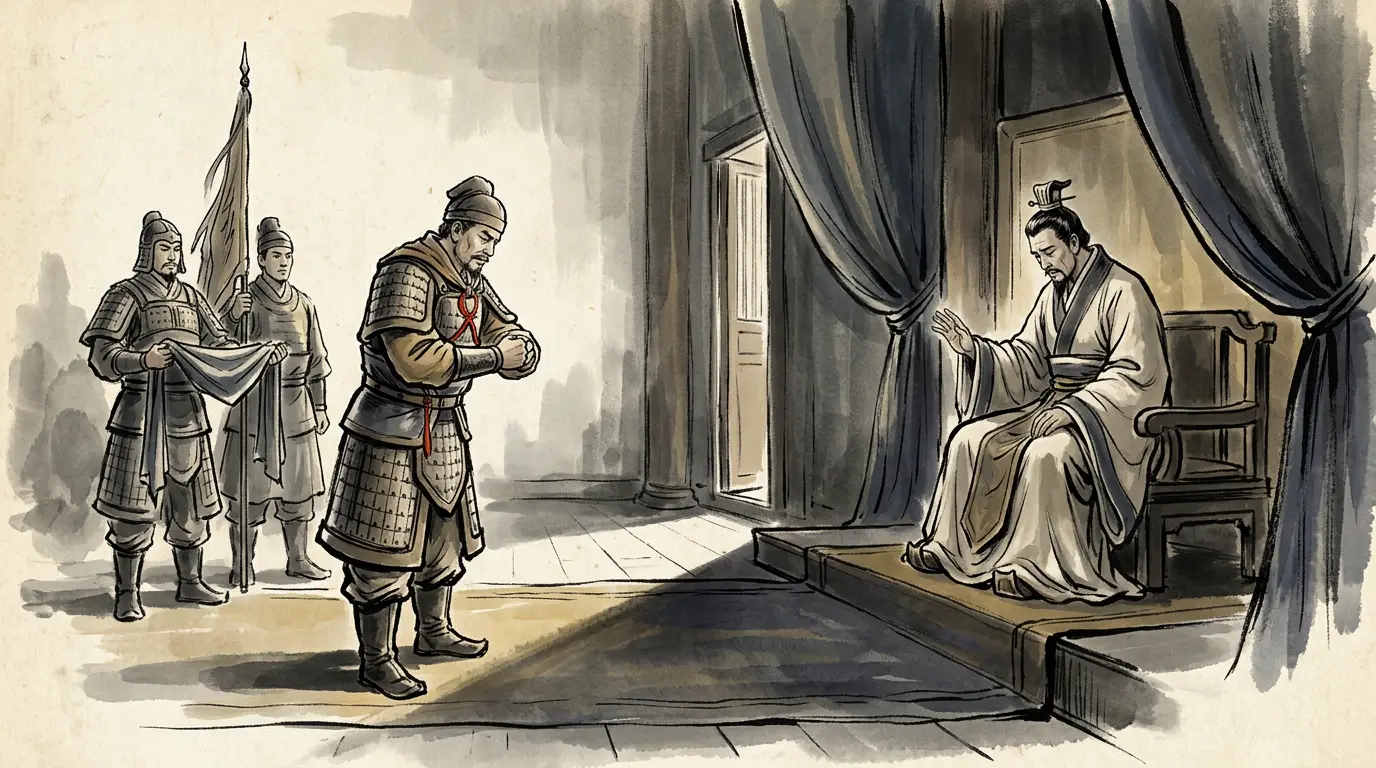
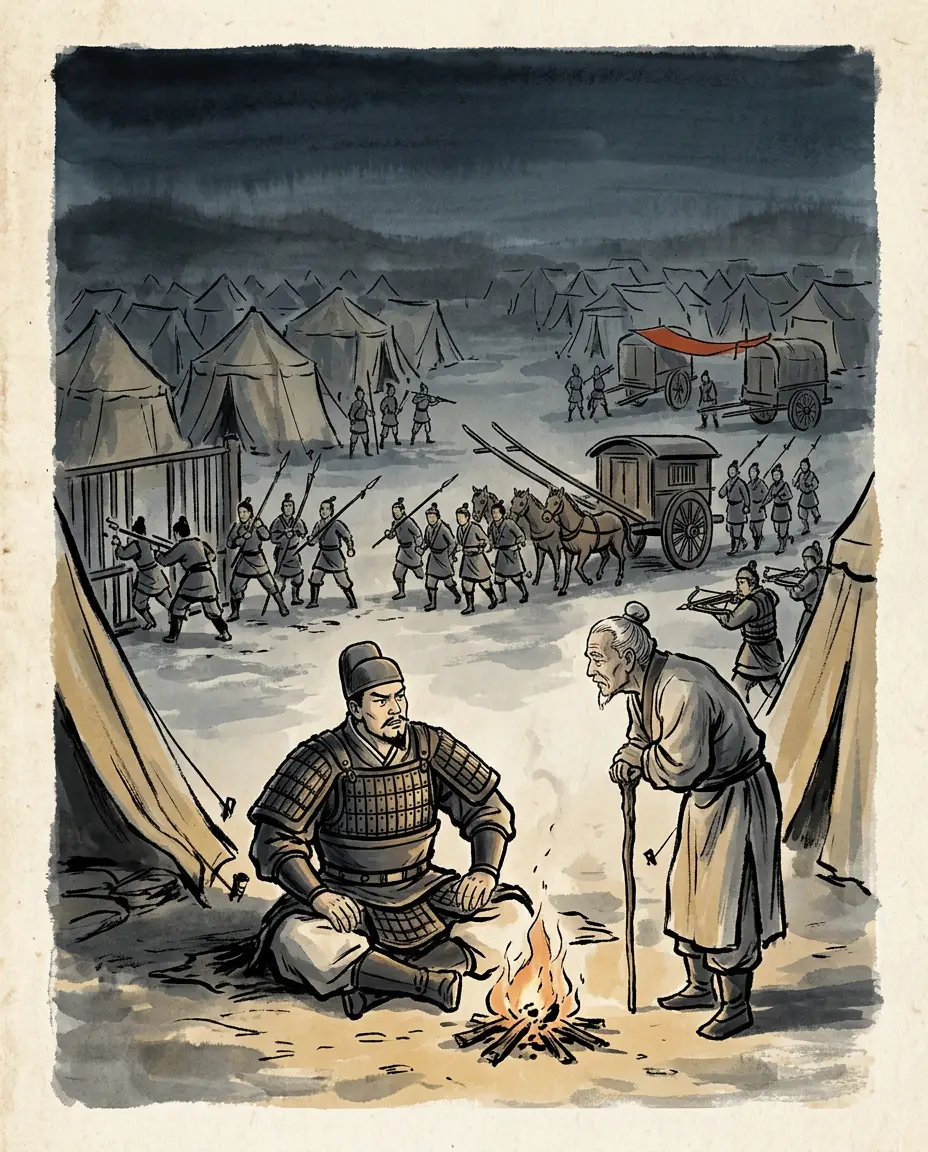
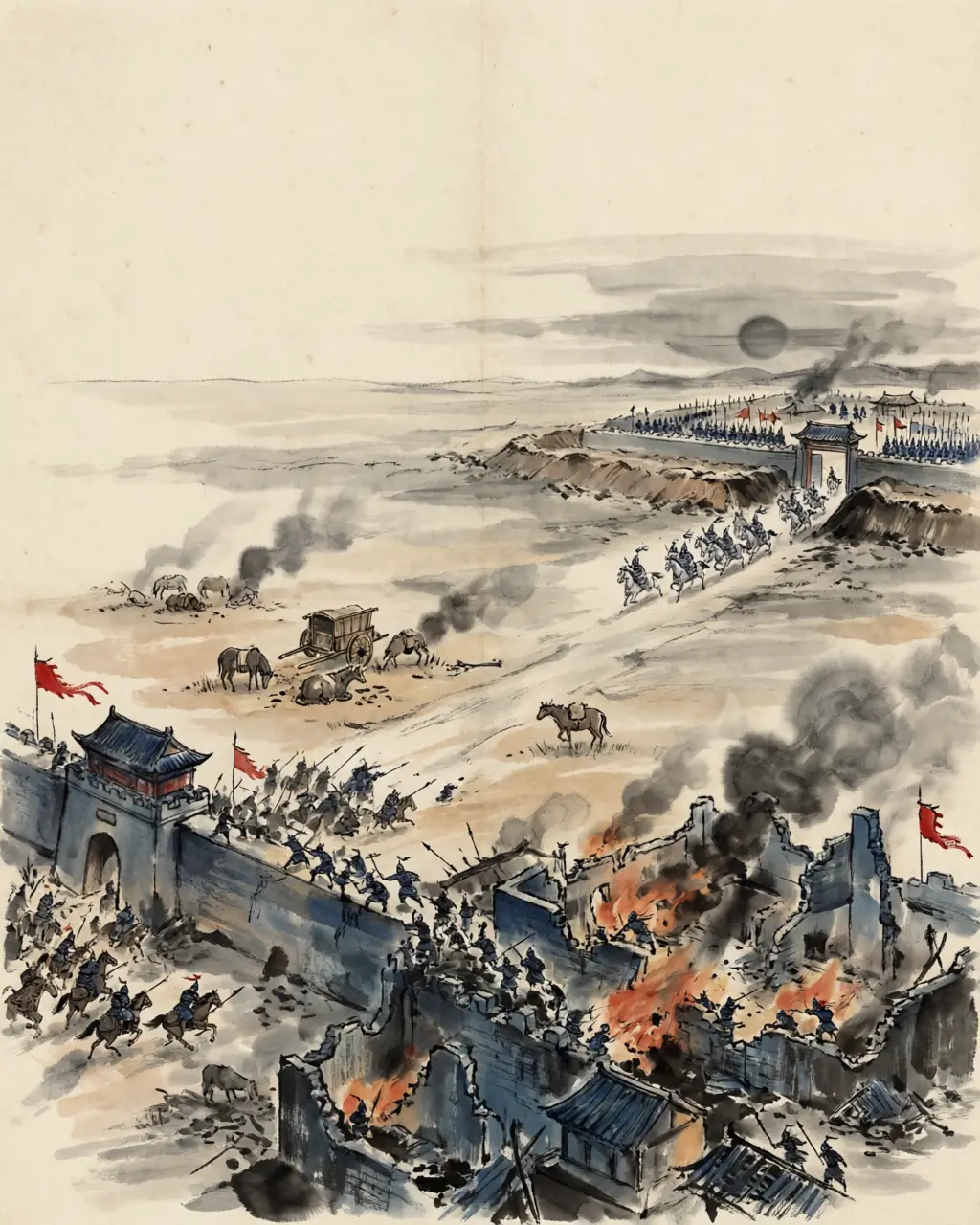
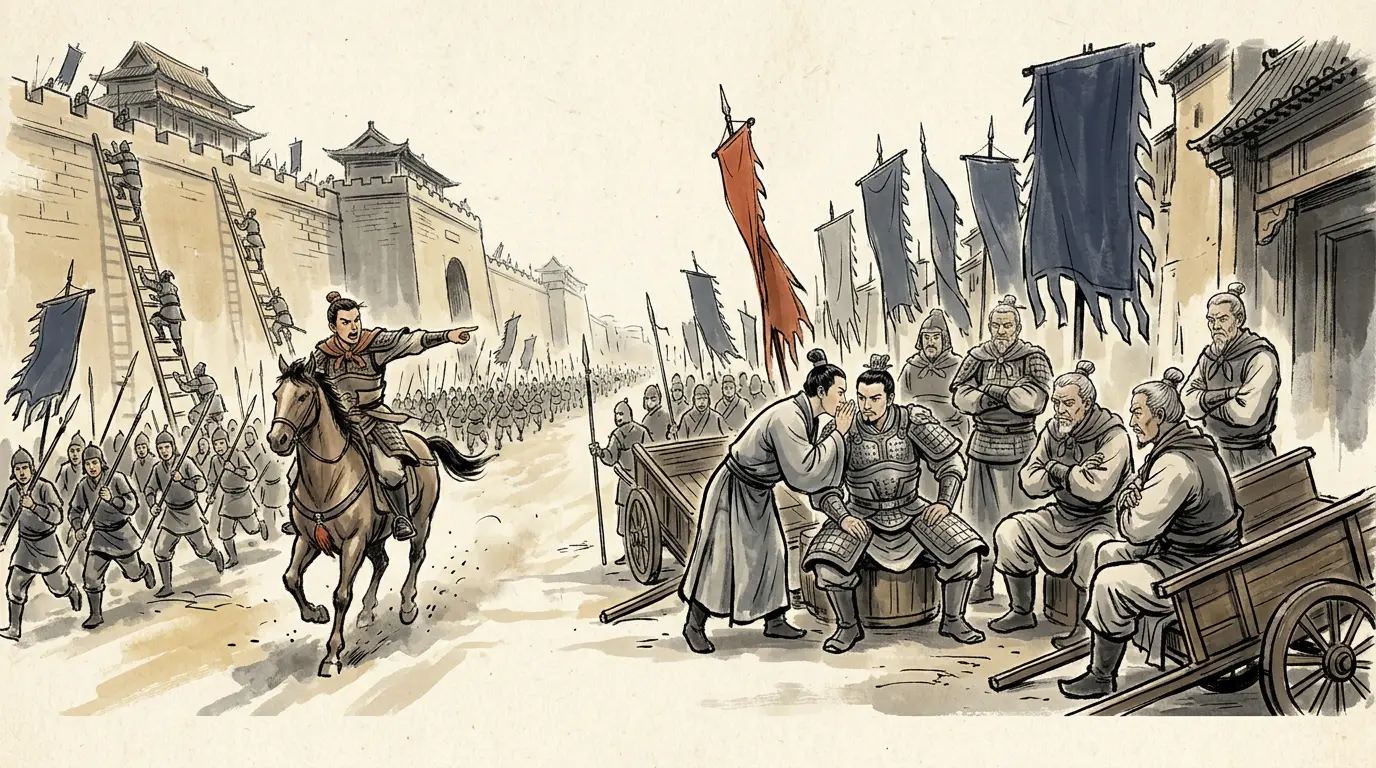
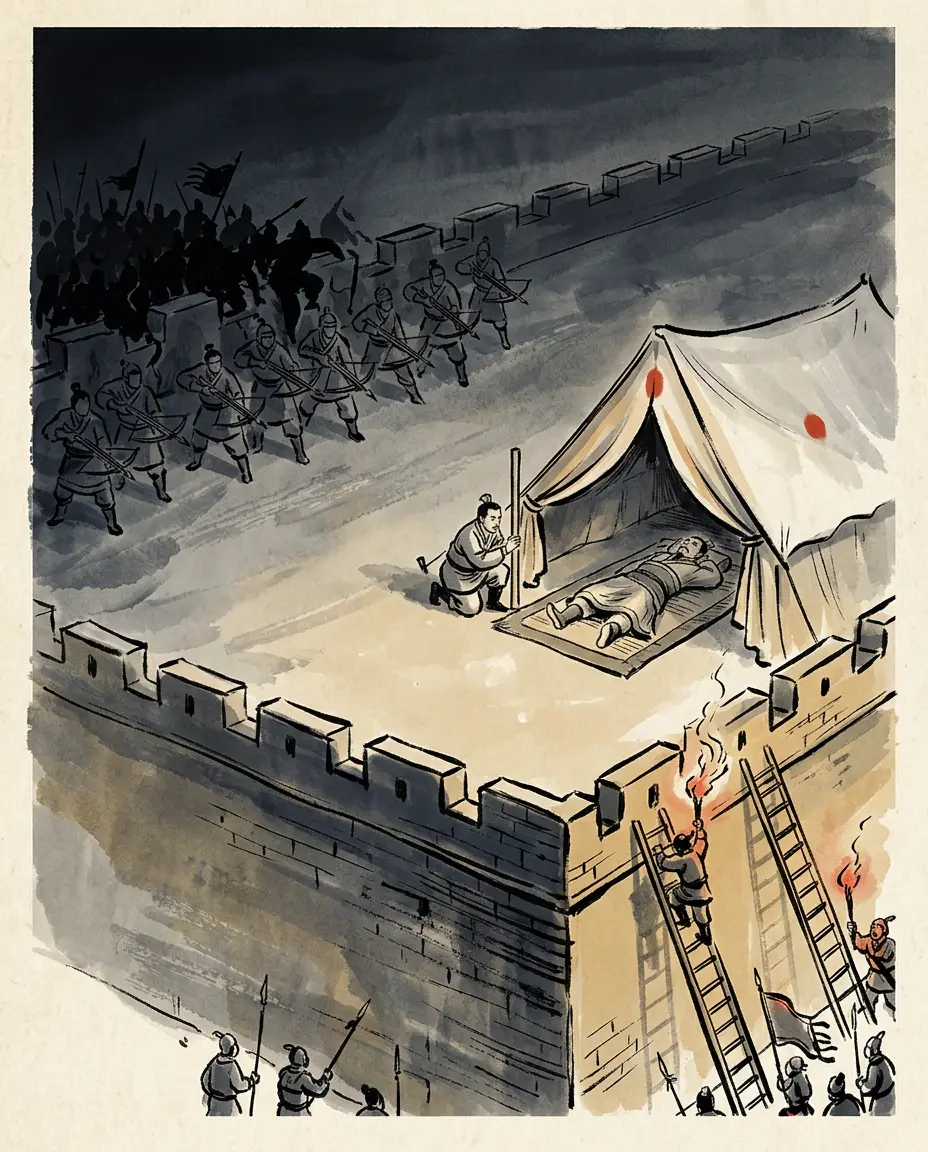
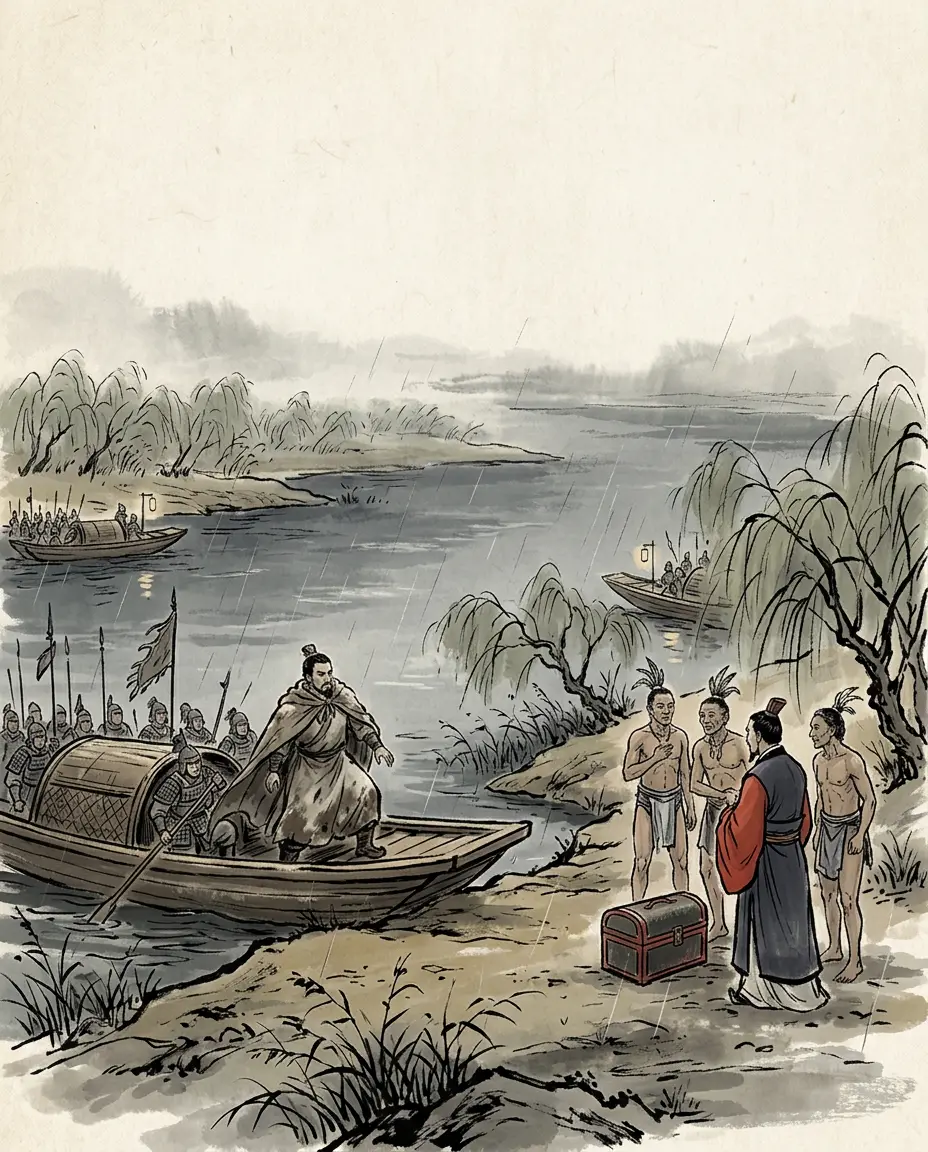
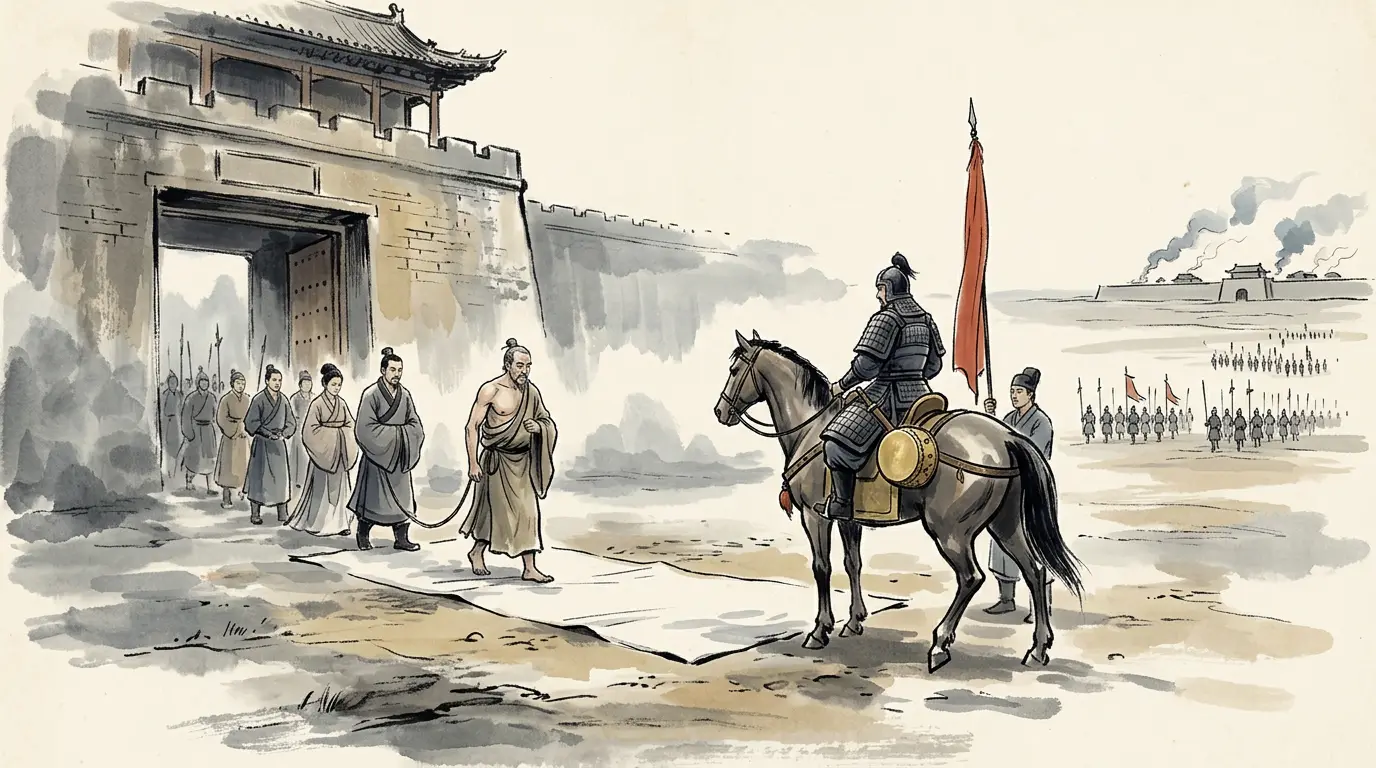
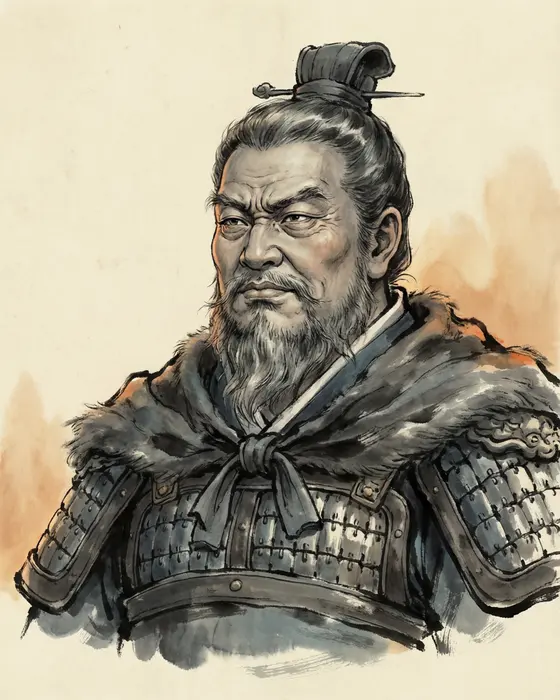


Six people carried 154 BCE: the minister whose plan outlived him, the commander who twice refused an order and was right both times, and the emperor who let them both be used.


The Ming romances of the Han dynasties, the stage plays drawn from them and the serials drawn from those are entertainment — and not a source. Where their famous scenes depart from the histories, we leave them out of the story and put them here.
Killing Chao Cuo very nearly ended the revolt, and only Zhou Yafu's stubbornness threw away a chance at peace.
The histories say the offer was refused on the spot and the war ran on unchanged. The emperor's own annal records the pardon and the restoration of the land, and then adds that Yuan Ang was sent to announce it and that it did not stop them. The king of Wu would not kneel to receive the edict, and had already declared himself Emperor of the East. Two men in the record say the killing achieved nothing at all: an officer returned from the front, and a Marquis of Gongguo to a king who had surrendered.
The war of the Seven Kingdoms was a long and exhausting struggle that nearly brought the dynasty down.
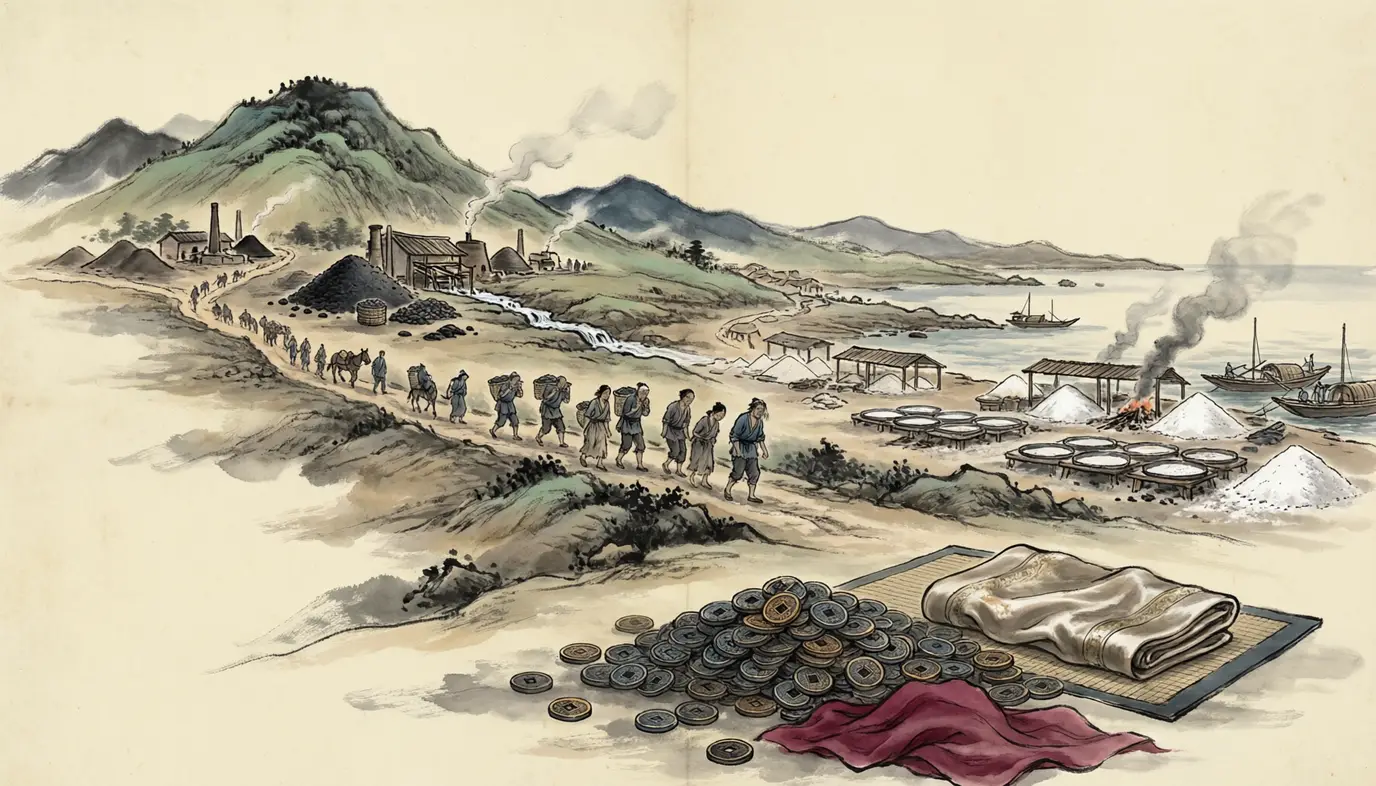
It lasted a season. The rising is dated to a specific day, the jiazi day of the first month, and the Shiji's summary is that the armies attacked and held each other for three months and Wu and Chu were broken; the emperor's annal puts the pursuit of the king of Wu at Dantu in the same spring and the deaths of the six other kings before the summer. Zhao alone held out for ten months. The exhaustion in the record is not the war's but the settlement's: the empire's wealth grows in the decades after it.
The whole eastern half of the empire rose against Chang'an.
The coalition was seven kingdoms out of the many in the east, and two more never moved: the king of Qi regretted the agreement and poisoned himself, and the king of Jibei was held under guard by his own senior secretary and could not raise troops. Wu's own letter invited the kings of Huainan, Hengshan and Lujiang and an heir of old Changsha; none of them came. The Xiongnu, whom Zhao went to for help, sent nothing. The emperor's annal names the seven exactly, and they are the seven.
The general who saved the dynasty died honoured, and the emperor he had served never forgot what he had done.
He was dismissed as chancellor, summoned to a banquet where a block of meat was set in front of him with no knife and no chopsticks, and told as he left that such a sulky man would not serve a young master. He was arrested over five hundred sets of store-made armour and shields his son had bought for his tomb and had gone unpaid on; asked why he was arming himself in the world below, he stopped answering, went hungry for five days and died vomiting blood. His king-of-Liang enemy had spent years telling the empress dowager against him, and had men kill the minister who had once been made chancellor in his place.
Zhou Yafu's end was fate: the physiognomist Xu Fu had read a line in his face that ran into his mouth and told him he would starve in nine years.
Both official histories carry that prediction, and Sima Qian closes the biography with the words Sure enough, the Marquis of Jiang starved to death — a life arranged backwards around an outcome. The same chapters say the plain facts: he was picked out of Zhou Bo's sons as the ablest and given the marquisate, and he died in the hands of jailers who wanted a confession he would not give. Nothing in the accounts of 154 BCE requires the diviner, and the campaign's decisions were his own.
Every caption and quotation in this episode traces to one of these. Where scholars disagree, the panel says so.
The fiefs were cut back, the treasury filled, and the empire turned its face outward — an officer volunteered for a ride of thirteen years: Episode 4 · The Road Bored Open (Longxi to the Oxus, 138 BCE). The treasury that survived that war is what paid for the road west. Or back to the Han line, or meet the cast.