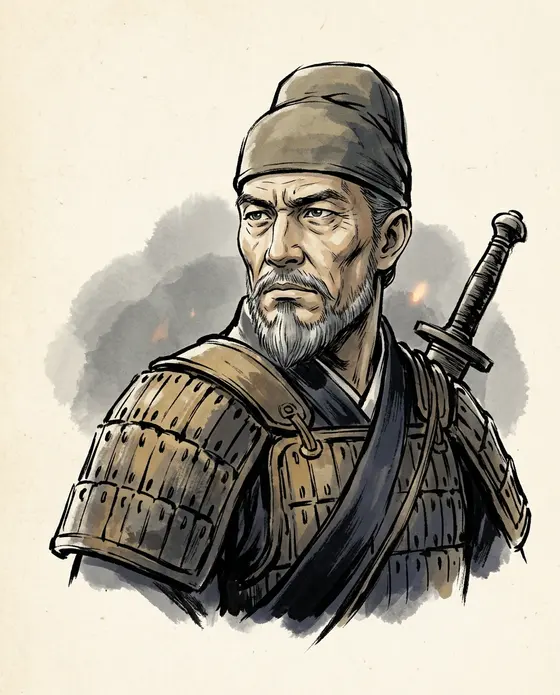
Marquis of Jiang, commander-in-chief. The man whose camp the late emperor had been stopped outside for discipline. He let the rebels beat the empire's richest fief to pieces, cut their grain, and would not fight until they were starving.
The men of Chu are swift and reckless; do not meet their edge. Give them Liang to chew on, cut off their grain road, and they can be handled.Zhou Yafu's plan for the war, put to and approved by the emperor before he marched, 154 BCE; Shiji, juan 57, Hereditary House of the Marquis of Jiang (Zizhi Tongjian, scroll 16)
Appears in
Relations
- Emperor Jing commander — The late emperor had marked him out at Xiliu for discipline and told his son he was the one to use in an emergency; the emperor approved this plan in advance and did not change it when the appeals came daily.
- Liu Wu enemies — He let the rebels beat the empire's richest fief to pieces because that was the plan the emperor had signed, and refused the edict that would have undone it; the king never forgave him.
- Liu Pi enemies — His light horse cut the road the rebels' grain came by, and at last their starving host came to the wall of his camp and challenged for a battle every day he did not give them.
Myth vs record
A general outside the court need not take every order from the Son of Heaven: the flawless disciplinarian who saved the dynasty by disobeying, and who never put a foot wrong in politics.
The refusal is real and thinner than the legend — he would not take the edict to relieve Liang and sent his light horse to seal the grain road instead; but the strategy had been agreed with the emperor before he left, in the words on this card, and approved (Shiji, juan 57). Xiliu is in the same chapter and needs no embellishment: the imperial advance party was stopped at the gate with the line that in this army we hear the general's orders, not the Son of Heaven's edict. What the record keeps as the rest of the man is politics lost, not avoided: he was outvoted at court, fell silent over a block of meat set in front of him at a banquet with no knife or chopsticks by it, and heard the emperor say as he left that such a sulk would not serve a young master. He was arrested over five hundred sets of store-made armour and shields his son had bought for his tomb; asked why he was arming himself in the world below, he stopped answering, went five days without food and died vomiting blood (juan 57; Hanshu, juan 40).