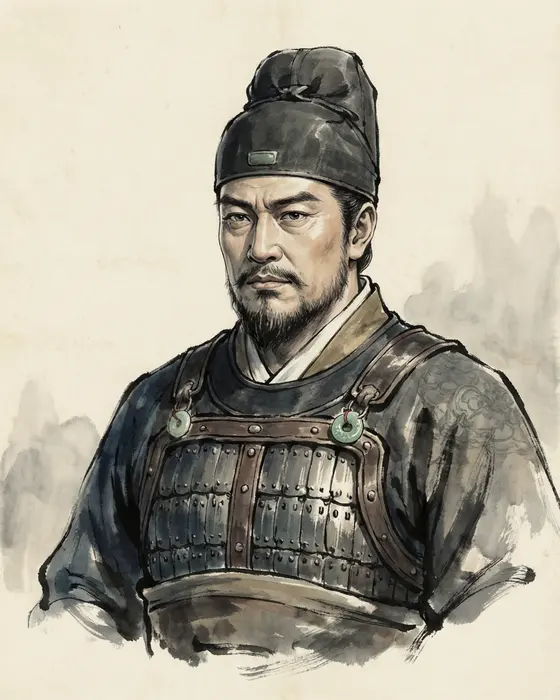
King of Liang, the emperor's full brother and the empire's richest prince. He held Suiyang through the siege, was deliberately abandoned while he held it, and spent the rest of his life getting even.
He was loved, and he held the richest land; and it fell in the Han's prosperous years, when the people were rich, so he piled up stores and enlarged his palaces until his carriages and robes matched the Son of Heaven's. That, too, was presumption.Sima Qian's judgment closing the hereditary house; Shiji, juan 58, Hereditary House of the King of Liang
Appears in
Relations
- Emperor Jing brother — Full brother to the emperor and the empress dowager's favourite, and the man whose city was given to the rebels to chew on while the war was won over it.
- Zhou Yafu enemies — He held Suiyang through the siege while the Commandant let him be beaten to pieces, and spent the rest of his life at the empress dowager's ear against him.
- Yuan Ang enemies — When the king wanted to be heir, Ang argued the throne down on the house's own rule, and the king's agents caught him outside the gate wall at Anling.
Myth vs record
The emperor promised him the throne and then cheated him of it, so Liang's revenge on the minister who blocked it was the owed anger of a wronged heir.
The promise is in the record and so is its killing: the emperor said it at a private drinking party, and Dou Ying took up the wine and answered in front of them that the throne is the founder's and passes father to son, so there was no business handing it to the king of Liang (Shiji, juan 107, relayed in Zizhi Tongjian, scroll 16). What came after was not feeling but machinery — the memoir dates the quarrel that finished his commander with one flat clause, that from that point the king of Liang and the Commandant were at odds (juan 57) — and his agents did kill Yuan Ang on the road outside the capital's gate wall (juan 101). Sima Qian's closing word on him is neither pity nor praise but a charge of presumption: because he was loved he held the richest land, and because the empire was prosperous he could match the emperor's carriages and robes (juan 58). Liang survived him only one year: it was divided into five kingdoms for his five sons after his death in 144 BCE.