Bamboo Scroll竹簡 Ep. 2 · Seven Days at Baideng
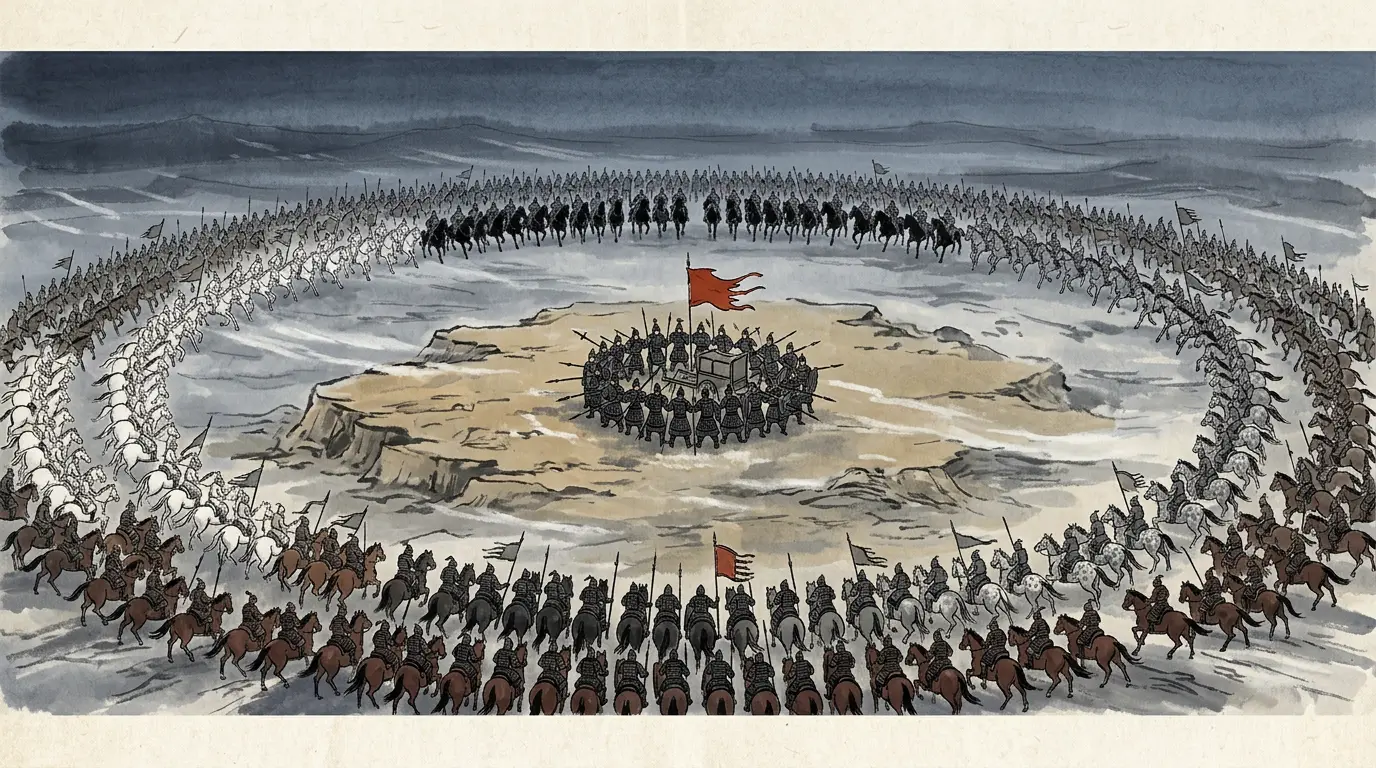
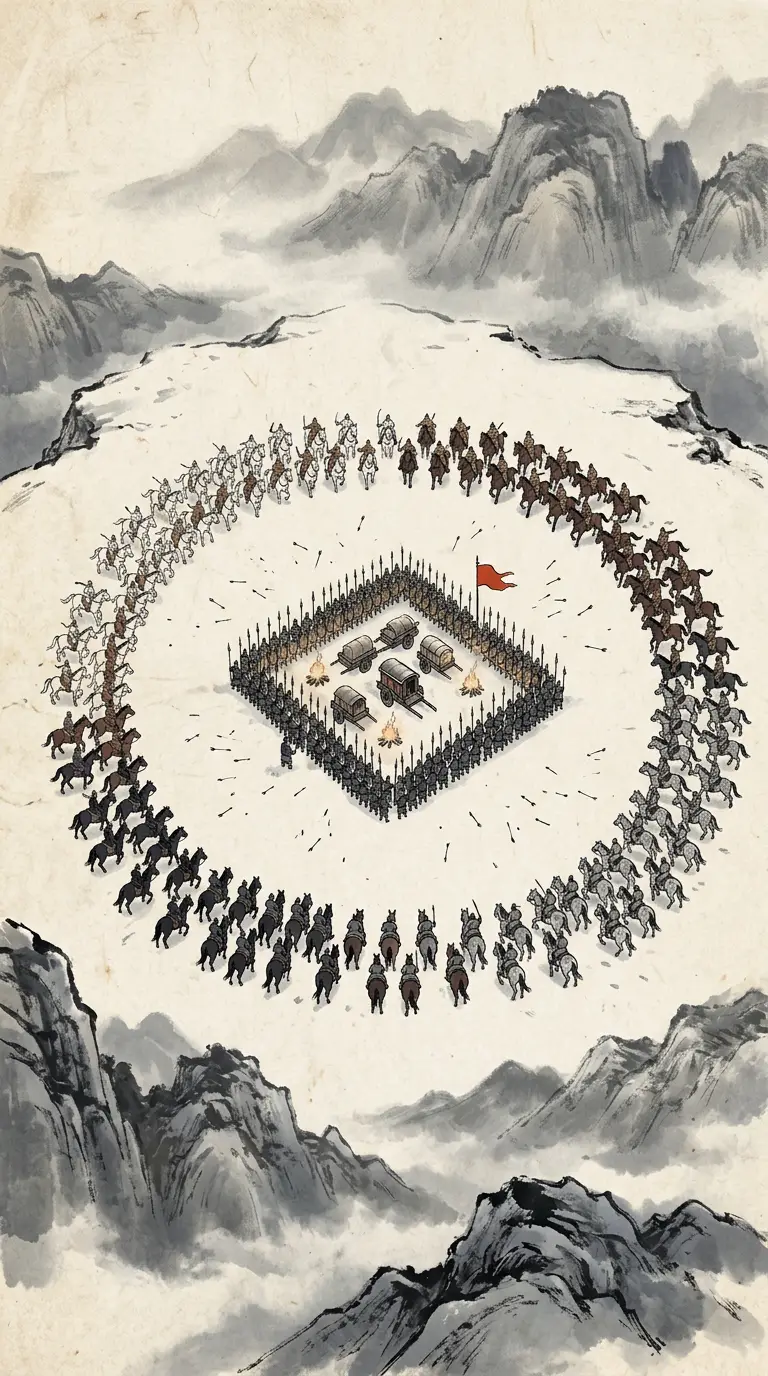
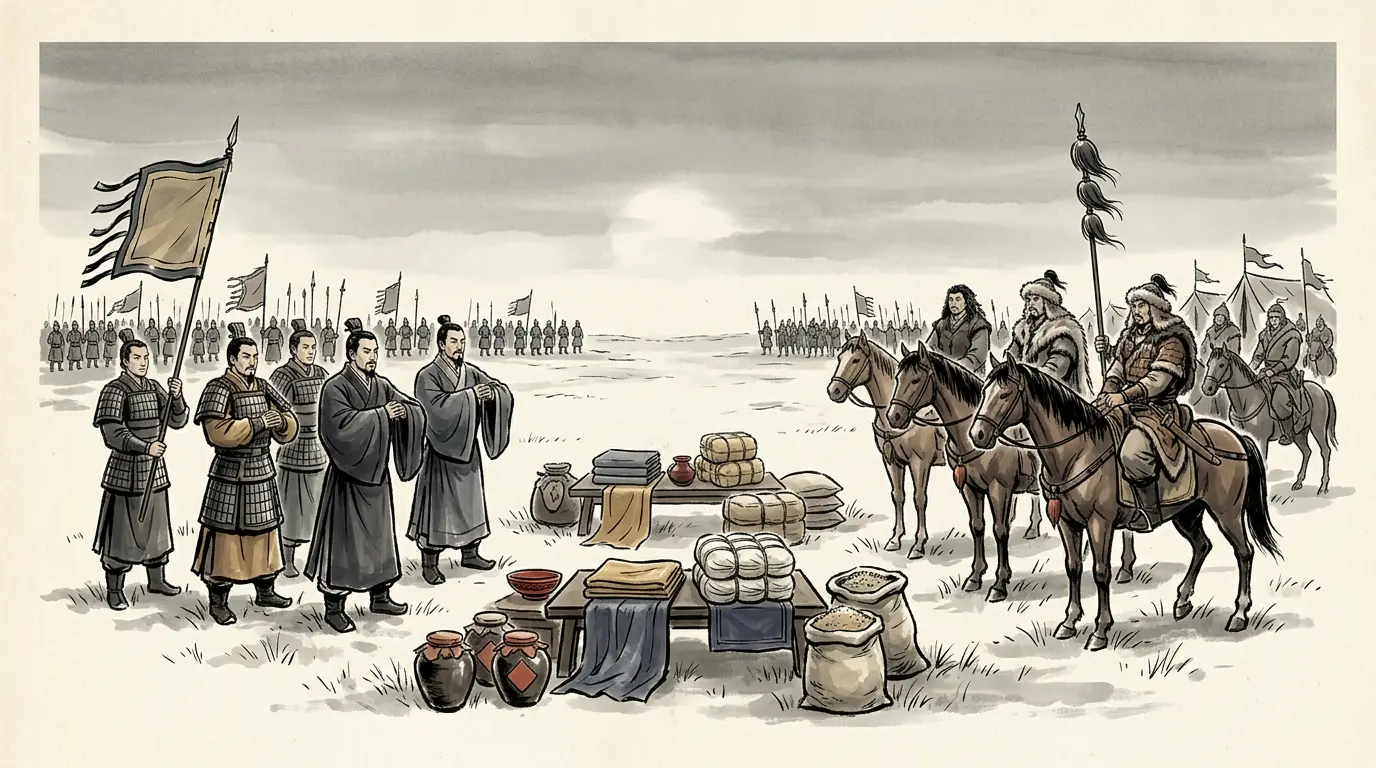
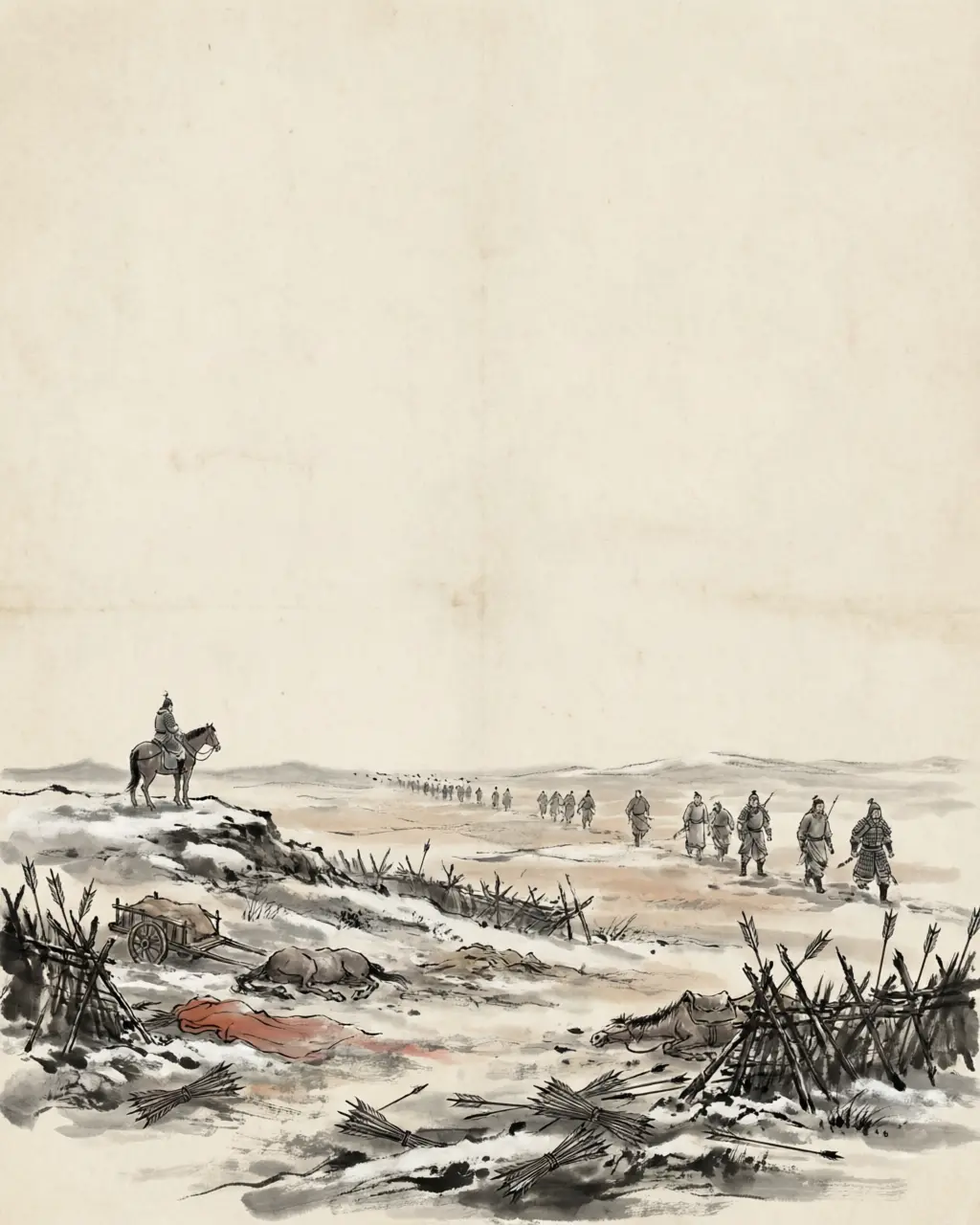
A low tableland in drifting snow at dusk, ringed by Xiongnu horsemen sorted by the colour of their mounts — white to the west, dappled to the east, black to the north, bay to the south — with a small knot of Han infantry and one emperor's banner held inside the ring
Bamboo Scroll · Han · Episode 2

Seven Days at Baideng

Pingcheng, 200 BCE — The founder of the dynasty crossed the frontier passes ahead of his own infantry, was held on a tableland for seven days by an enemy his defectors had informed, and bought the next sixty years with a borrowed princess and an annual cargo of silk and grain.
18 panels~7 min read free to readevery line sourced
Panel 01: Winter, 200 BCE. North of the frontier town of Pingcheng there is a tableland the records call Baideng. The emperor of Han got there before his own army did.
Winter, 200 BCE. North of the frontier town of Pingcheng there is a tableland the records call Baideng. The emperor of Han got there before his own army did.
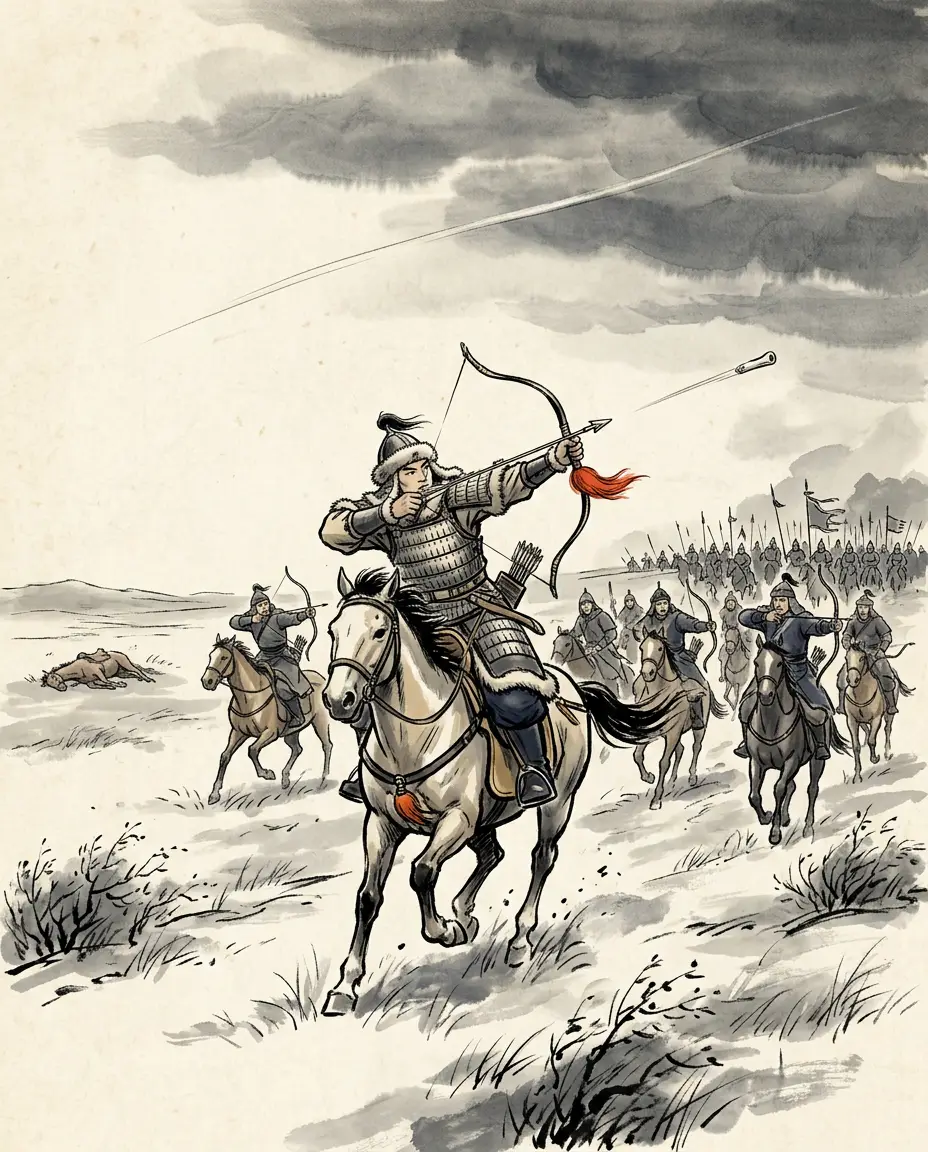
Panel 02: The man he met had been made recently. A steppe prince trained his riders to shoot whatever his whistling arrow shot, on pain of death — then tested the drill on his own best horse and on his own favourite wife, and put the arrow into his father on a hunt.
The man he met had been made recently. A steppe prince trained his riders to shoot whatever his whistling arrow shot, on pain of death — then tested the drill on his own best horse and on his own favourite wife, and put the arrow into his father on a hunt.
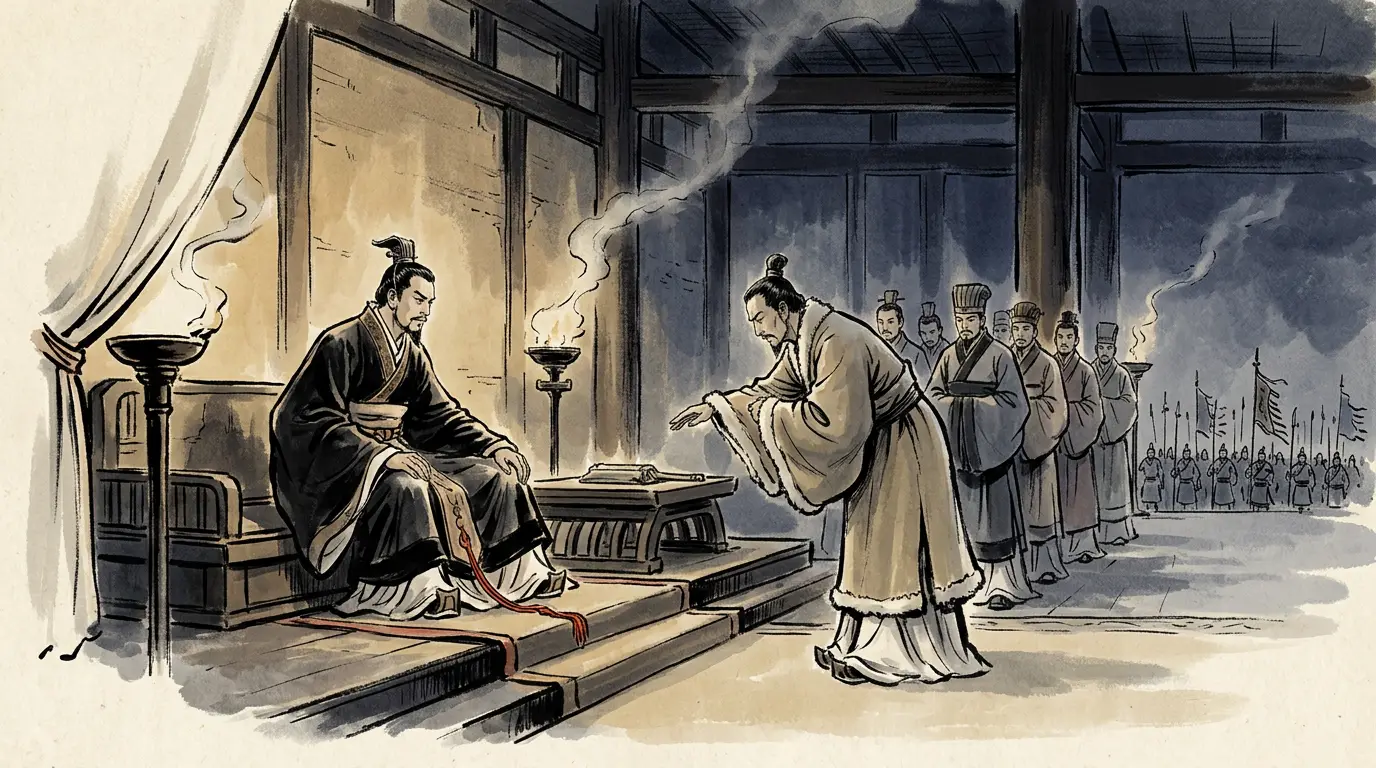
Panel 03: The war was begun by a Han king put on a frontier he could not hold. The court moved him north, let him push his capital forward to Mayi because the old one was too far from the pass — and then, when the Xiongnu closed on Mayi and he treated for peace through secret envoys, sent a reproach instead of a relief.
The war was begun by a Han king put on a frontier he could not hold. The court moved him north, let him push his capital forward to Mayi because the old one was too far from the pass — and then, when the Xiongnu closed on Mayi and he treated for peace through secret envoys, sent a reproach instead of a relief.
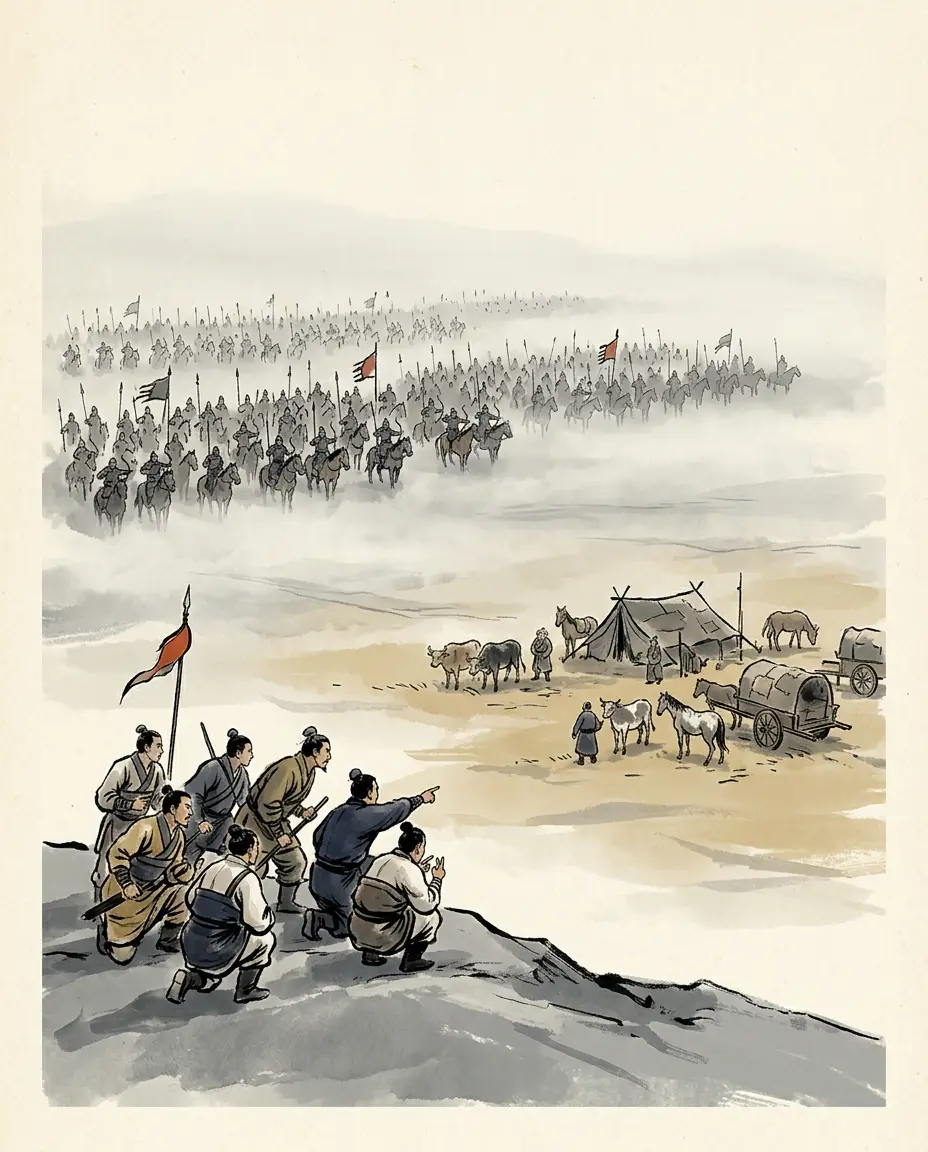
Panel 04: Before marching, the emperor sent people to look at the enemy. Ten parties went and came back and said the same thing: old men, starving cattle, it can be done. The last one back said that was the bait.
Liu Jing Two states at war display what they have. All I could see was the old and the lean. They are showing their short side to keep a strong arm in reserve — the Xiongnu cannot be struck.
Before marching, the emperor sent people to look at the enemy. Ten parties went and came back and said the same thing: old men, starving cattle, it can be done. The last one back said that was the bait.
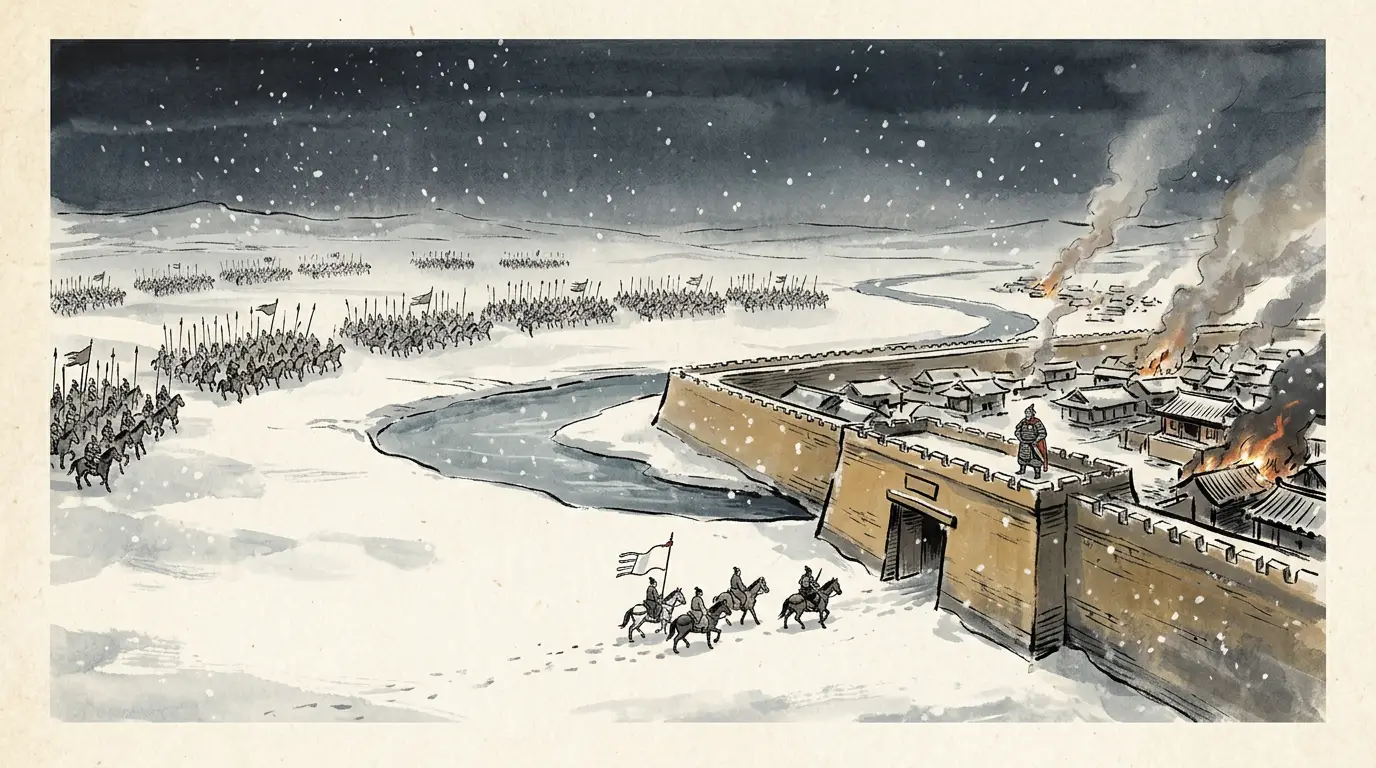
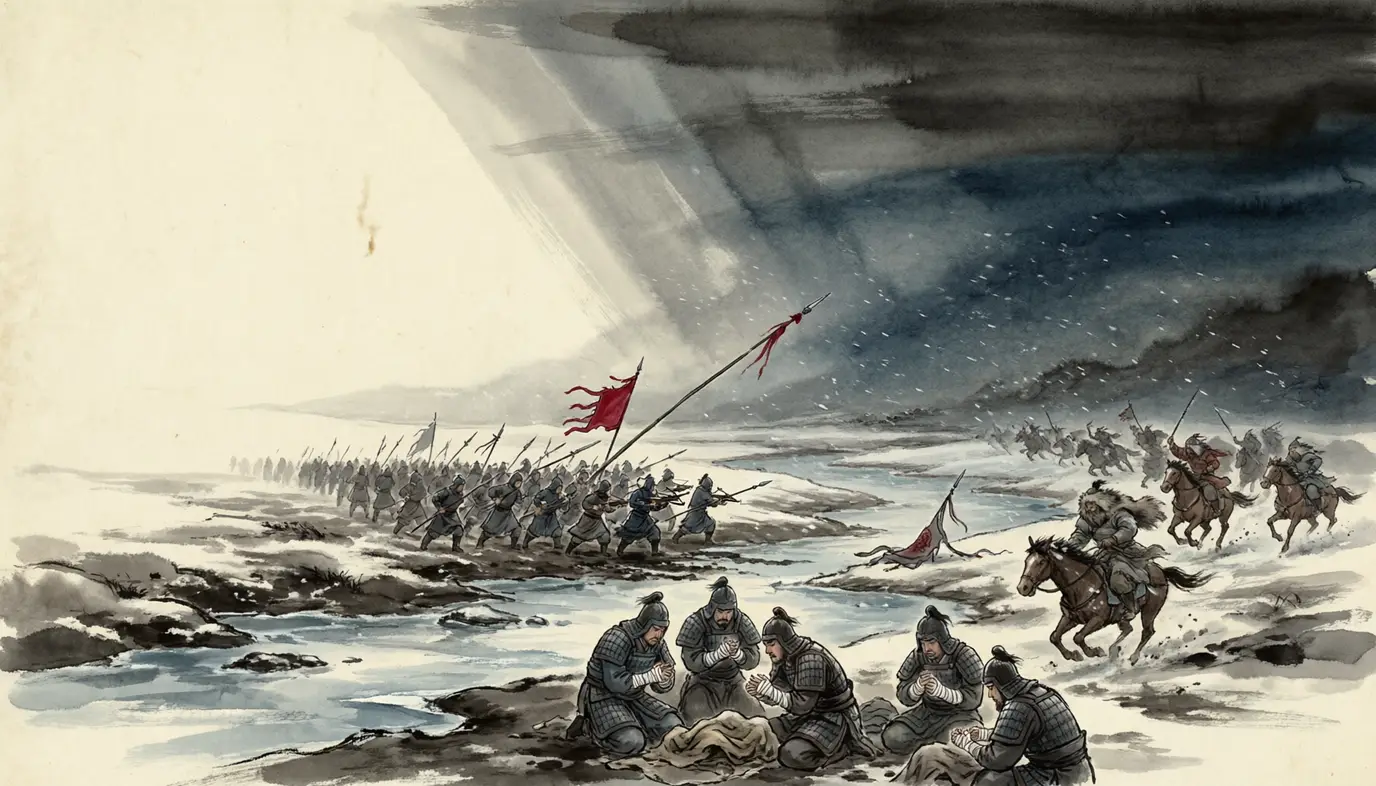
Panel 05: In the tenth month the emperor took Tongdi and beheaded one of Han Xin's generals, and the pursuit ran on past Jinyang and up to Loufan, every report a rout. Then the rain and snow came. The histories say two or three soldiers in ten lost fingers.
In the tenth month the emperor took Tongdi and beheaded one of Han Xin's generals, and the pursuit ran on past Jinyang and up to Loufan, every report a rout. Then the rain and snow came. The histories say two or three soldiers in ten lost fingers.
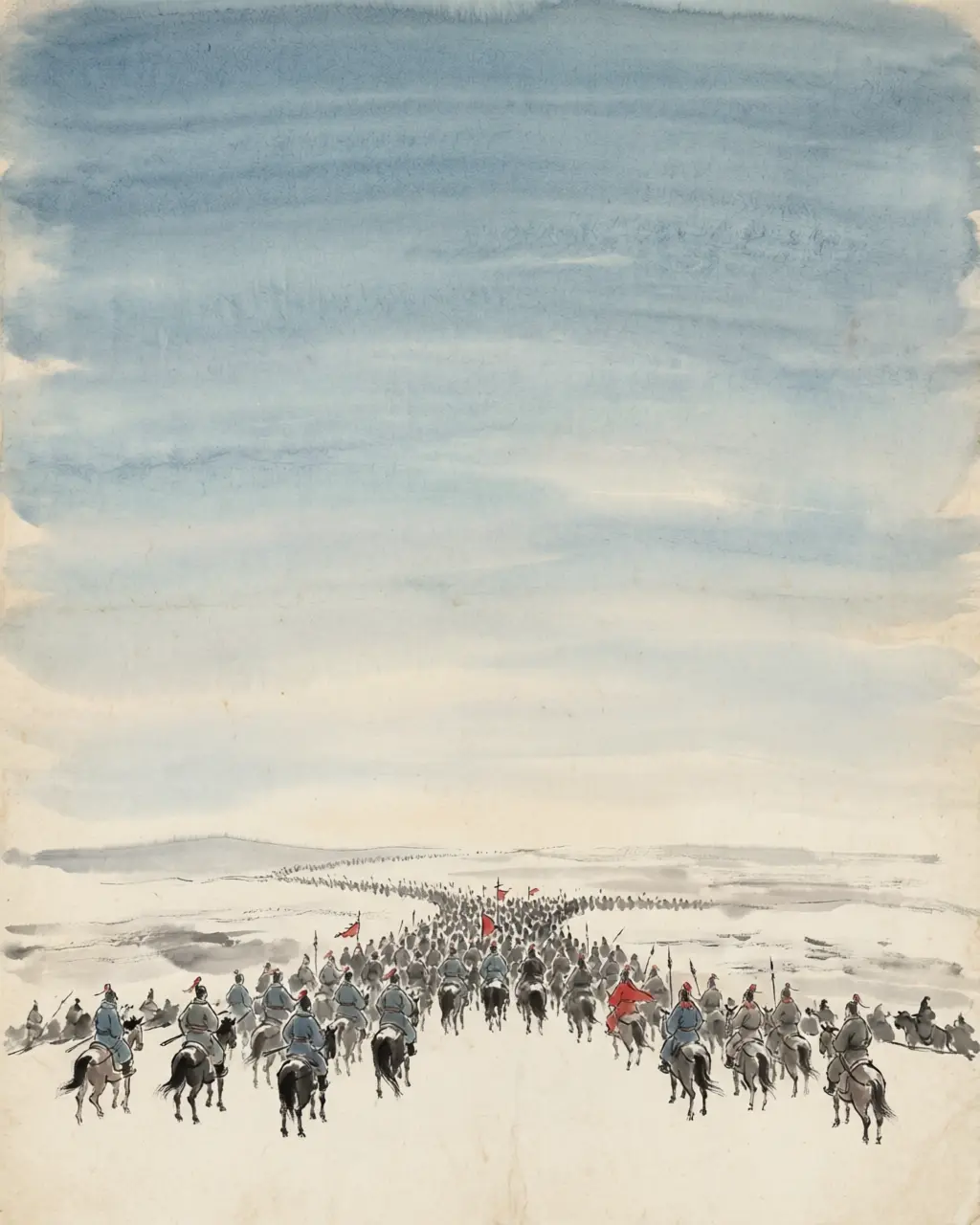
Panel 06: The emperor went on with the advance to Pingcheng. The infantry was still on the road behind him.
The emperor went on with the advance to Pingcheng. The infantry was still on the road behind him.
Panel 07: Seven days. The record of those seven days is one line: the army inside the ring and the army outside it could not send each other food.
Seven days. The record of those seven days is one line: the army inside the ring and the army outside it could not send each other food.
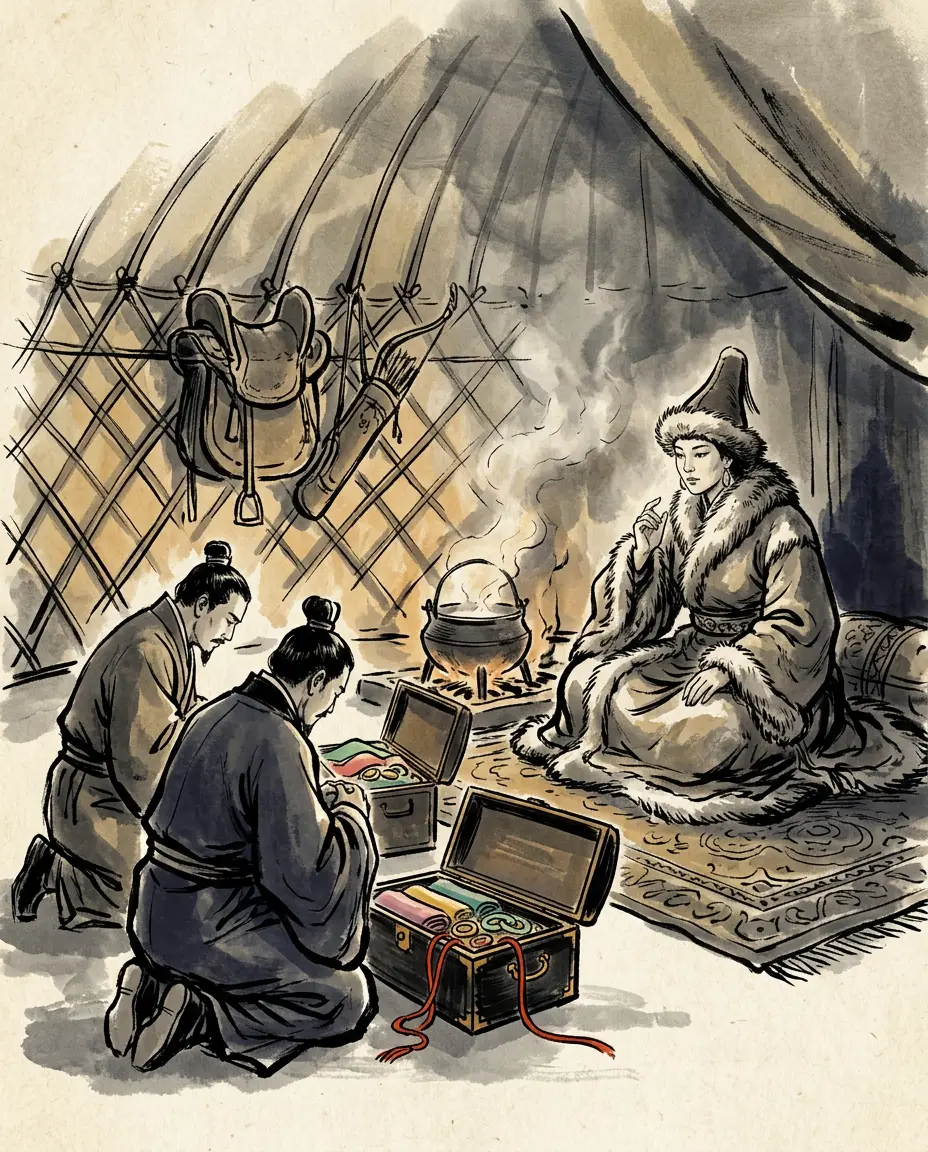
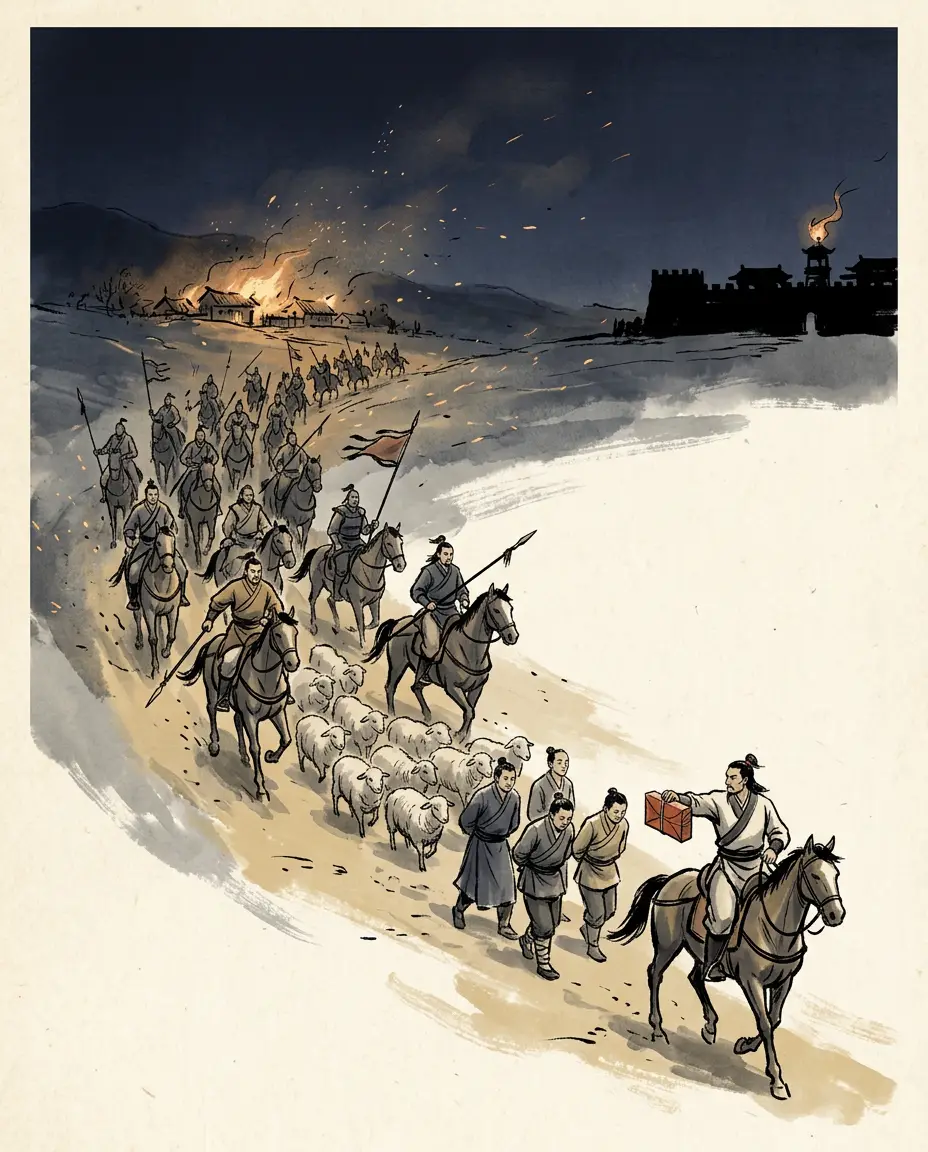
Panel 08: Envoys went through the lines with rich gifts for the Chanyu's wife. What she said to her husband is in the record. What it was bought with is not.
Envoys went through the lines with rich gifts for the Chanyu's wife. What she said to her husband is in the record. What it was bought with is not.
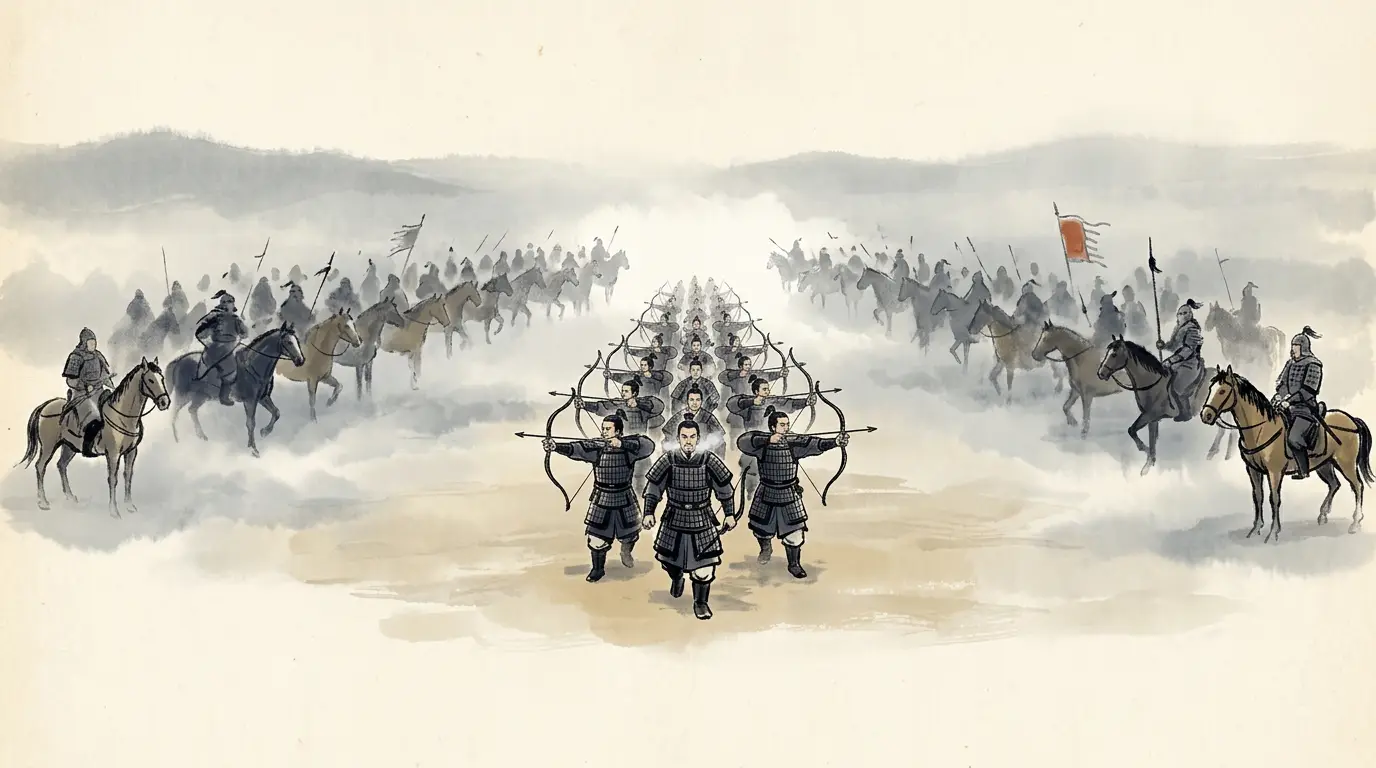
Panel 09: What the breakout was given to be is an order of march. Bows at full draw, two arrows nocked and pointing out of the column, and the whole ring walked through at a pace — at the corner the enemy had left open.
Chen Ping The Hu are armed to a man. Let every strong crossbow carry two arrows to the outside, and we walk out slowly.
What the breakout was given to be is an order of march. Bows at full draw, two arrows nocked and pointing out of the column, and the whole ring walked through at a pace — at the corner the enemy had left open.
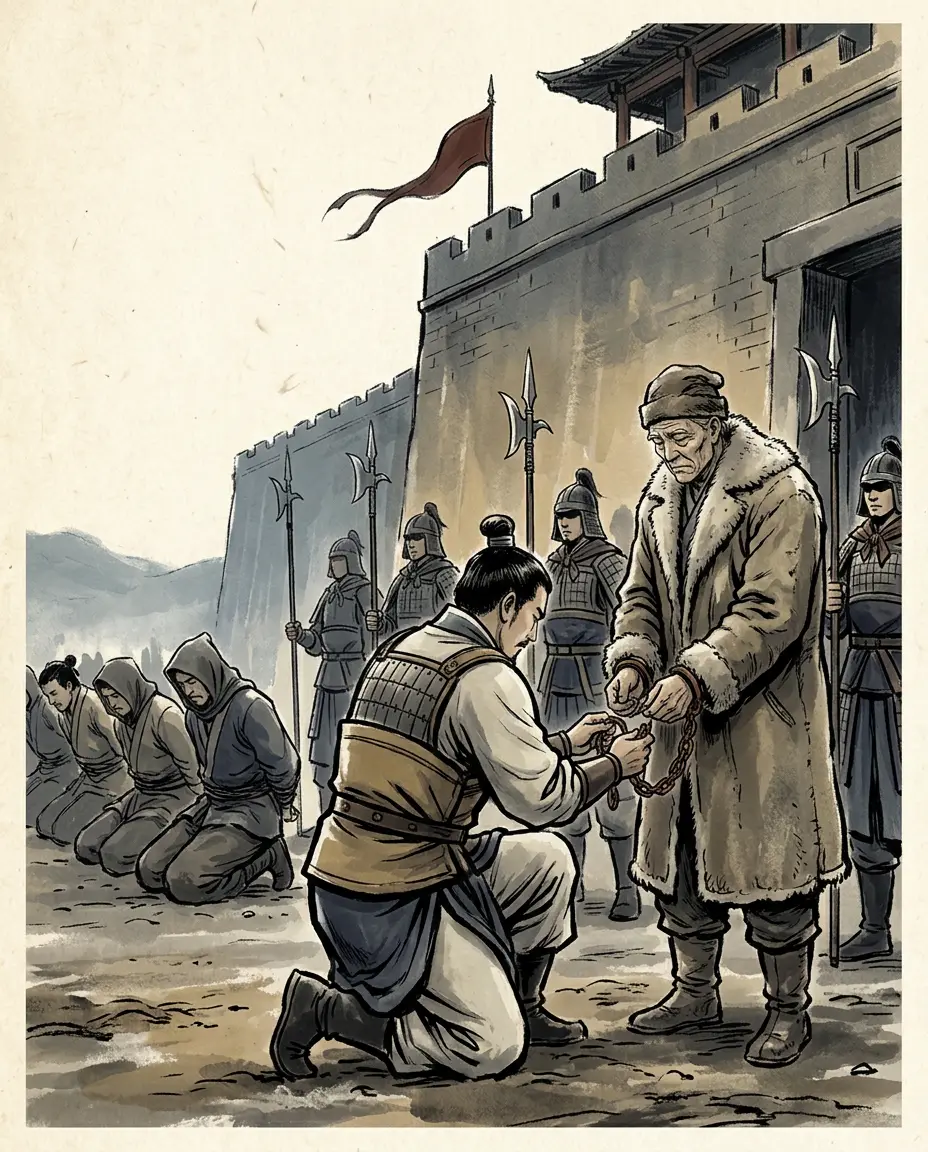
Panel 10: On the road back, at Guangwu, he had the prisoner brought out, took off the man's chains in front of the army, and then said what he had already done to the men who had got him there.
Liu Bang I did not take your words, and so I was trapped at Pingcheng. The ten parties who told me it could be done — I have had every one of them beheaded.
On the road back, at Guangwu, he had the prisoner brought out, took off the man's chains in front of the army, and then said what he had already done to the men who had got him there.
Panel 11: The empire now had to do something about a frontier it could be raided across at will. The answer the court took was that it could not be fought, and could not be argued with either.
The empire now had to do something about a frontier it could be raided across at will. The answer the court took was that it could not be fought, and could not be argued with either.
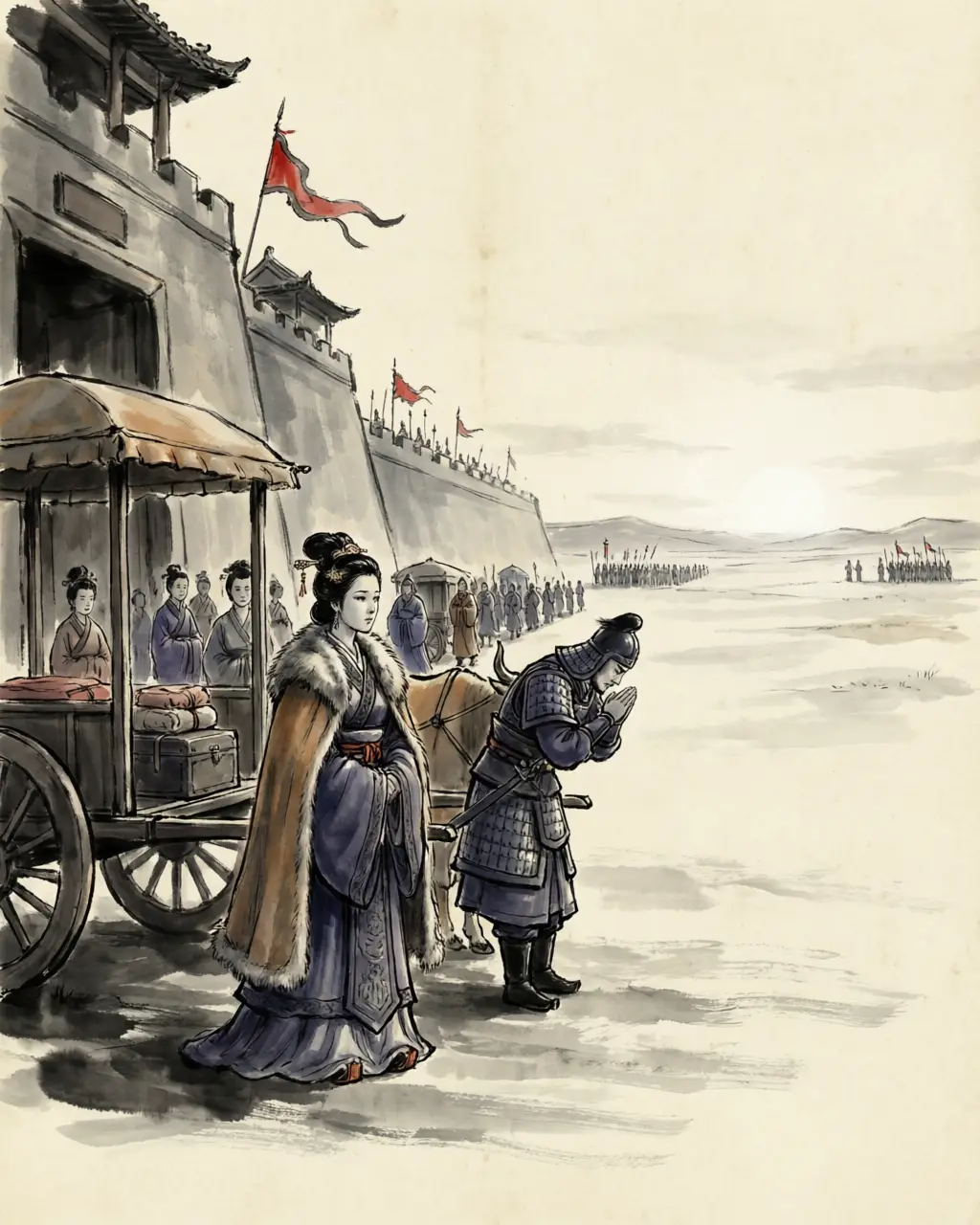
Panel 12: The plan required the emperor's own daughter by the empress — the family's one girl. The empress would not let her go, and the emperor did not insist. A girl of the palace households was named a princess in her place and sent north.
Empress Lu I have the heir and one daughter. Why must she be thrown away among the Xiongnu?
The plan required the emperor's own daughter by the empress — the family's one girl. The empress would not let her go, and the emperor did not insist. A girl of the palace households was named a princess in her place and sent north.
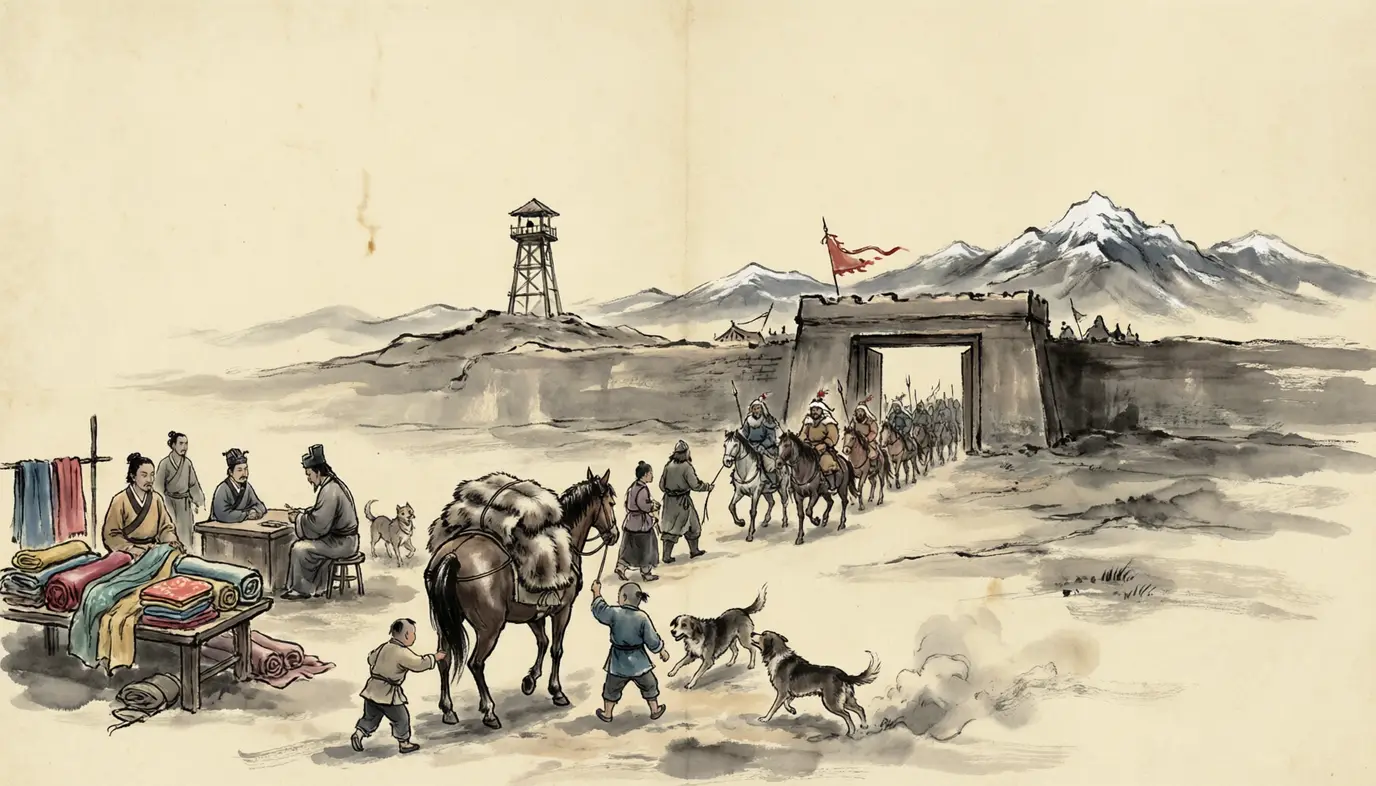
Panel 13: So the settlement was: a bride of the blood, a yearly delivery of silk floss and silk cloth, wine, grain and food in fixed amounts, and two courts sworn as brothers. The raids did not stop; they stopped being a war.
So the settlement was: a bride of the blood, a yearly delivery of silk floss and silk cloth, wine, grain and food in fixed amounts, and two courts sworn as brothers. The raids did not stop; they stopped being a war.
Panel 14: The pact did not stop the north from knowing what the south was doing. Han Xin led Xiongnu horse on the frontier for five more years; Wang Huang and Zhao Li broke the oath again and again; the revolt of Chen Xi was made with them; and an envoy the king of Yan sent to the Xiongnu stayed there and worked for them.
Han Xin A withered man does not stop meaning to stand; a blind man does not stop wanting to see. But it cannot be done.
The pact did not stop the north from knowing what the south was doing. Han Xin led Xiongnu horse on the frontier for five more years; Wang Huang and Zhao Li broke the oath again and again; the revolt of Chen Xi was made with them; and an envoy the king of Yan sent to the Xiongnu stayed there and worked for them.
Panel 15: Two decades later the Chanyu sent the empress-dowager a letter she took as an insult, and she answered it with a plan to ride out and punish him. It was stopped with one sentence: the able and warlike Emperor Gao had still been caught at Pingcheng.
Two decades later the Chanyu sent the empress-dowager a letter she took as an insult, and she answered it with a plan to ride out and punish him. It was stopped with one sentence: the able and warlike Emperor Gao had still been caught at Pingcheng.
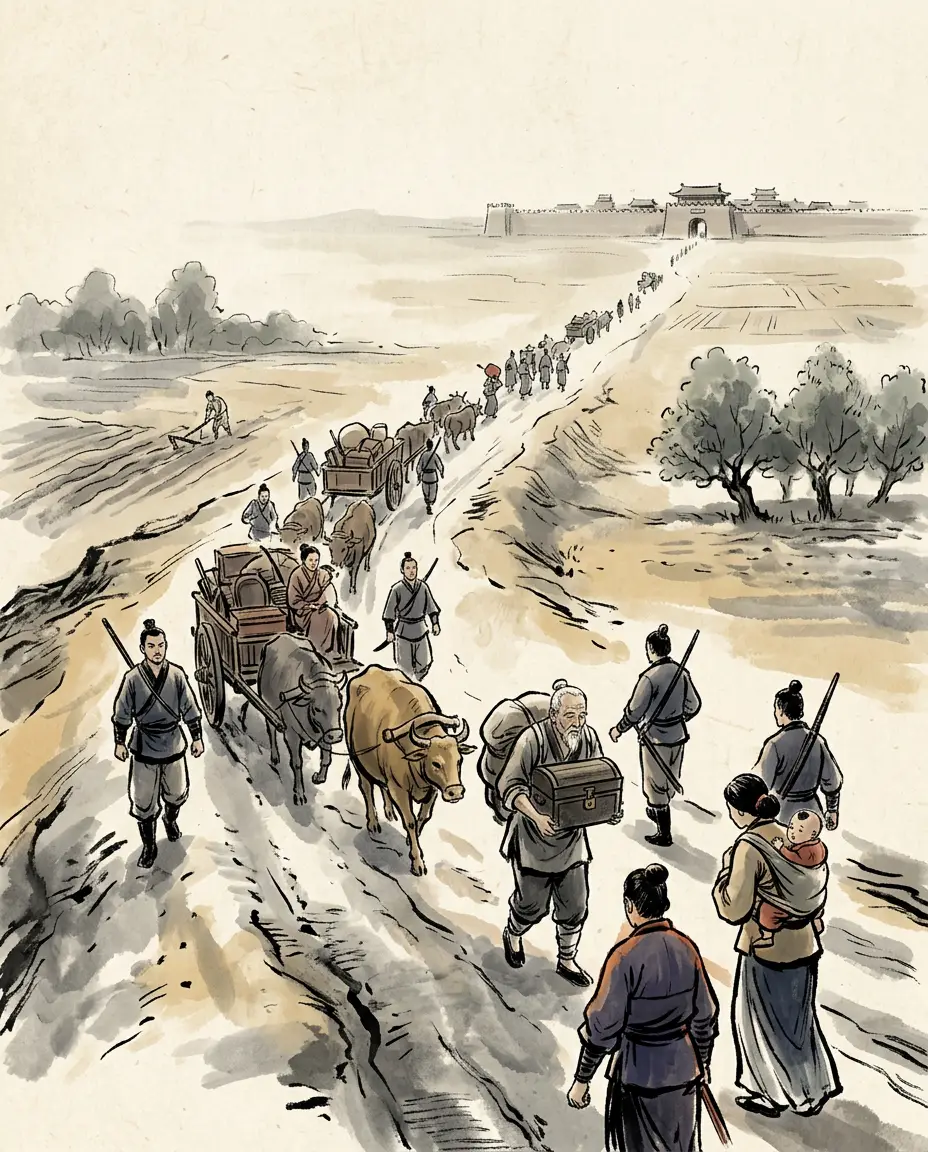
Panel 16: The man who wrote the northern settlement wrote a southern one too. Move the old royal houses of the six kingdoms, and every locally powerful family, inside the Wei valley: the record counts over a hundred thousand people. Against the Hu it was a reserve. Against the lords it was a leash.
The man who wrote the northern settlement wrote a southern one too. Move the old royal houses of the six kingdoms, and every locally powerful family, inside the Wei valley: the record counts over a hundred thousand people. Against the Hu it was a reserve. Against the lords it was a leash.
Panel 17: Nothing in the record says how the emperor actually got away. The escape is credited to Chen Ping and then closed, and the one thing he is left saying about a life of that kind is a warning to his own family.
Nothing in the record says how the emperor actually got away. The escape is credited to Chen Ping and then closed, and the one thing he is left saying about a life of that kind is a warning to his own family.
Panel 18: The bargain held, with quarrels, until 133 BCE. And part of the defector's family came back: the best general on the empire's side in the Liu family's next and worst civil war was the son of the man who handed over Mayi.
The bargain held, with quarrels, until 133 BCE. And part of the defector's family came back: the best general on the empire's side in the Liu family's next and worst civil war was the son of the man who handed over Mayi.

In this episode

Six people carried 200 BCE. Two of them were arguing about whether the empire could pay for its own frontier, one was a woman the court never consulted, and the sixth was the steppe itself.

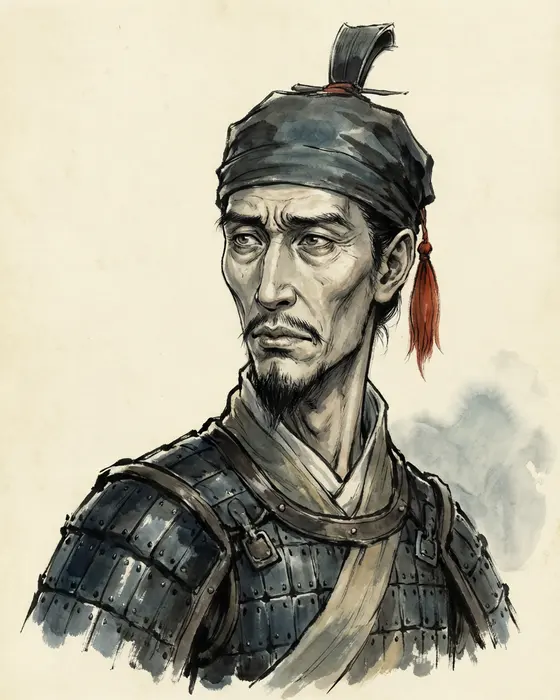
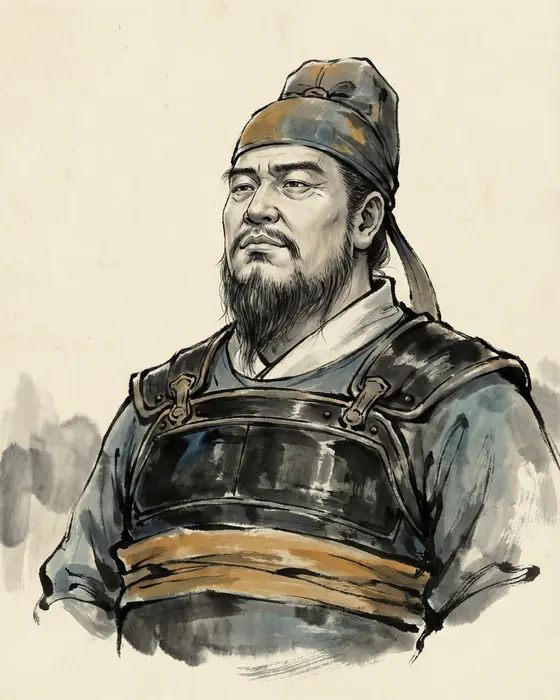
Portrait of Liu Bang
Liu Bang劉邦
256–195 BCE
Emperor Gaozu of Han, founder. Took the field in the tenth month against a vassal's revolt, reached Pingcheng before his own army, and spent seven days inside a closed ring of cavalry. On the way home he apologised to a man he had put in irons and told the army he had killed the ten who had advised the march.
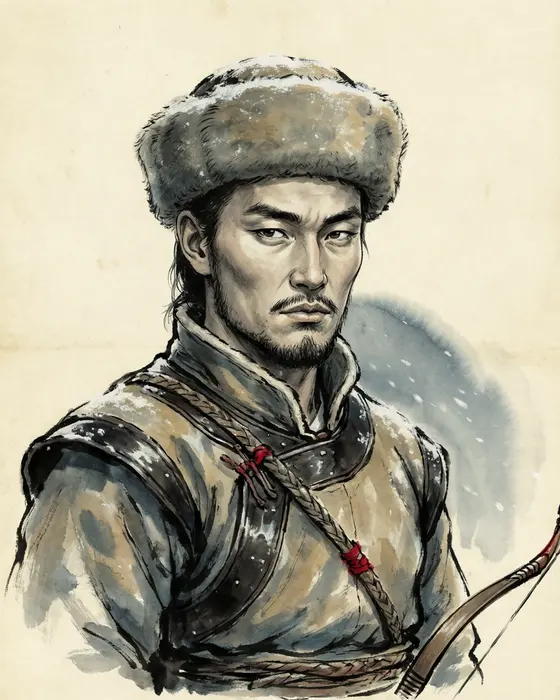
Portrait of Modu
Modu冒頓單于
d. 174 BCE
Chanyu of the Xiongnu. He drilled his escort with a whistling arrow, killed his father with it, took a horse, a wife and a thousand li of empty grazing from the Eastern Hu, then hid his fat cattle and strong riders to lure the Han north.
Portrait of Han Xin
Han Xin韓信
d. 196 BCE
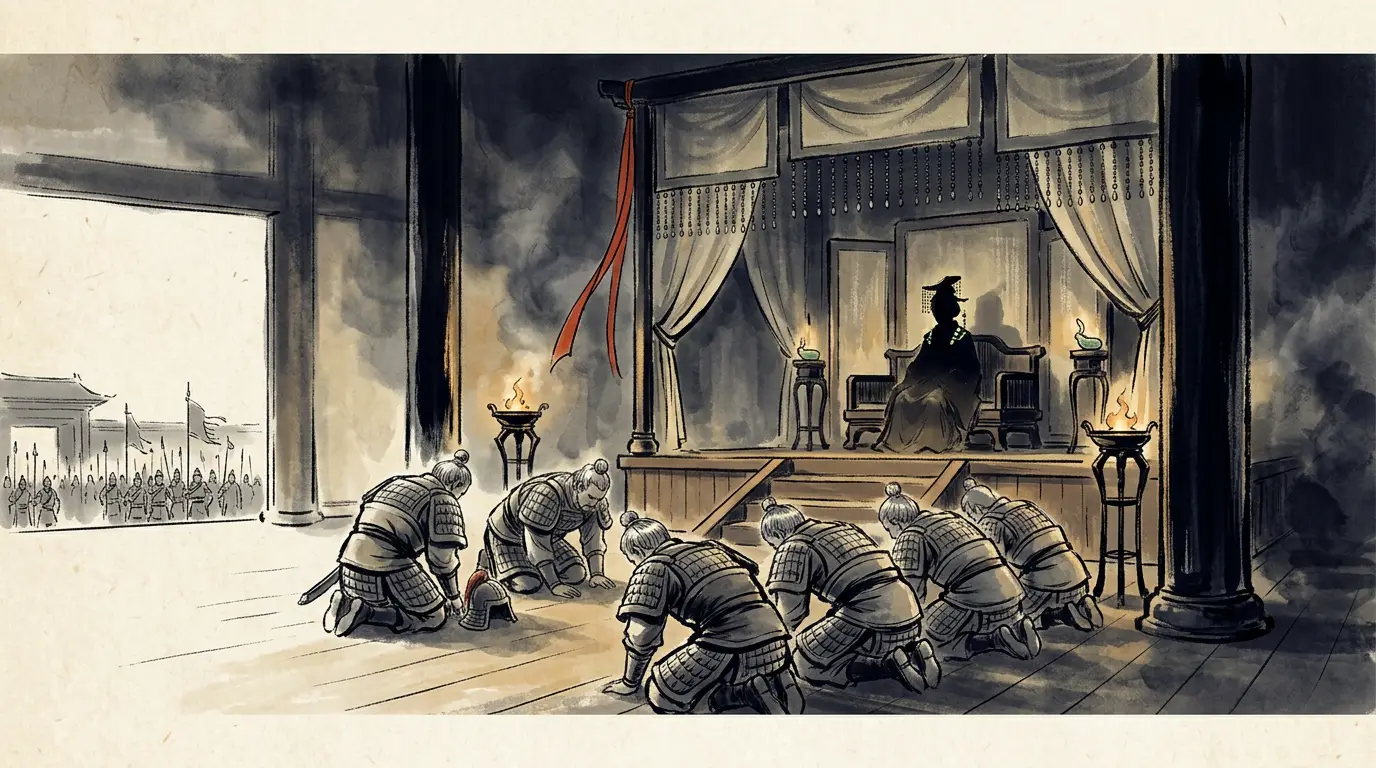
King of Han on the frontier, and not the marquis with the same name. Besieged at Mayi, scolded by his own court for treating for peace, he handed the town to the Xiongnu and gave the emperor the war he was caught in. He died leading Xiongnu cavalry five years later.
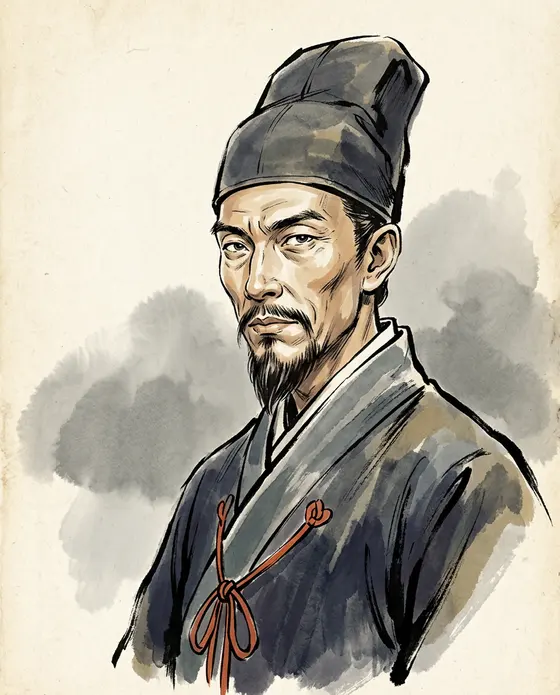
Portrait of Chen Ping
Chen Ping陳平
d. 178 BCE
The emperor's planter of stratagems, ennobled six times for counsels the record says were kept too secret to be heard. At Baideng what it will let him say is an order of march: crossbows strung, two arrows nocked to the outside, and walk.
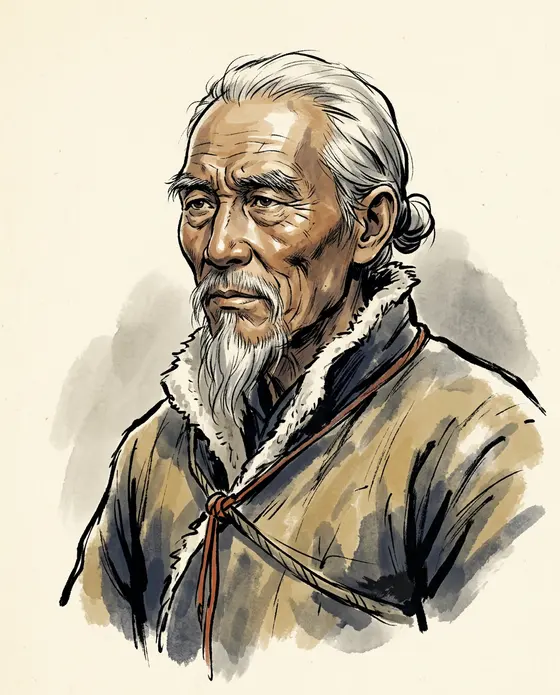
Portrait of Liu Jing
Liu Jing劉敬
fl. 202–198 BCE
A conscript from Qi in a sheepskin coat who argued the court into camping the capital inside the pass, then reported that the Xiongnu could not be attacked and was chained for it. Released with a marquisate of two thousand households, he wrote the marriage-tribute agreement and proposed moving over a hundred thousand people into the Wei valley.
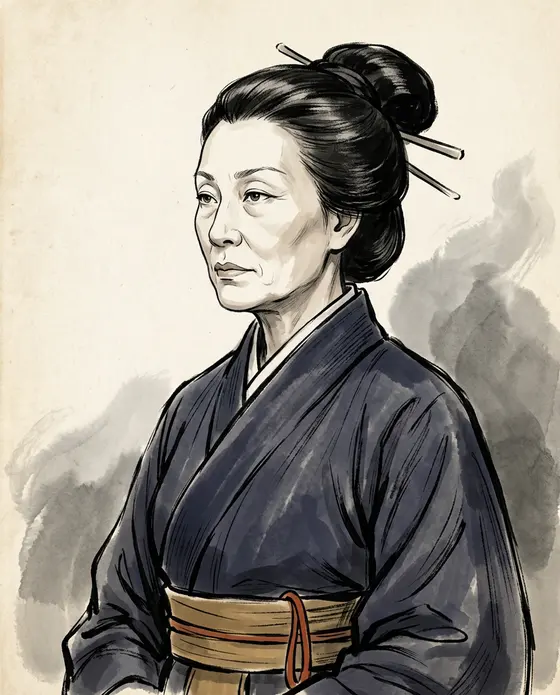
Portrait of Empress Lu
d. 180 BCE
Wife of the founder, mother of the heir and of one daughter, and the power in the court after 195 BCE. The bargain on the table needed that daughter. She wept day and night, and the girl who went north was somebody else.

Myth Check

The Ming romances of the Han dynasties, the stage plays drawn from them and the serials drawn from those are entertainment — and not a source. Where their famous scenes depart from the histories, we leave them out of the story and put them here.

The story you may know

A Han bride for the Chanyu was chosen from a portrait, and lost her face — and her marriage — because she would not bribe the painter.

What the sources say

That story is in the Xijing zaji, a Jin-dynasty anecdote collection, where the painter Mao Yanshou and his colleagues are executed for it. It belongs to 33 BCE, not to this bargain, and the Hanshu's own sentence has no painter in it: the emperor gave a palace lady of good family, Wang Qiang, courtesy name Zhaojun, to the Chanyu who asked for a Han marriage. And in 200 BCE nobody of the emperor's blood went at all.

Xijing zaji (anecdote collection, tier D); against Hanshu, juan 94b, Memoir of the Xiongnu
The story you may know

Chen Ping broke the encirclement with a marvel — a painter's picture of Han beauty, sent to make the Chanyu's wife jealous.

What the sources say

The Shiji credits him with a marvellous device and then says the plan was kept so secret that the age never heard of it; the Hanshu's annal has the same thing as a secret plan. The jealous-beauty version is a guess made four centuries later by Huan Tan, in a lost essay collection quoted by commentators. What the records will actually show is a bribe carried through the lines, a rendezvous the Han defectors failed to keep, a fog, and a march-order: crossbows strung, two arrows nocked outward, walk.

Huan Tan, Xinlun (1st c. CE), lost and quoted in later commentary; against Shiji, juan 56, 93 and 110
The story you may know

The heqin marriage made the Xiongnu subordinate to Han, and the annual deliveries were tribute paid by a subject people.

What the sources say

The two courts were written as equals in the same documents. The pact is a sworn brotherhood, and the Xiongnu chancery answered in its own style: the great Chanyu of the Xiongnu, set up by Heaven, respectfully inquires after the Emperor's welfare. When the court debated whether to fight after the Xiongnu had destroyed the Yuezhi, its ministers conceded the same premise from the other side: the land is salt marsh, it cannot be lived on, and the marriage is the cheaper option.

Shiji, juan 110; Hanshu, juan 94a
The story you may know

An emperor's own daughter was sacrificed to the steppe to save the dynasty.

What the sources say

The record says the opposite, twice, and blames no one grandly. Liu Jing had warned that a substitute would not be honoured; the emperor agreed, the empress dowager wept, and the book's sentence is blunt — the emperor could not send the Eldest Princess. A girl of the palace households was named in her place; the Hanshu calls her a daughter of the imperial clan of the second rank. She is unnamed in every one of these books.

Shiji, juan 99; Hanshu, juan 94a
The story you may know

After Baideng the Han abandoned the north and hid behind its wall.

What the sources say

The settlements of the period are the opposite of a withdrawal. The same adviser who wrote the marriage pact had the old royal houses and the powerful families of the east moved into the Wei valley — the record gives over a hundred thousand people — on the stated ground that the Ordos peoples were seven hundred li from the capital; the frontier markets stayed open under the treaty; and a later memorial against dismantling the outposts quotes border elders saying that the Xiongnu, since losing the Yin mountains, had never passed them without weeping.

Shiji, juan 99; Shiji, juan 110; Hanshu, juan 94b

Sources

Every caption and quotation in this episode traces to one of these. Where scholars disagree, the panel says so.

Next

The frontier was bought rather than won, and the men who had been given kingdoms to govern were next: Episode 3 · Cut Back the Fiefs (Wu, Liang and Chang'an, 154 BCE). The vassal kingdoms were the other half of the bill. Or back to the Han line, or meet the cast.