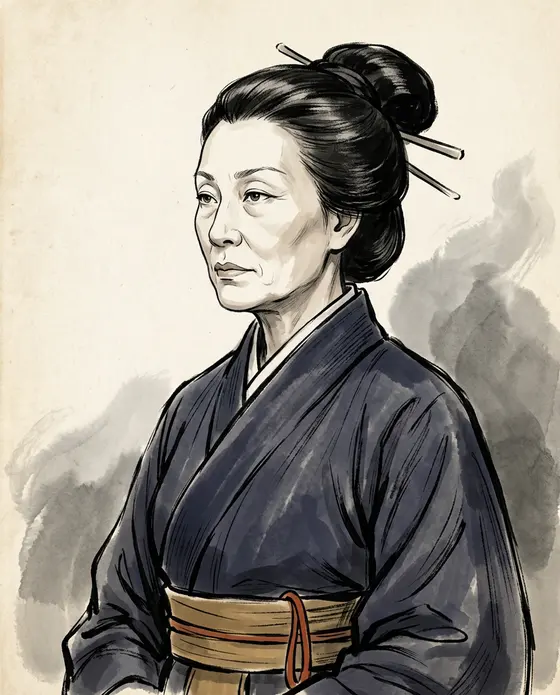
Wife of the founder, mother of the heir and of one daughter, and the power in the court after 195 BCE. The bargain on the table needed that daughter. She wept day and night, and the girl who went north was somebody else.
I have the heir and one daughter. Why must she be thrown away among the Xiongnu?Empress Lu when the marriage-tribute bargain was put to the court after Baideng; Shiji, juan 99, Memoir of Liu Jing and Shusun Tong (Hanshu, juan 94a)
Appears in
Relations
- Liu Bang husband — She was his wife and the mother of his heir and of the family's one girl; the record has her weep at him once over the marriage and he did not press the matter.
- Modu enemies — He was offered a princess of the blood as the price of the frontier; the girl who went north was somebody else, and two decades later his letter to her was thought an insult.
- Liu Jing colleagues — The settlement he drafted needed her only daughter to work, and he had warned in advance that a substitute would be found out and not honoured.
Myth vs record
A monster of the inner chambers: the woman who made her rival a human swine, poisoned her own son, and ruled a terror-state that the histories exist to denounce.
The swine is in the official history, not the playhouse: Shiji, juan 9 — the annals of the years she ruled — records Lady Qi's hands and feet cut off, her eyes put out, her ears burnt through and medicine forced on her to take her speech, and then the dump into the latrine. The murder of Emperor Hui is not in it: the book has him break at the sight of her, drink every day, stop attending to government and die in his seventh year at twenty-three. And Sima Qian's arrangement is structural rather than moral — he set a woman's regency in the Basic Annals and closed it saying that in those years the government did not issue from the bedchamber doors, punishments were seldom used, and the people got on with their farming. On the marriage she won the argument she is quoted with here: the Eldest Princess did not go (juan 99; Hanshu, juan 94a).