Bamboo Scroll竹簡 Ep. 11 · The Gate and the Trackless Road
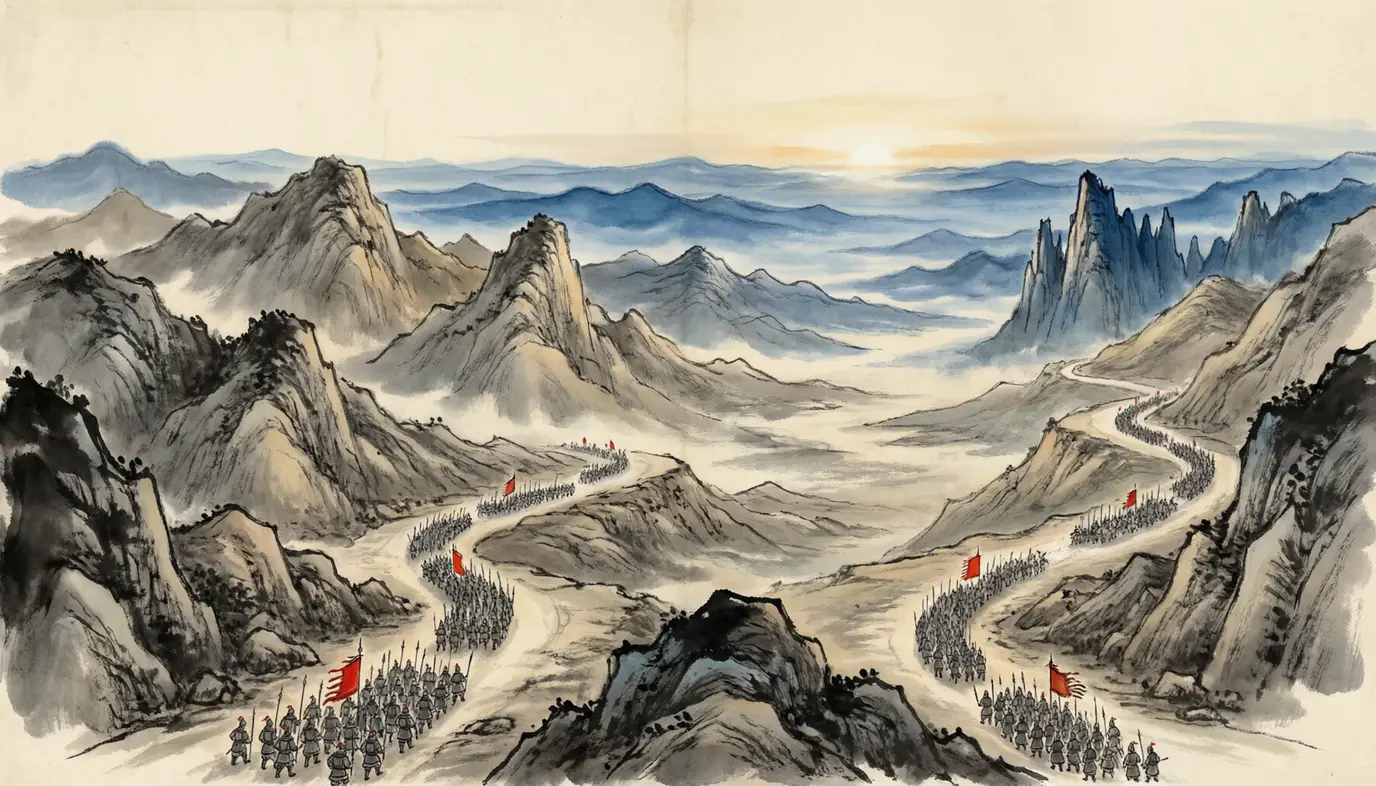
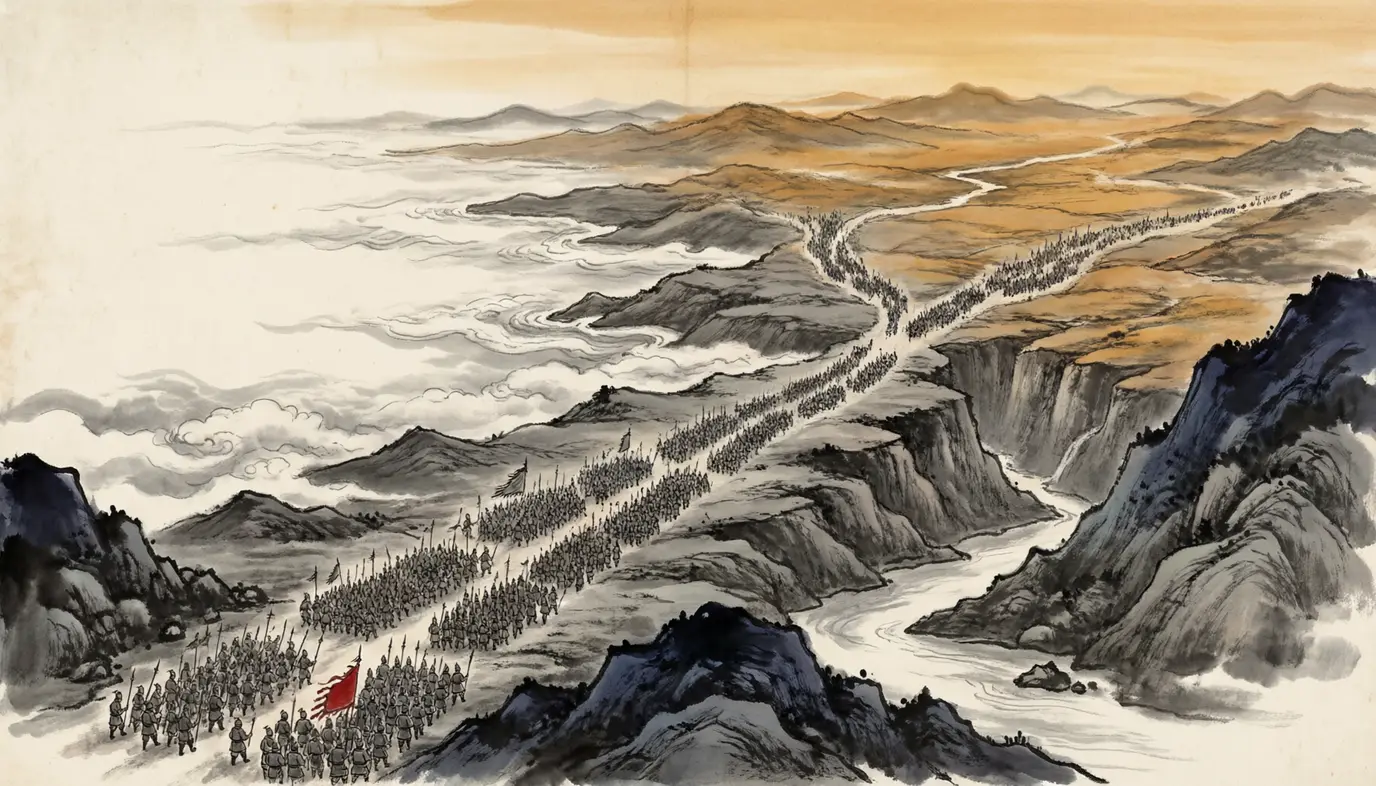
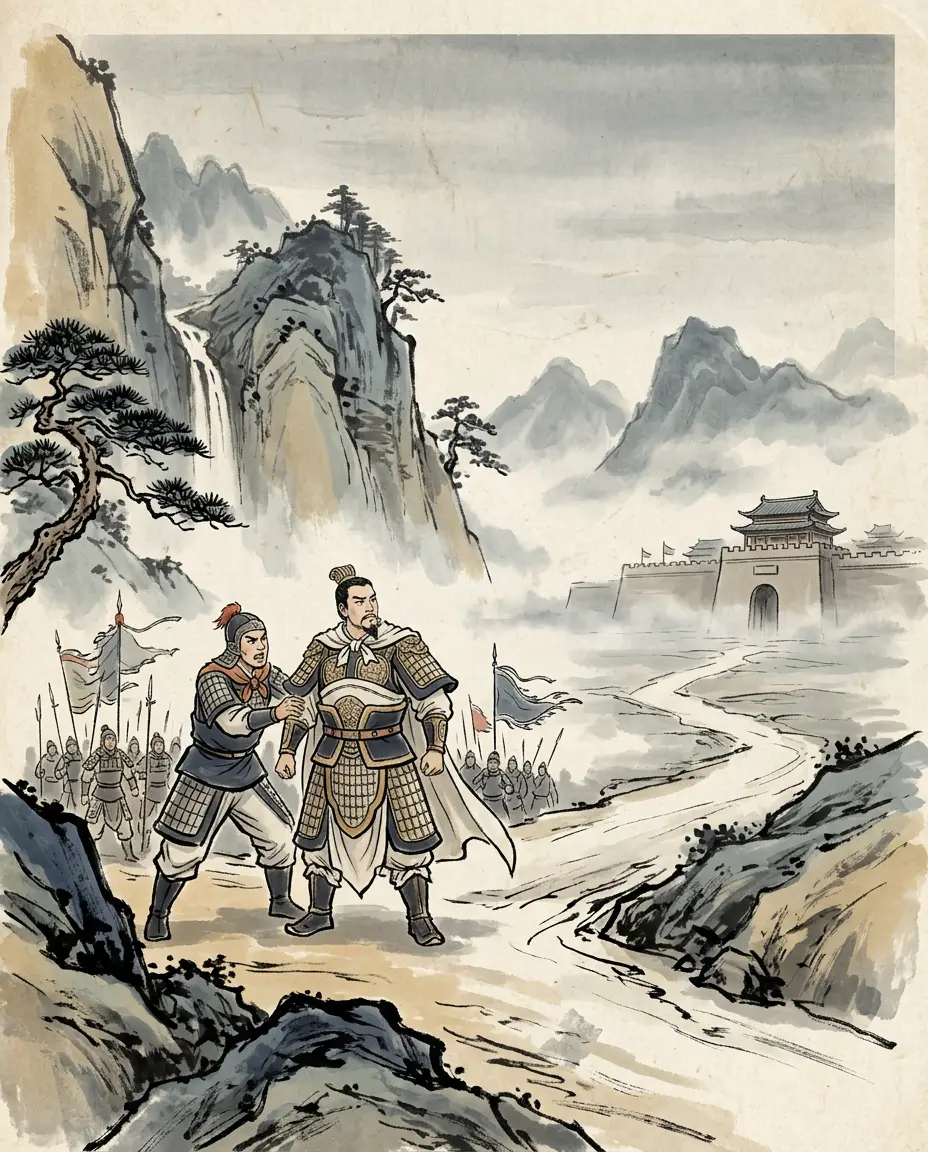
At dawn three columns of tiny Wei soldiers with banners descend separate winding mountain roads toward the mist-filled valleys of Shu, 263 CE
Bamboo Scroll · Three Kingdoms · Episode 11

The Gate and the Trackless Road

Chengdu, 263 CE — In the autumn of 263 three armies came down on the mountain kingdom of Shu-Han: one was stopped at a gate of sword-point cliffs, one vanished into seven hundred li of trackless mountains — and what came out on the other side ended a kingdom.
16 panels~6 min read free to readevery line sourced
Panel 01: Autumn, 263 CE. Shu-Han, the kingdom Liu Bei won and Zhuge Liang held, had stood behind its mountains for forty years. That autumn the master of the north sent three armies against it. One would be stopped at a gate of sword-point cliffs; one would vanish into seven hundred li of trackless mountains; and what came out on the other side would end the kingdom.
Autumn, 263 CE. Shu-Han, the kingdom Liu Bei won and Zhuge Liang held, had stood behind its mountains for forty years. That autumn the master of the north sent three armies against it. One would be stopped at a gate of sword-point cliffs; one would vanish into seven hundred li of trackless mountains; and what came out on the other side would end the kingdom.
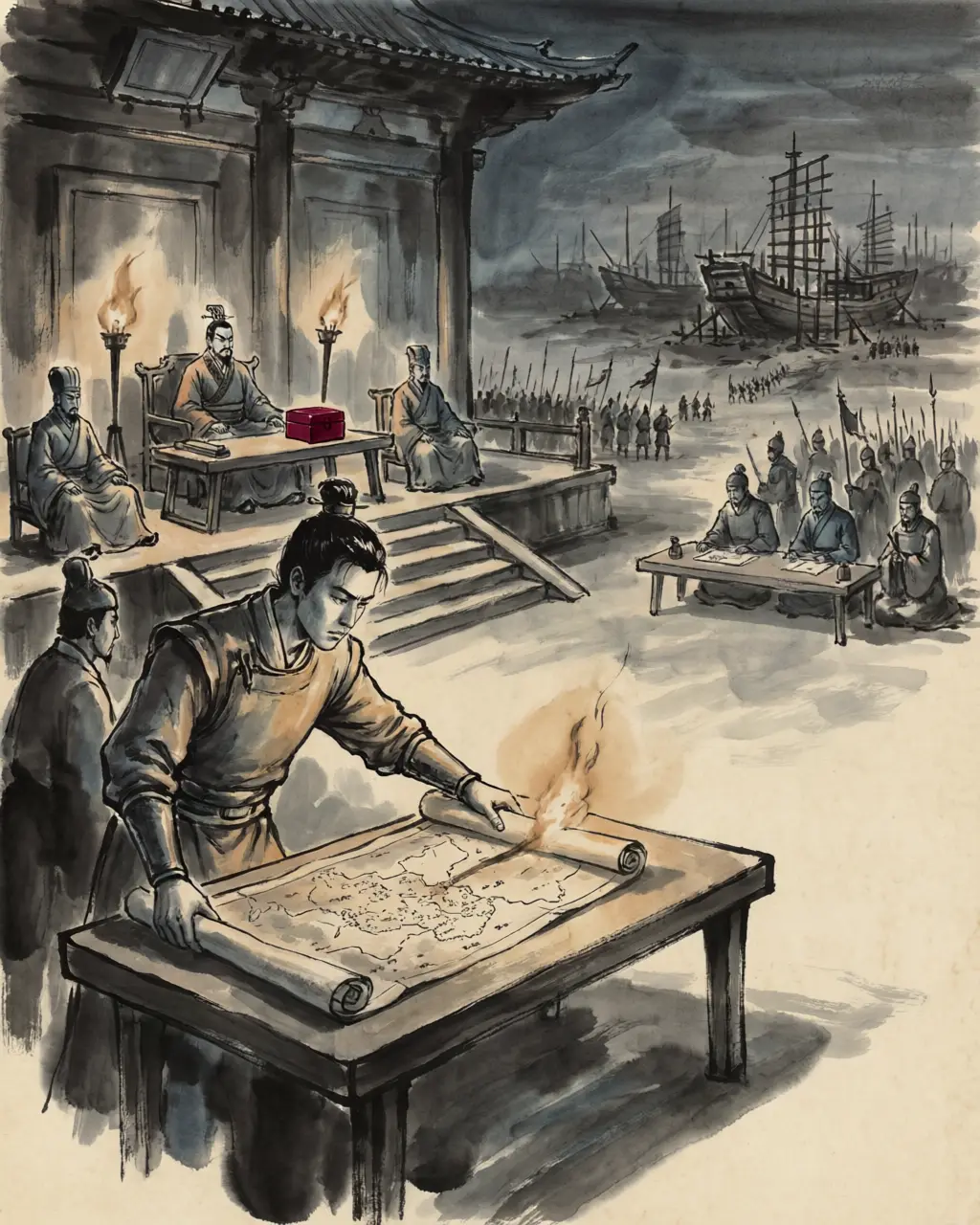
Panel 02: The war was made at Luoyang by the man who held the Wei court, Sima Zhao, and the man who wanted it, Zhong Hui. To keep Wu quiet and Shu blind, ships were built on the eastern rivers as if for a southern invasion; then, in the autumn of 263, the edict went out — west and south, into the mountains.
The war was made at Luoyang by the man who held the Wei court, Sima Zhao, and the man who wanted it, Zhong Hui. To keep Wu quiet and Shu blind, ships were built on the eastern rivers as if for a southern invasion; then, in the autumn of 263, the edict went out — west and south, into the mountains.
Panel 03: Three roads, one kingdom. Zhong Hui with rather more than a hundred thousand came down from Xiegu and Luogu toward Hanzhong, the main blade. Deng Ai with thirty thousand and more went to pin Jiang Wei down at Gan Song and Tazhong. Zhuge Xu with thirty thousand more went to close the door behind him at Wujie and Qiaotou.
Three roads, one kingdom. Zhong Hui with rather more than a hundred thousand came down from Xiegu and Luogu toward Hanzhong, the main blade. Deng Ai with thirty thousand and more went to pin Jiang Wei down at Gan Song and Tazhong. Zhuge Xu with thirty thousand more went to close the door behind him at Wujie and Qiaotou.
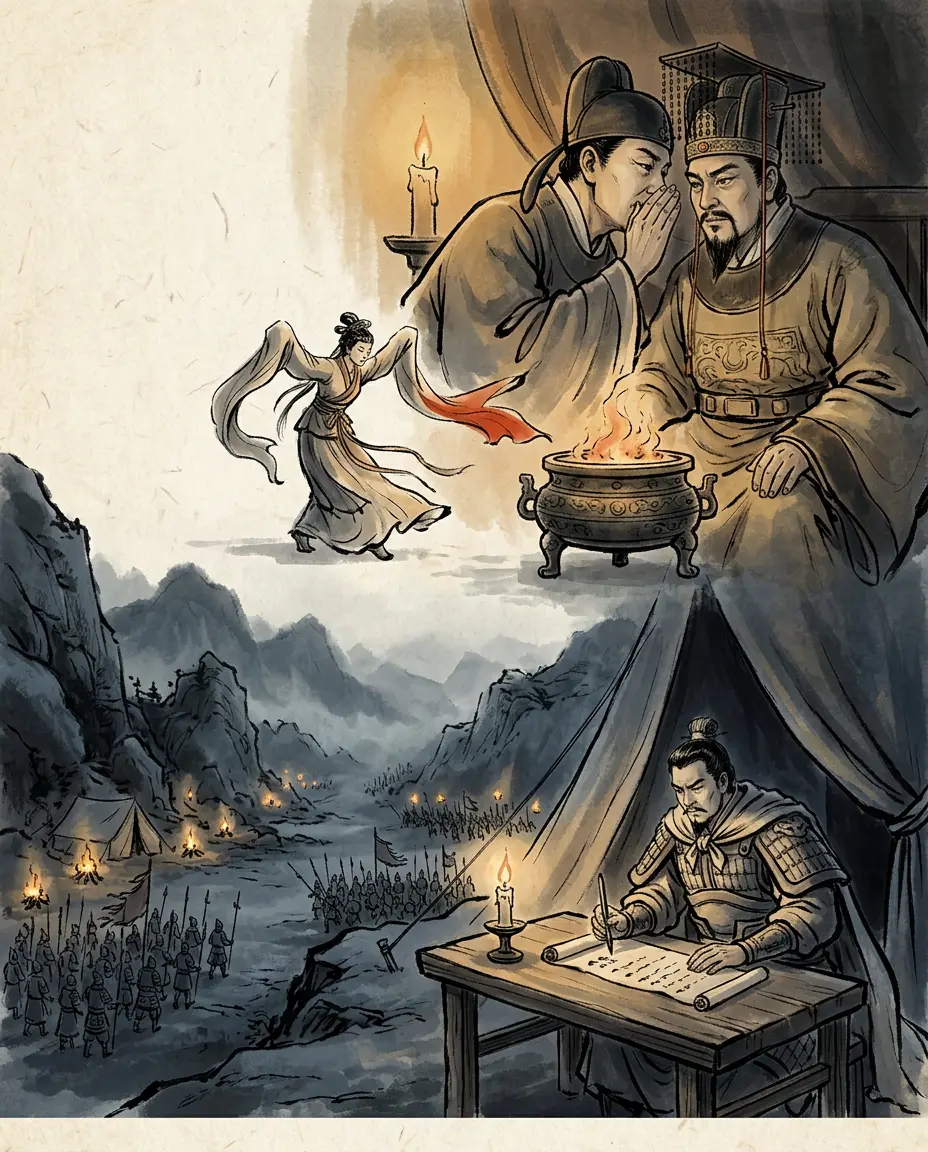
Panel 04: Jiang Wei had seen the storm coming. From his western camp he sent word to Chengdu: send Liao Hua and Zhang Yi to hold Yang'an Pass and the bridgehead at Yinping before the enemy arrives. The eunuch Huang Hao trusted his shamans, who said the enemy would never come; the memorial was shelved, and the court never knew.
Jiang Wei had seen the storm coming. From his western camp he sent word to Chengdu: send Liao Hua and Zhang Yi to hold Yang'an Pass and the bridgehead at Yinping before the enemy arrives. The eunuch Huang Hao trusted his shamans, who said the enemy would never come; the memorial was shelved, and the court never knew.
Panel 05: Jiang Wei abandoned Tazhong and marched east with Zhuge Xu closing at Qiaotou to cut him off. Jiang Wei turned as if to strike into Xu's own rear; Xu hesitated and drew back, and in the space of that day Jiang Wei was through and away toward Jiange. Zhong Hui had Zhuge Xu sent home in a prisoner's cart for not closing the door, and took his army.
Jiang Wei abandoned Tazhong and marched east with Zhuge Xu closing at Qiaotou to cut him off. Jiang Wei turned as if to strike into Xu's own rear; Xu hesitated and drew back, and in the space of that day Jiang Wei was through and away toward Jiange. Zhong Hui had Zhuge Xu sent home in a prisoner's cart for not closing the door, and took his army.
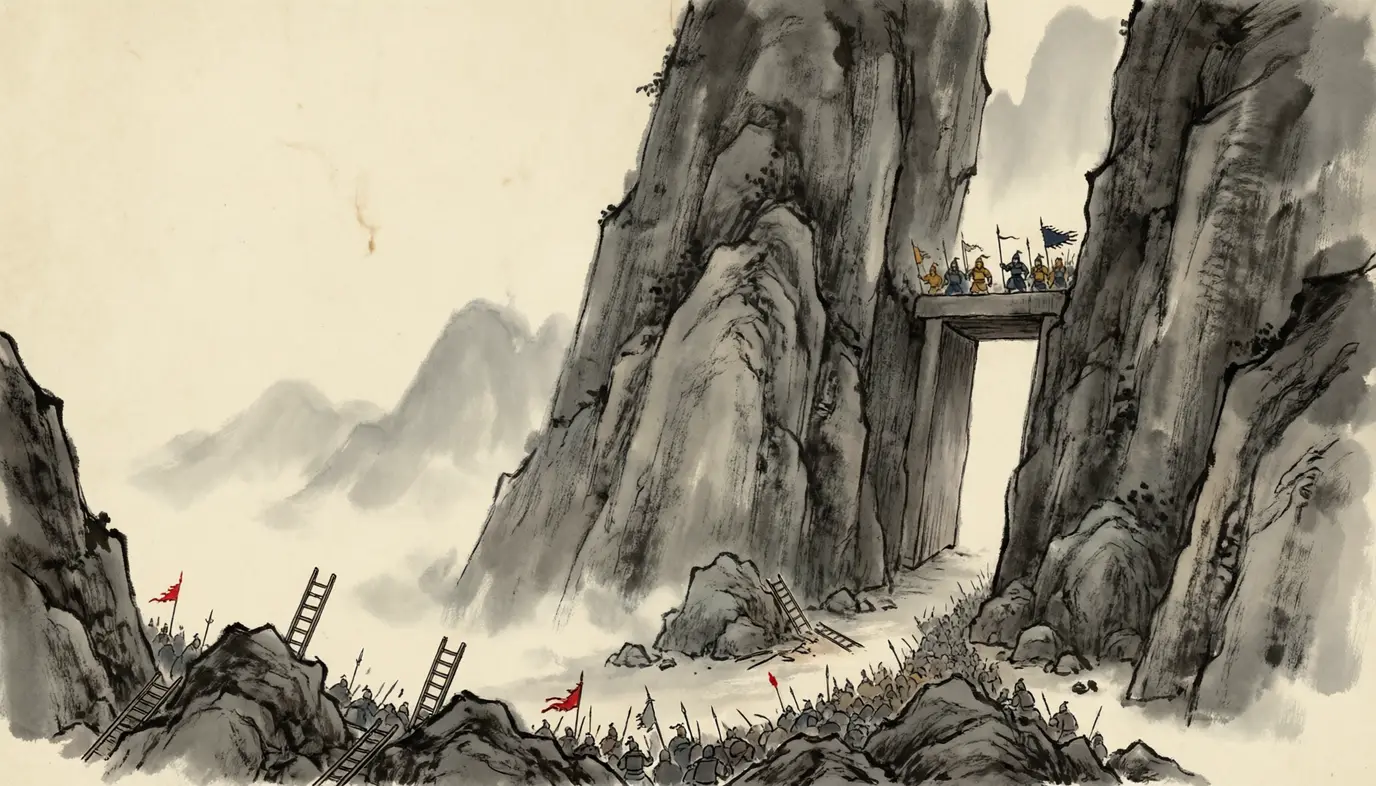
Panel 06: Zhong Hui broke into the Hanzhong basin — Yang'an Pass opened by a turncoat's surrender, Fu Qian fighting to the death at his post — and came to Jiange, the gate of sword-point cliffs on the road to Chengdu. Jiang Wei was there, inside it. A hundred thousand men could not move him; the northern army's grain grew thin, and Zhong Hui began to speak of turning home.
Zhong Hui broke into the Hanzhong basin — Yang'an Pass opened by a turncoat's surrender, Fu Qian fighting to the death at his post — and came to Jiange, the gate of sword-point cliffs on the road to Chengdu. Jiang Wei was there, inside it. A hundred thousand men could not move him; the northern army's grain grew thin, and Zhong Hui began to speak of turning home.
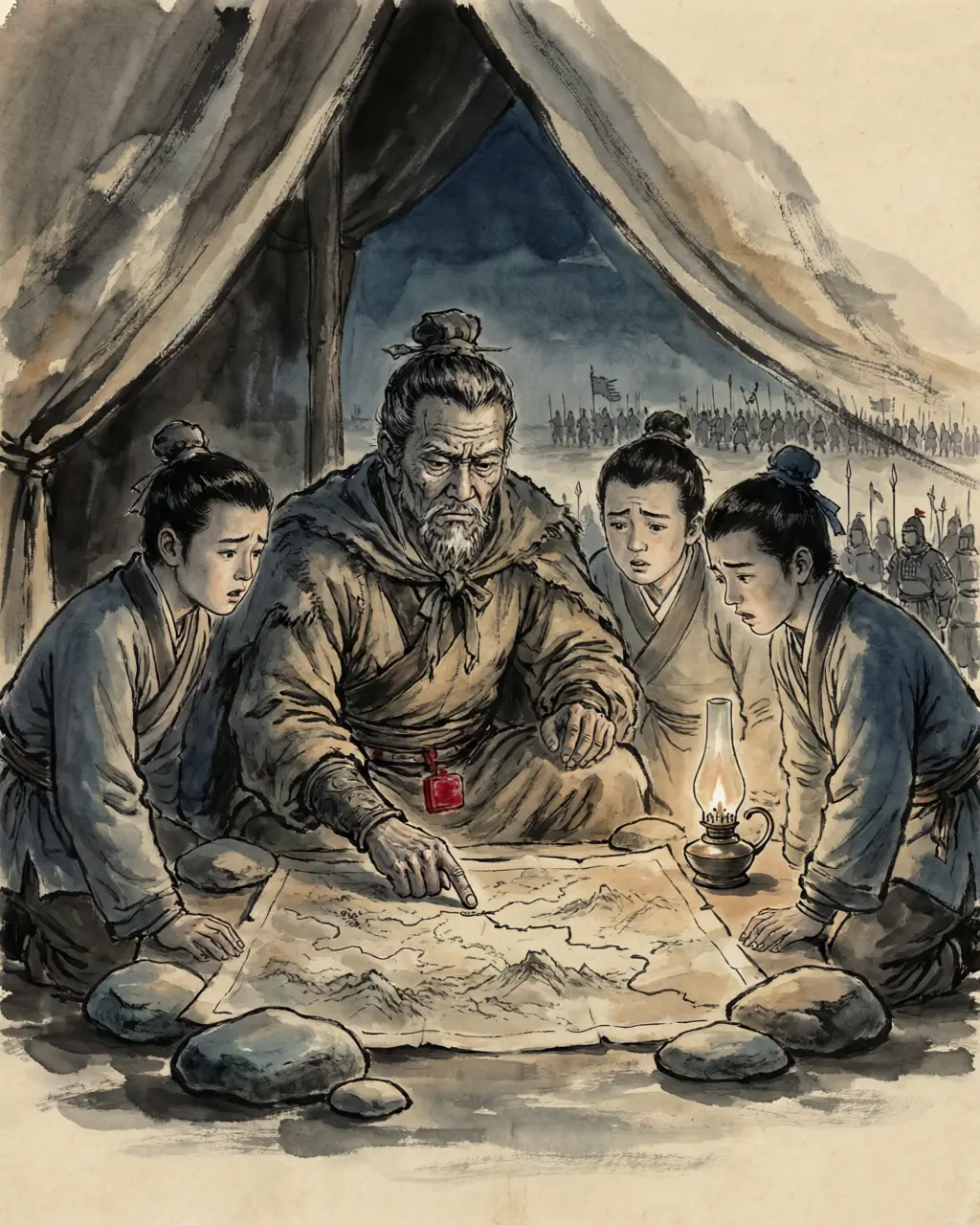
Panel 07: Then Deng Ai sent his plan in from the west: take the trailless road from Yinping, by way of Han Deyang Pavilion, straight to Fu County — west of Jiange, three hundred li from Chengdu, a dagger aimed at the heart. The garrison at Jiange must run back to save Fu, he wrote, and ended with the old soldier's rule: attack where there is no preparation, emerge where there is no expectation.
Then Deng Ai sent his plan in from the west: take the trailless road from Yinping, by way of Han Deyang Pavilion, straight to Fu County — west of Jiange, three hundred li from Chengdu, a dagger aimed at the heart. The garrison at Jiange must run back to save Fu, he wrote, and ended with the old soldier's rule: attack where there is no preparation, emerge where there is no expectation.
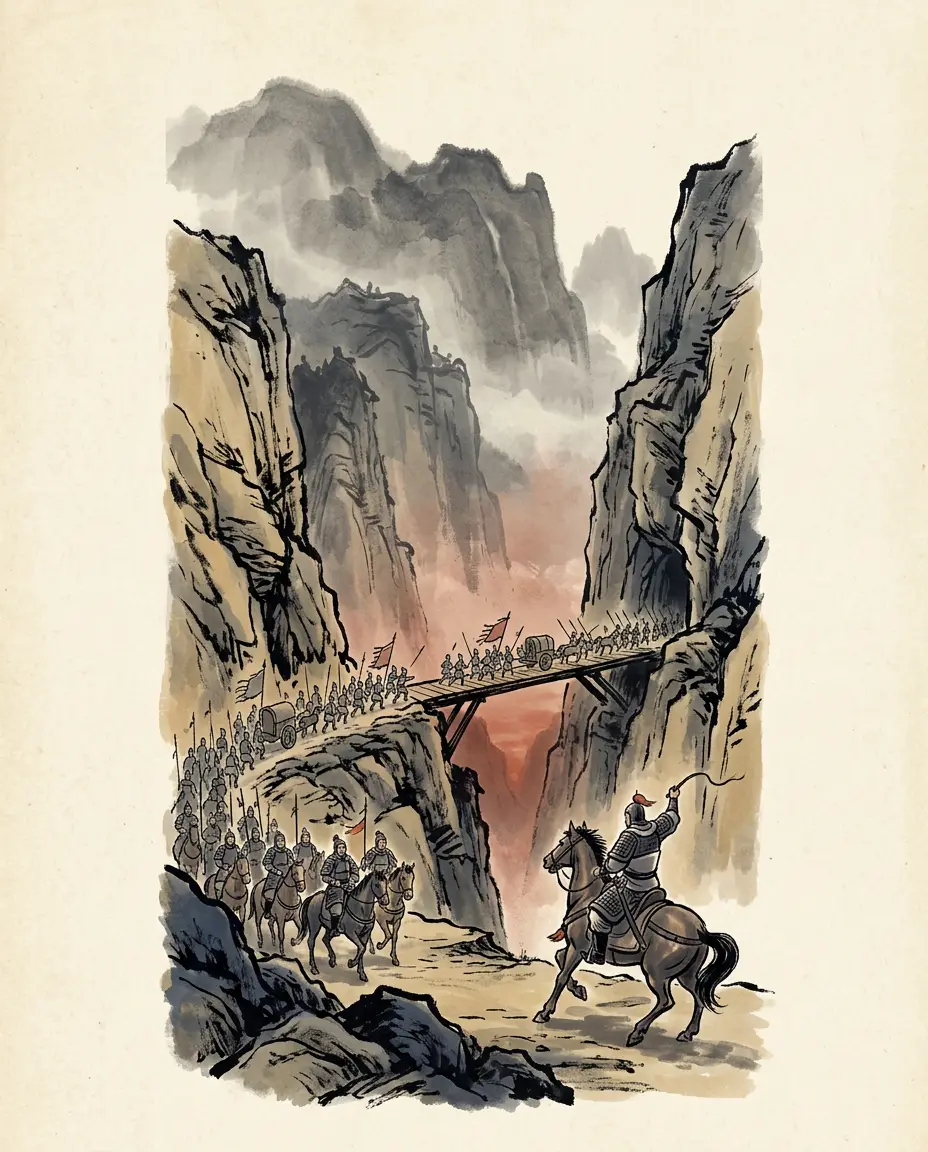
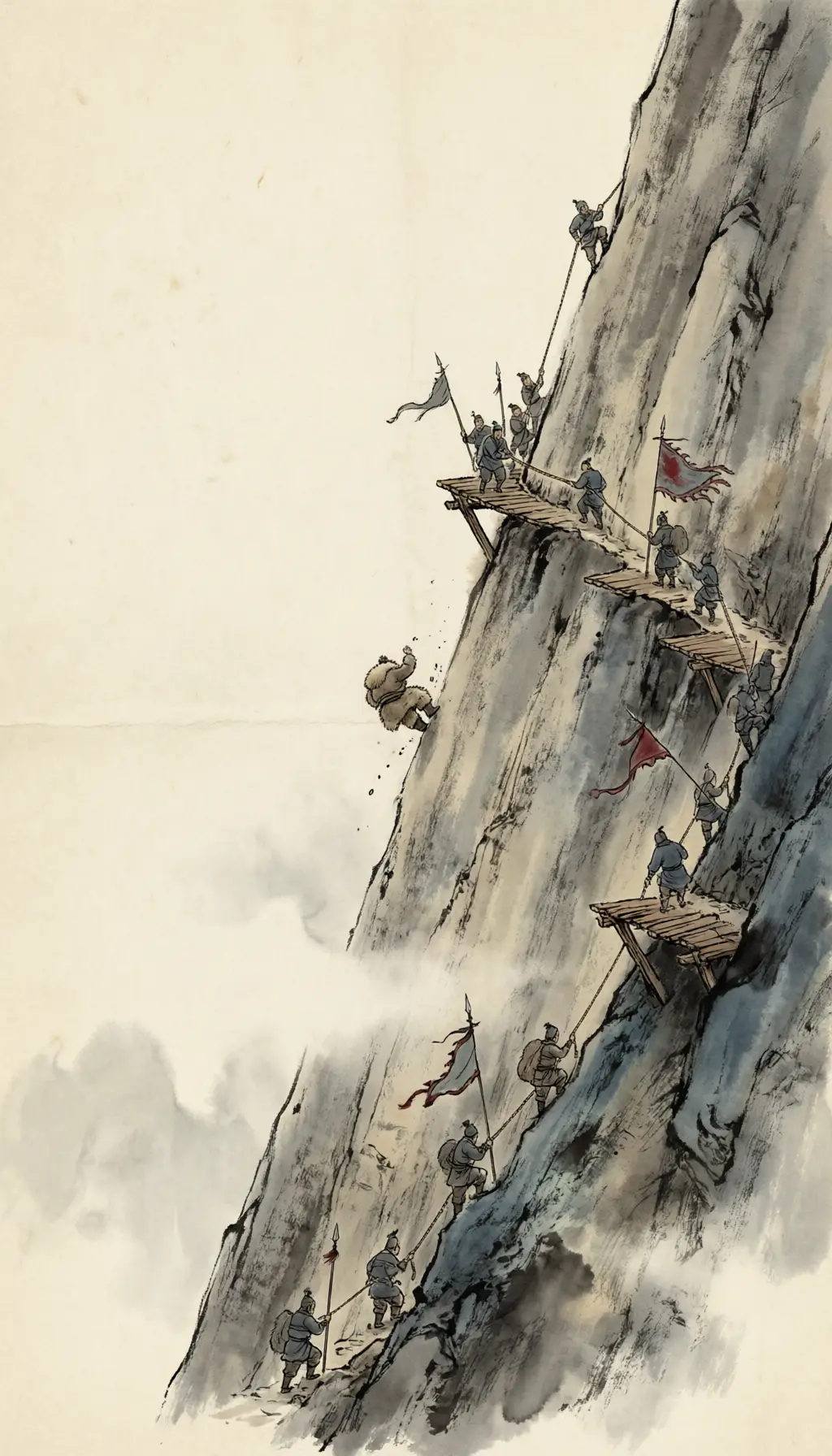
Panel 08: He took it himself. Seven hundred li of mountain with no road: they chiseled a path and hung plank galleries over the void, and still the grain failed and the army nearly broke. At the worst cliff Deng Ai wrapped himself in felt and rolled down; his soldiers climbed by tree and rock, each man following the one before.
He took it himself. Seven hundred li of mountain with no road: they chiseled a path and hung plank galleries over the void, and still the grain failed and the army nearly broke. At the worst cliff Deng Ai wrapped himself in felt and rolled down; his soldiers climbed by tree and rock, each man following the one before.
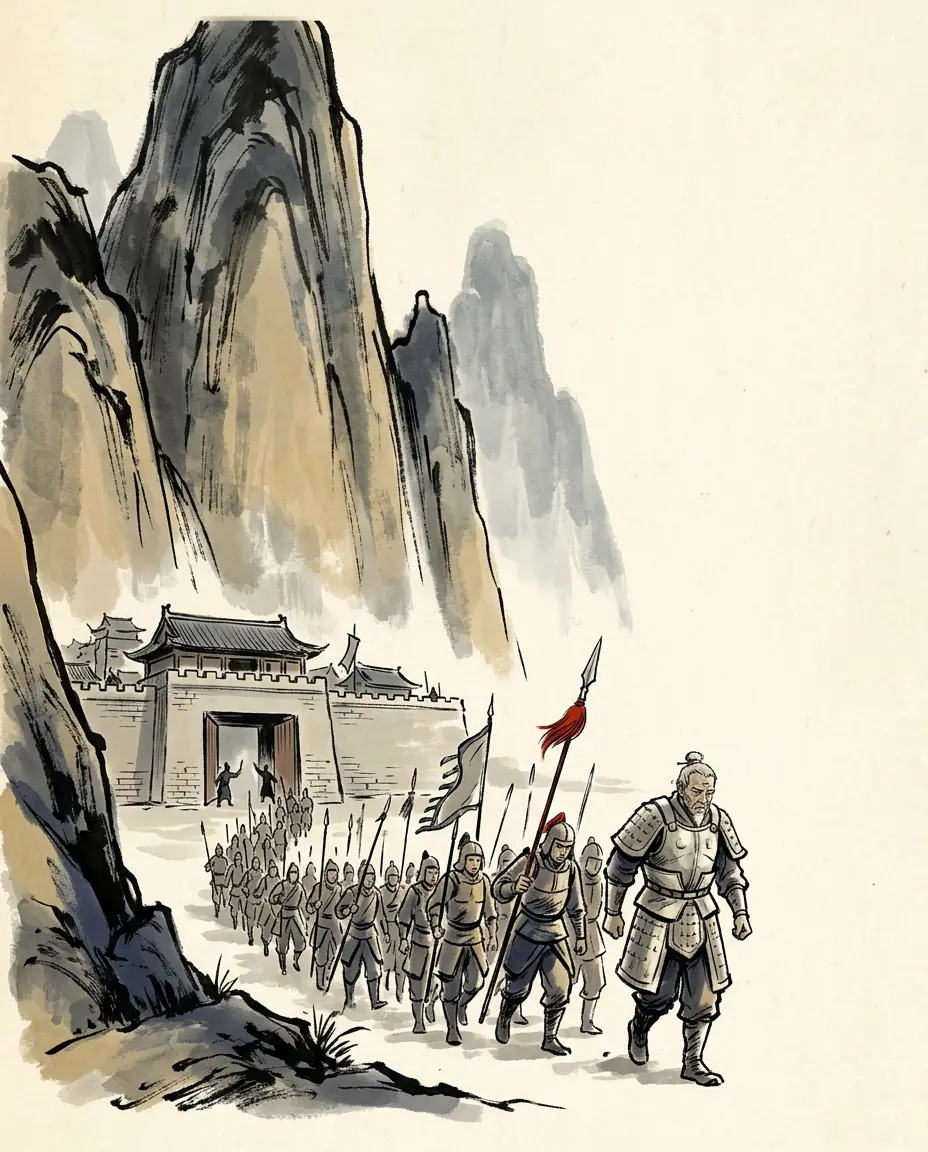
Panel 09: At the foot of the mountains lay the garrison town of Jiangyou. Its commander, Ma Miao, looked at the ragged army that had come out of nowhere, and opened his gates. The first defence of Shu's heartland surrendered without a battle; the mountain army took grain, a foothold, and a road.
At the foot of the mountains lay the garrison town of Jiangyou. Its commander, Ma Miao, looked at the ragged army that had come out of nowhere, and opened his gates. The first defence of Shu's heartland surrendered without a battle; the mountain army took grain, a foothold, and a road.
Panel 10: What Chengdu could still gather was given to Zhuge Zhan, Zhuge Liang's son: the last field army of Shu-Han. His officer Huang Chong urged him again and again to seize the defiles at speed and keep the enemy off the plain. Zhuge Zhan did not advance; the defiles were lost, and he drew back to the walled city of Mianzhu. Deng Ai wrote first, offering him the kingship of Langye if he surrendered; Zhuge Zhan killed the messenger.
What Chengdu could still gather was given to Zhuge Zhan, Zhuge Liang's son: the last field army of Shu-Han. His officer Huang Chong urged him again and again to seize the defiles at speed and keep the enemy off the plain. Zhuge Zhan did not advance; the defiles were lost, and he drew back to the walled city of Mianzhu. Deng Ai wrote first, offering him the kingship of Langye if he surrendered; Zhuge Zhan killed the messenger.
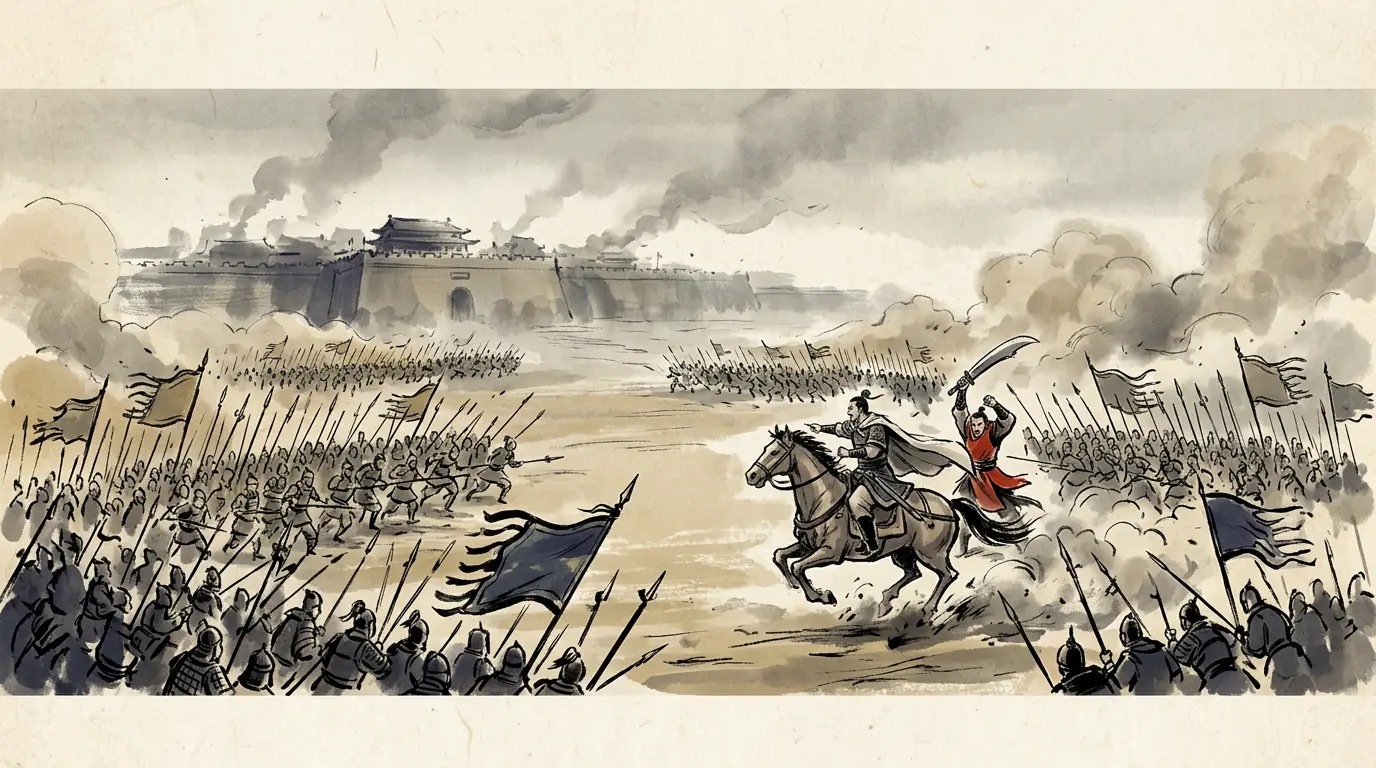
Panel 11: Deng Ai sent his son Deng Zhong against Zhuge Zhan's right and Sima Shi against the left. Both attacks broke and came back, and both reported the enemy could not be beaten. Deng Ai's answer was that life and death stood on this one battle, and if they turned back again he would take their heads. They turned again — and the line at Mianzhu broke.
Deng Ai sent his son Deng Zhong against Zhuge Zhan's right and Sima Shi against the left. Both attacks broke and came back, and both reported the enemy could not be beaten. Deng Ai's answer was that life and death stood on this one battle, and if they turned back again he would take their heads. They turned again — and the line at Mianzhu broke.
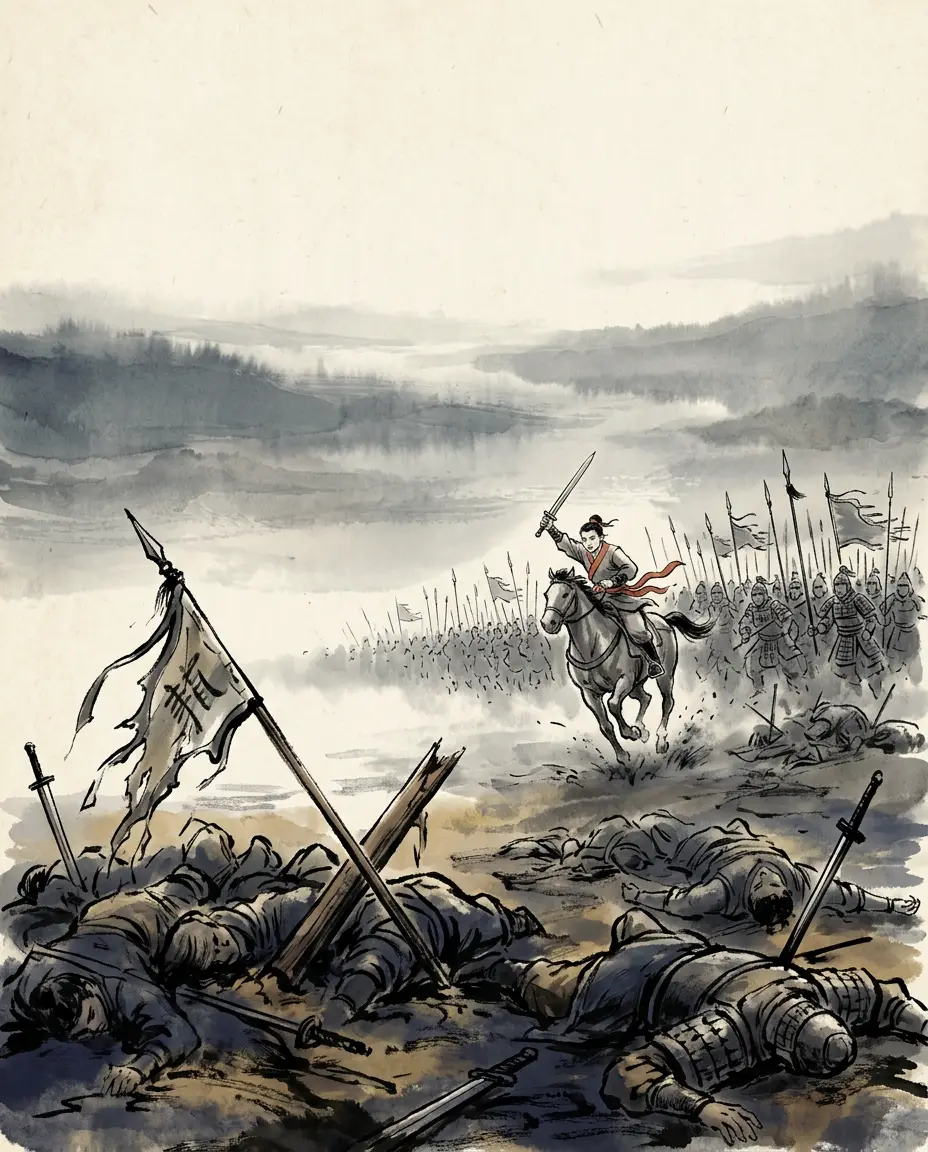
Panel 12: Zhuge Zhan died on the field, aged thirty-seven. His son Zhuge Shang said: father and son received the state's favour, and we did not cut down Huang Hao sooner — for what, then, should we live? — and rode his horse alone into the Wei ranks and died. Zhang Zun, grandson of Zhang Fei, and Huang Chong, son of Huang Quan, fell in the same battle. Mianzhu was the last battle of Shu-Han.
Zhuge Zhan died on the field, aged thirty-seven. His son Zhuge Shang said: father and son received the state's favour, and we did not cut down Huang Hao sooner — for what, then, should we live? — and rode his horse alone into the Wei ranks and died. Zhang Zun, grandson of Zhang Fei, and Huang Chong, son of Huang Quan, fell in the same battle. Mianzhu was the last battle of Shu-Han.
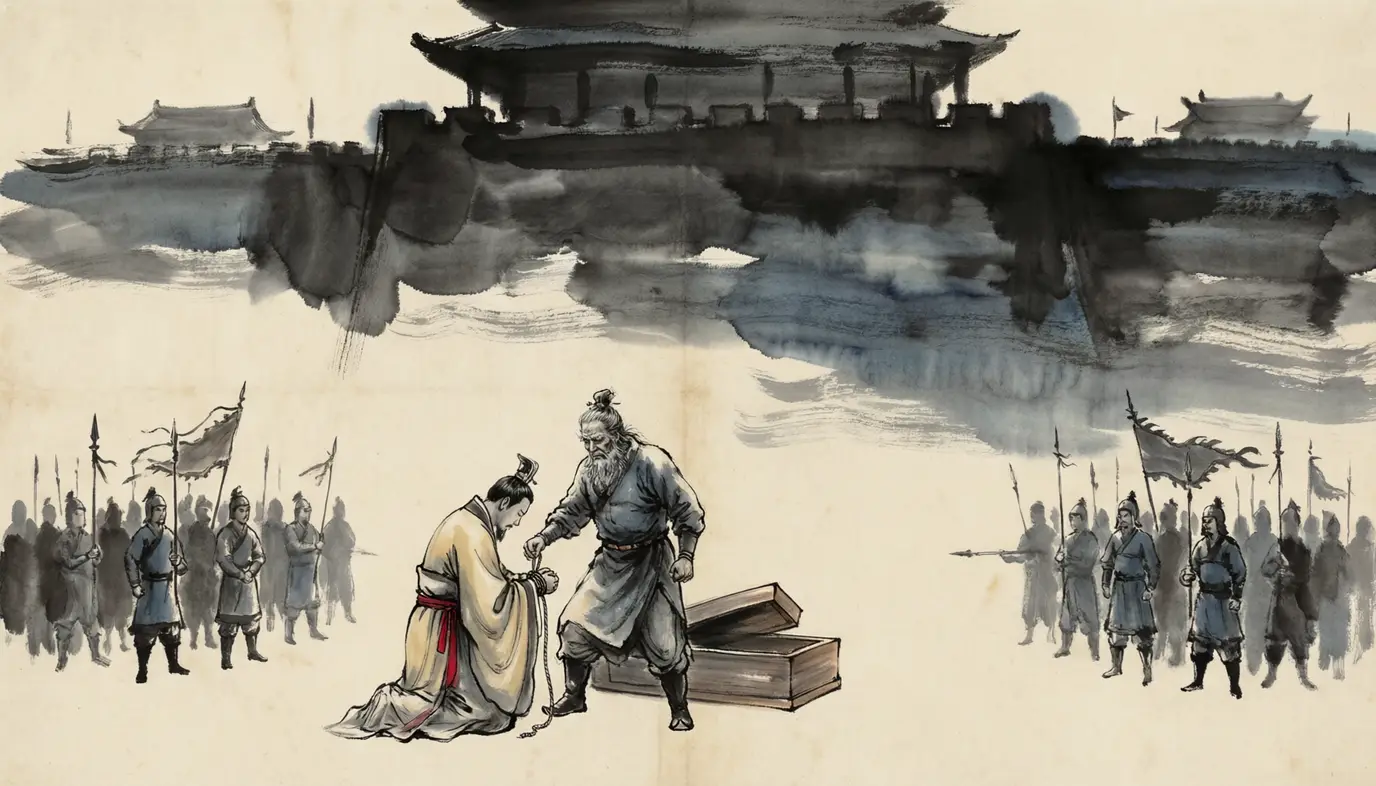
Panel 13: Chengdu still had walls and men, but no plan. Some urged flight to the south, some flight east to Wu; Qiao Zhou argued for surrender to Wei, and his argument carried. Liu Shan came out with a coffin and bound himself, and gave up the city north of the walls. Deng Ai loosed the bonds and burned the coffin, and received Chengdu.
Chengdu still had walls and men, but no plan. Some urged flight to the south, some flight east to Wu; Qiao Zhou argued for surrender to Wei, and his argument carried. Liu Shan came out with a coffin and bound himself, and gave up the city north of the walls. Deng Ai loosed the bonds and burned the coffin, and received Chengdu.
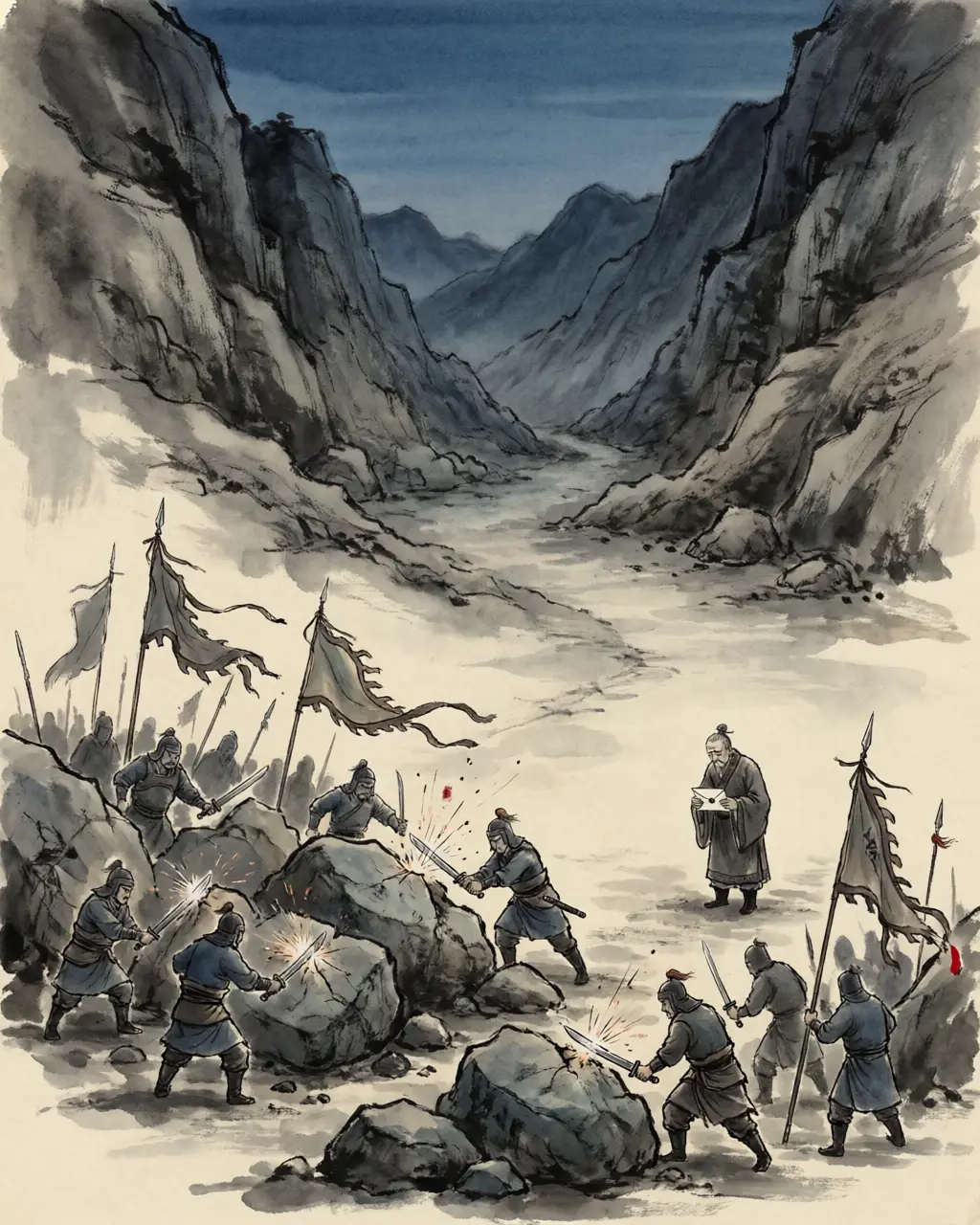
Panel 14: At Jiange, unbowed and undefeated, Jiang Wei received his own emperor's order to lay down his arms. His officers raged and drew their swords and hacked at stones. Jiang Wei went down to Zhong Hui at Fu County; Zhong Hui handed back seals and batons, gave him a seat in his own carriage, and said that among the famous men of the Central Plains this man had no better. Conqueror and conquered were already plotting together.
At Jiange, unbowed and undefeated, Jiang Wei received his own emperor's order to lay down his arms. His officers raged and drew their swords and hacked at stones. Jiang Wei went down to Zhong Hui at Fu County; Zhong Hui handed back seals and batons, gave him a seat in his own carriage, and said that among the famous men of the Central Plains this man had no better. Conqueror and conquered were already plotting together.
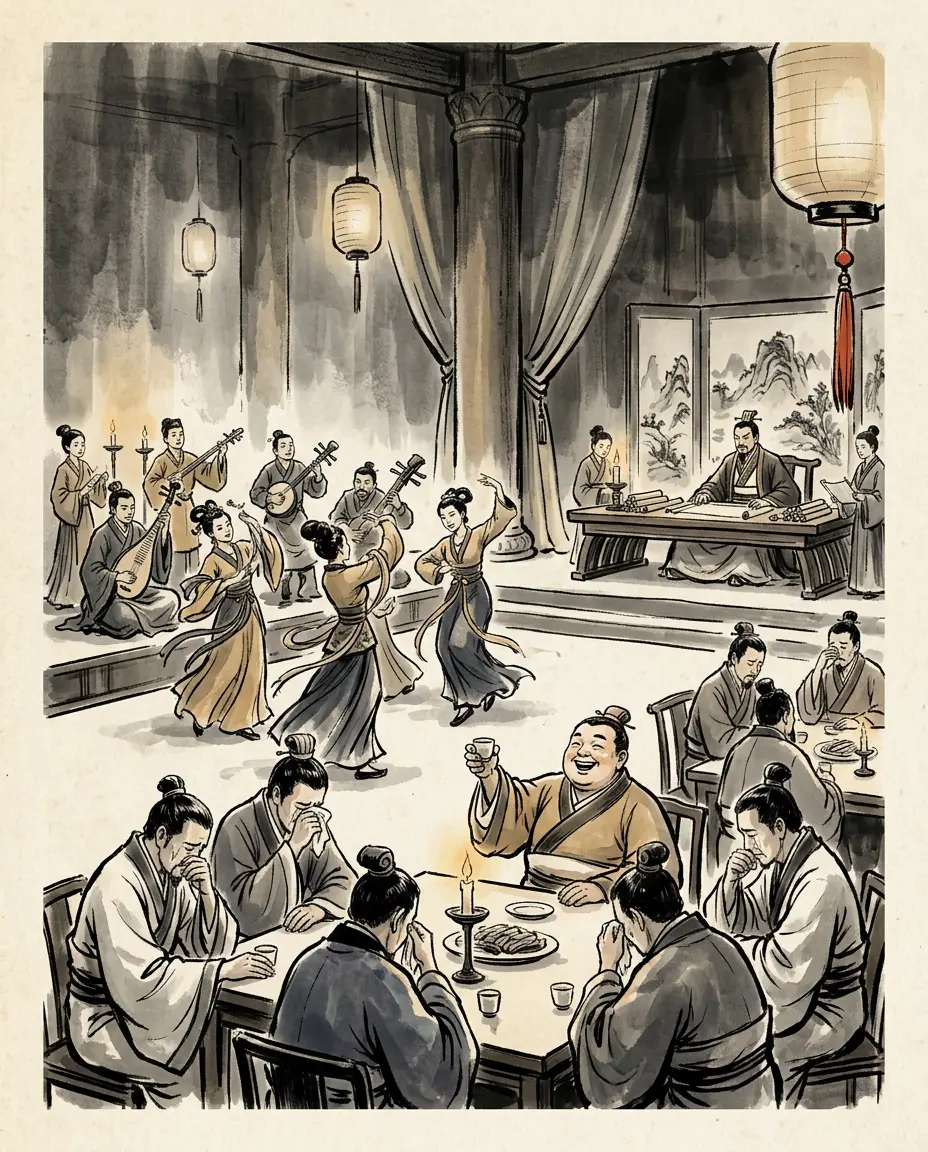
Panel 15: A year later, at a feast in Luoyang, Sima Zhao had the music and dancers of Shu performed. Every former Shu minister present was moved; Liu Shan laughed and drank as if nothing had happened. Asked whether he missed Shu, he answered: I am happy here; I do not miss Shu. Later, schooled by Xi Zheng, he tried grief, saying his fathers' graves lay in Shu; Sima Zhao saw through it at once, and Liu Shan owned the words were not his own — and the whole court laughed.
A year later, at a feast in Luoyang, Sima Zhao had the music and dancers of Shu performed. Every former Shu minister present was moved; Liu Shan laughed and drank as if nothing had happened. Asked whether he missed Shu, he answered: I am happy here; I do not miss Shu. Later, schooled by Xi Zheng, he tried grief, saying his fathers' graves lay in Shu; Sima Zhao saw through it at once, and Liu Shan owned the words were not his own — and the whole court laughed.
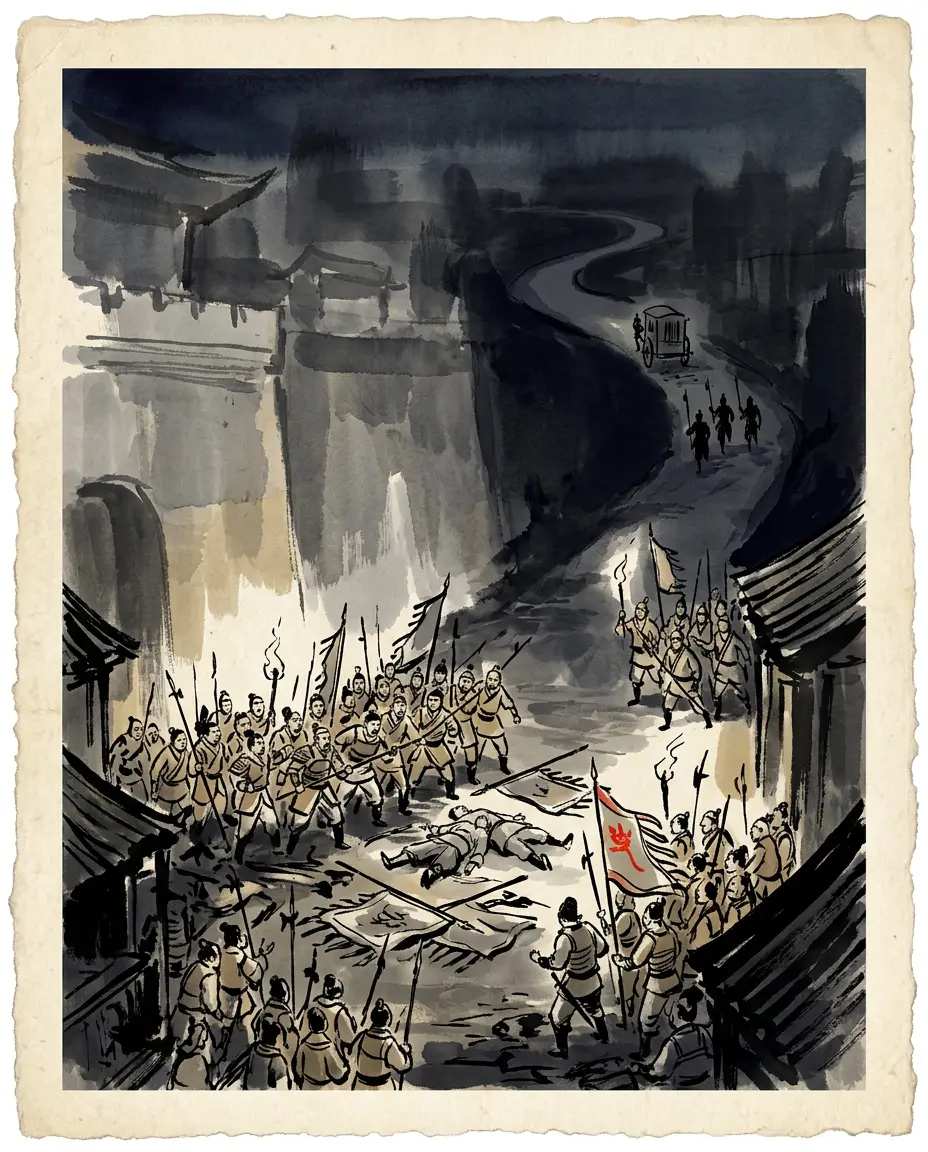
Panel 16: None of the three who were sent against Shu lived long after it. In the first month of 264 Zhong Hui raised his rebellion at Chengdu with Jiang Wei at his side; the soldiers mutinied, and both died in the streets. Deng Ai, already under arrest and on his way to Luoyang in a prisoner's cart, was overtaken and killed on the road. Shu-Han was gone; the men who killed it followed within months.
None of the three who were sent against Shu lived long after it. In the first month of 264 Zhong Hui raised his rebellion at Chengdu with Jiang Wei at his side; the soldiers mutinied, and both died in the streets. Deng Ai, already under arrest and on his way to Luoyang in a prisoner's cart, was overtaken and killed on the road. Shu-Han was gone; the men who killed it followed within months.

In this episode

The people who carried this year. The sources disagree about almost everything else.

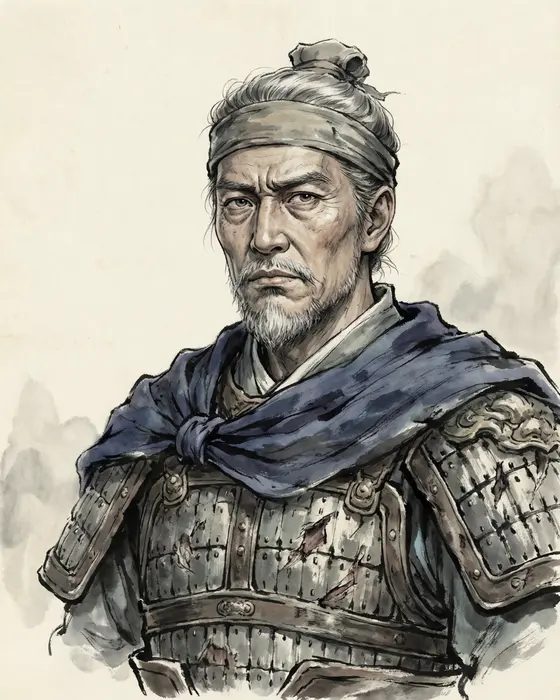
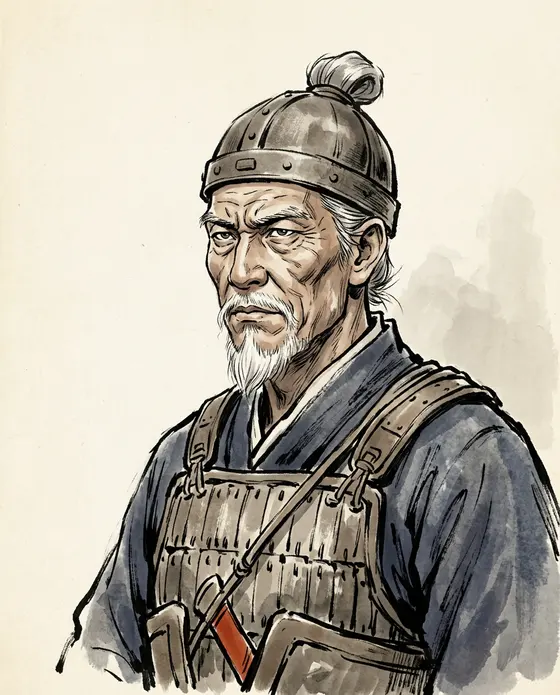
Portrait of Deng Ai
Deng Ai鄧艾
d. 264 CE
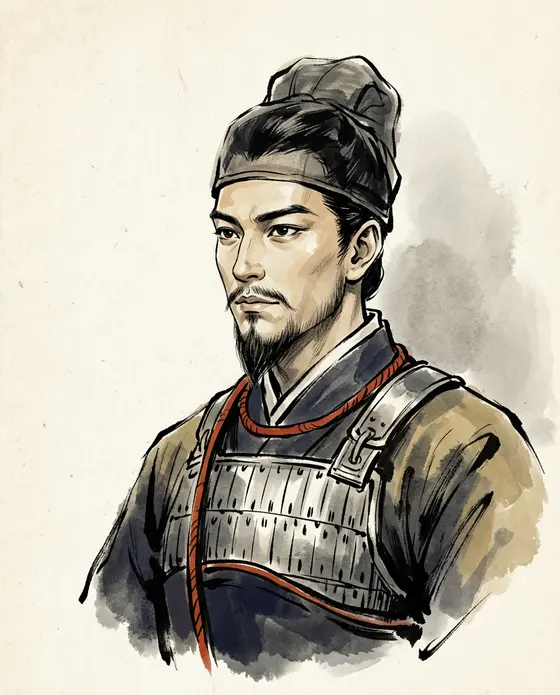
Frontier general who rose out of poverty. Held the western border against Jiang Wei for a decade, then took some thirty thousand men over seven hundred li of trackless mountains, broke Zhuge Zhan at Mianzhu, and received Chengdu's surrender. He was dead within months, killed in the aftermath of his own victory.
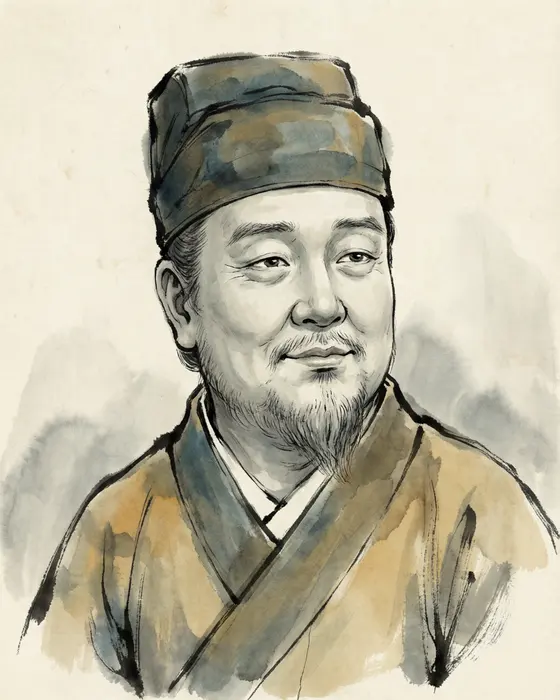
Portrait of Zhong Hui
Zhong Hui鍾會
225–264 CE
Son of the calligrapher Zhong You, and the man who planned the conquest of Shu. Led more than a hundred thousand to Jiange and could not pass it; watched Deng Ai win the war; then raised rebellion at Chengdu and died in the mutiny, aged forty.
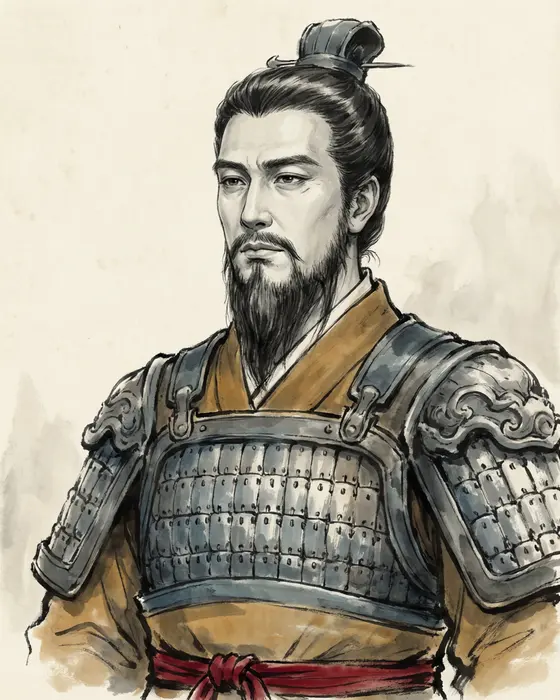
Portrait of Jiang Wei
Jiang Wei姜維
202–264 CE
Shu-Han's last great general, twenty-five years at war with the north. Held Zhong Hui's main army at Jiange, took his own emperor's order to surrender, and then tried to turn the conquerors against each other; died in the mutiny at Chengdu in 264.
Portrait of Liu Shan
Liu Shan劉禪
207–271 CE
Liu Bei's son, forty-one years emperor of Shu-Han. Surrendered Chengdu in 263 to spare it a sack; at Luoyang told Sima Zhao he was content and did not miss Shu. The record keeps his words and leaves the judgment to the reader.
Portrait of Zhuge Zhan
Zhuge Zhan諸葛瞻
227–263 CE
Zhuge Liang's son and Shu's last field commander. Refused Deng Ai's offer of a kingship and killed the messenger, then died with his son at Mianzhu in 263, aged thirty-seven.

Myth Check

The novel Romance of the Three Kingdoms is a masterpiece — and not a source. Where its famous scenes depart from the histories, we leave them out of the story and put them here.

The story you may know

Jiang Wei launched nine campaigns into the Central Plains — the novel's famous number.

What the sources say

The number nine belongs to the Romance; the record gives the campaigns one by one, and counted they come to about eleven over some twenty-five years (238–262 CE). Almost all of them were aimed at Longyou, Wei's western frontier — not the Central Plains — and most were small affairs. The one great victory was Taoxi in 255; the last, in 262, was the defeat that sent Jiang Wei to farm at Tazhong, where the war of 263 found him.

Sanguozhi, Shu shu 14, Biography of Jiang Wei
The story you may know

Liu Shan was a pure imbecile — the proverbial A-Dou who could not be set upright.

What the sources say

He reigned forty-one years, and Chen Shou's appraisal says that with a worthy chancellor he was a reasonable ruler. His surrender was a reasoned decision taken on Qiao Zhou's recorded argument that it would spare Chengdu a sack. And at Luoyang, his words about being happy may be read as the caution of a captive whose life depended on missing nothing — the sources keep both readings open.

Sanguozhi, Shu shu 3, with Chen Shou's appraisal; Shu shu 12, Biography of Qiao Zhou
The story you may know

Shu-Han fell at a push, and Chengdu surrendered to Zhong Hui's great army.

What the sources say

The main army took nothing: Zhong Hui's hundred-thousand-plus stood helplessly at Jiange against Jiang Wei to the end, and Yang'an Pass had cost Fu Qian his life. Zhuge Zhan fought and died at Mianzhu with his son, a grandson of Zhang Fei and a son of Huang Quan. Chengdu surrendered to the remnant that came down out of Yinping, not to the main blade.

Sanguozhi, Wei shu 28; Shu shu 5; Shu shu 14
The story you may know

At Jiangyou, Ma Miao's wife Lady Li shamed him into dying for Shu — a noble couple in the novel's pages.

What the sources say

The record gives the whole affair in one clause: the garrison commander Ma Miao surrendered. Lady Li and her death of remonstrance are inventions of the Romance, written centuries after the event.

Sanguozhi, Shu shu 3, Biography of the Later Lord (Lady Li appears only in the Romance of the Three Kingdoms)

Sources

Every caption and quotation in this episode traces to one of these. Where scholars disagree, the panel says so.

Next

Before this: Episode 10 · The Gates at Dawn (Luoyang, 249 CE). Next: Episode 12 · The Fall of Wu (The Yangtze, 280 CE). Or meet the cast, or read the chronology of the age.