Bamboo Scroll竹簡 Ep. 4 · The Last Campaign
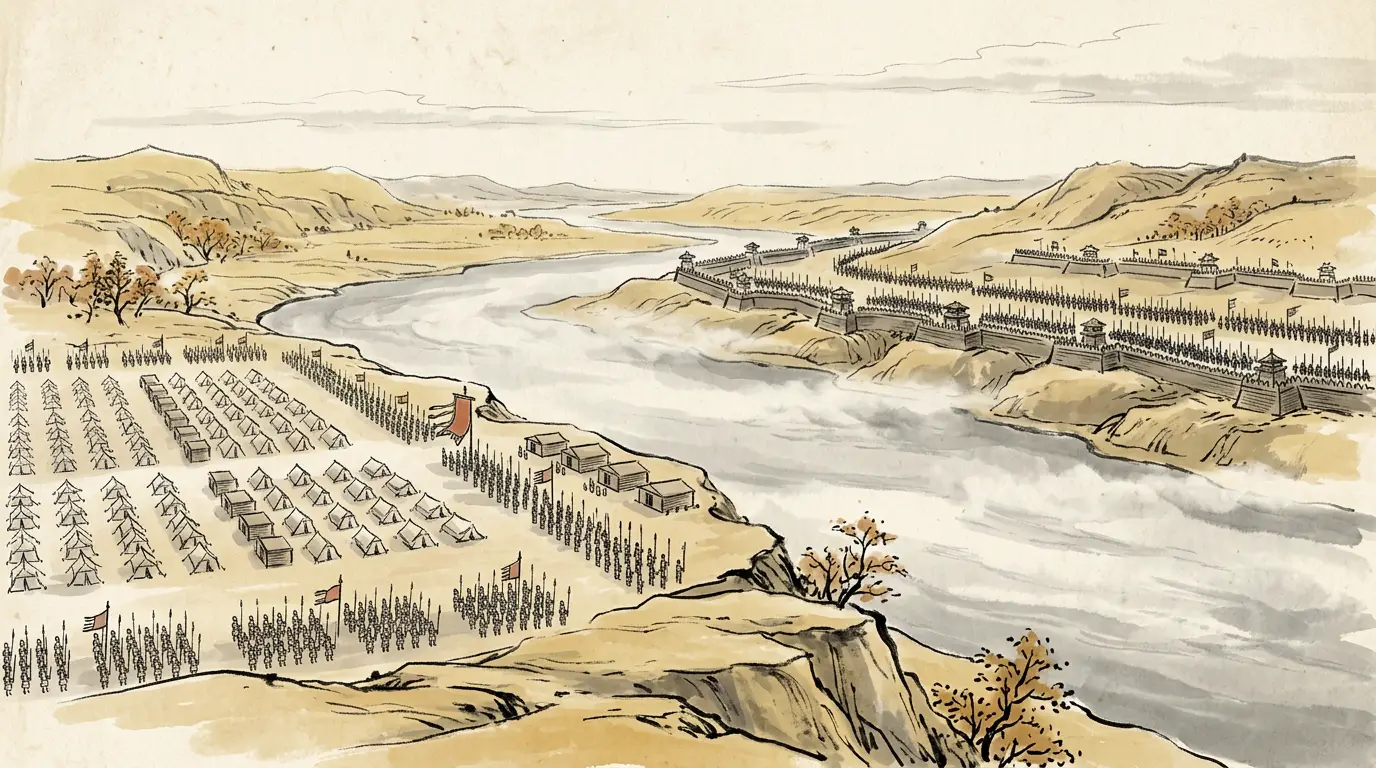
Two armies camped on the terraces above the Wei river at the Wuzhang Plains, autumn 234 CE
Bamboo Scroll · Three Kingdoms · Episode 4

The Last Campaign

Wuzhang Plains, 234 CE — Five roads over the Qinling in seven years, and every one of them died on the grain. The last ended against a general who would not fight — and a grave in the mountain, just big enough for a coffin.
16 panels~8 min read free to readevery line sourced
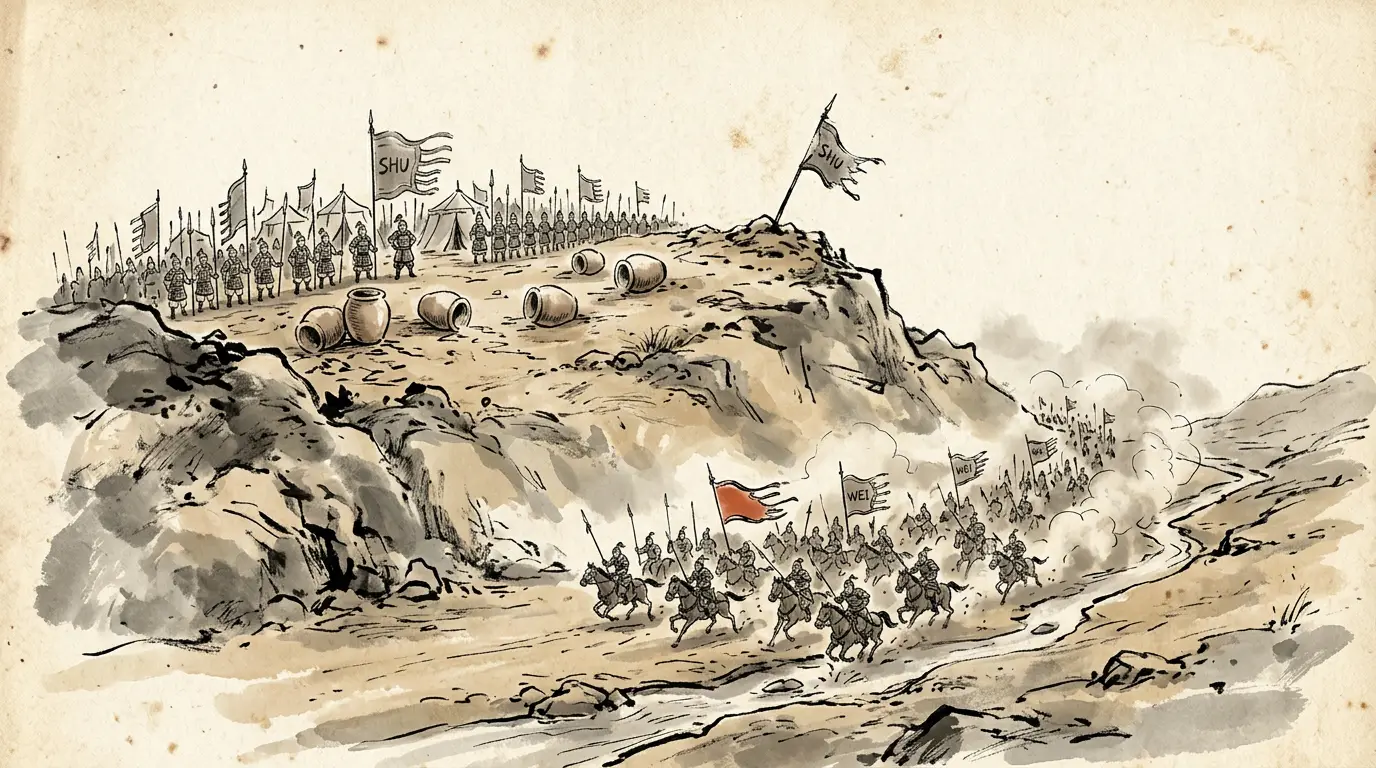
Panel 01: 234 CE. Five roads over the Qinling in seven years, and every one of them died on the grain. The last ended here, on the terraces above the Wei river, against a general who would not fight.
234 CE. Five roads over the Qinling in seven years, and every one of them died on the grain. The last ended here, on the terraces above the Wei river, against a general who would not fight.
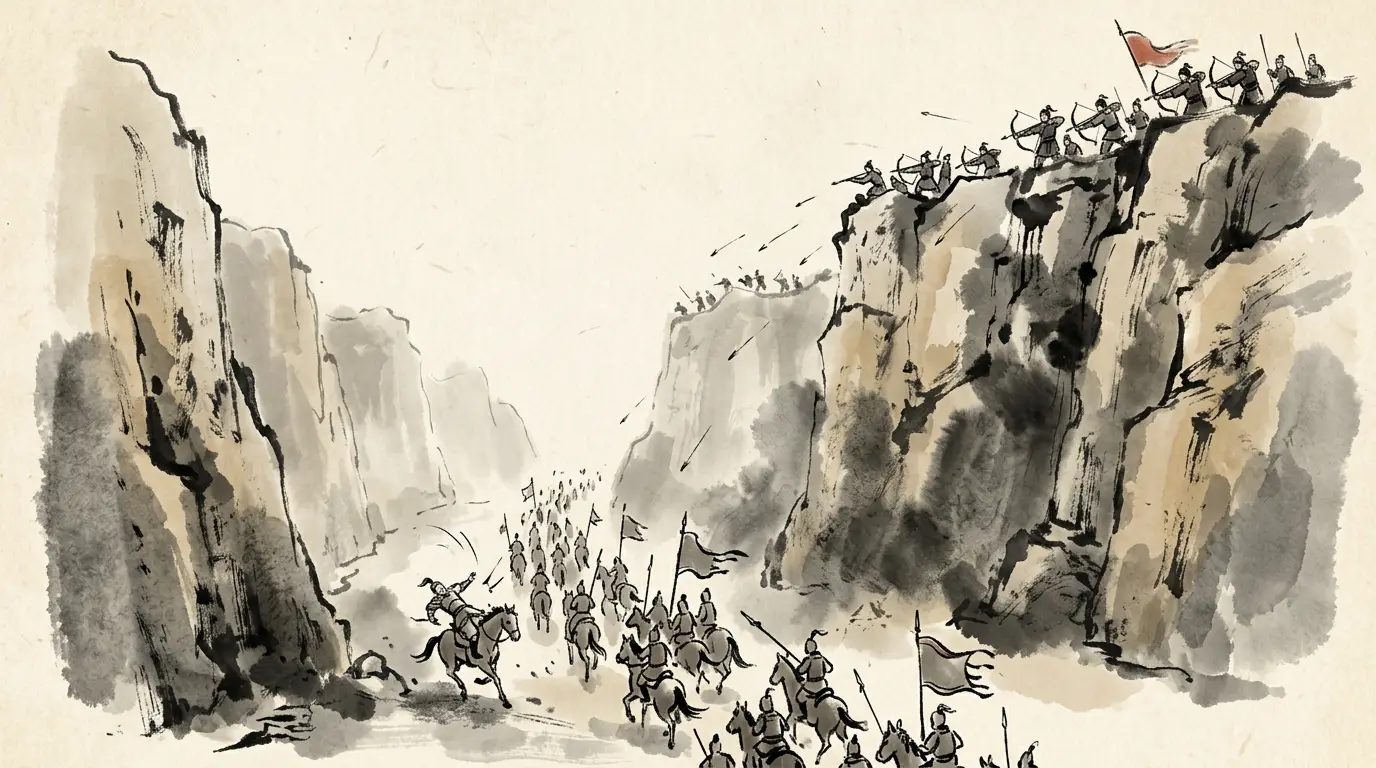
Panel 02: It began at Jieting, in 228: Ma Su camped on the hill instead of at the water, and Zhang He cut the water. The whole first expedition folded back over the mountains.
It began at Jieting, in 228: Ma Su camped on the hill instead of at the water, and Zhang He cut the water. The whole first expedition folded back over the mountains.
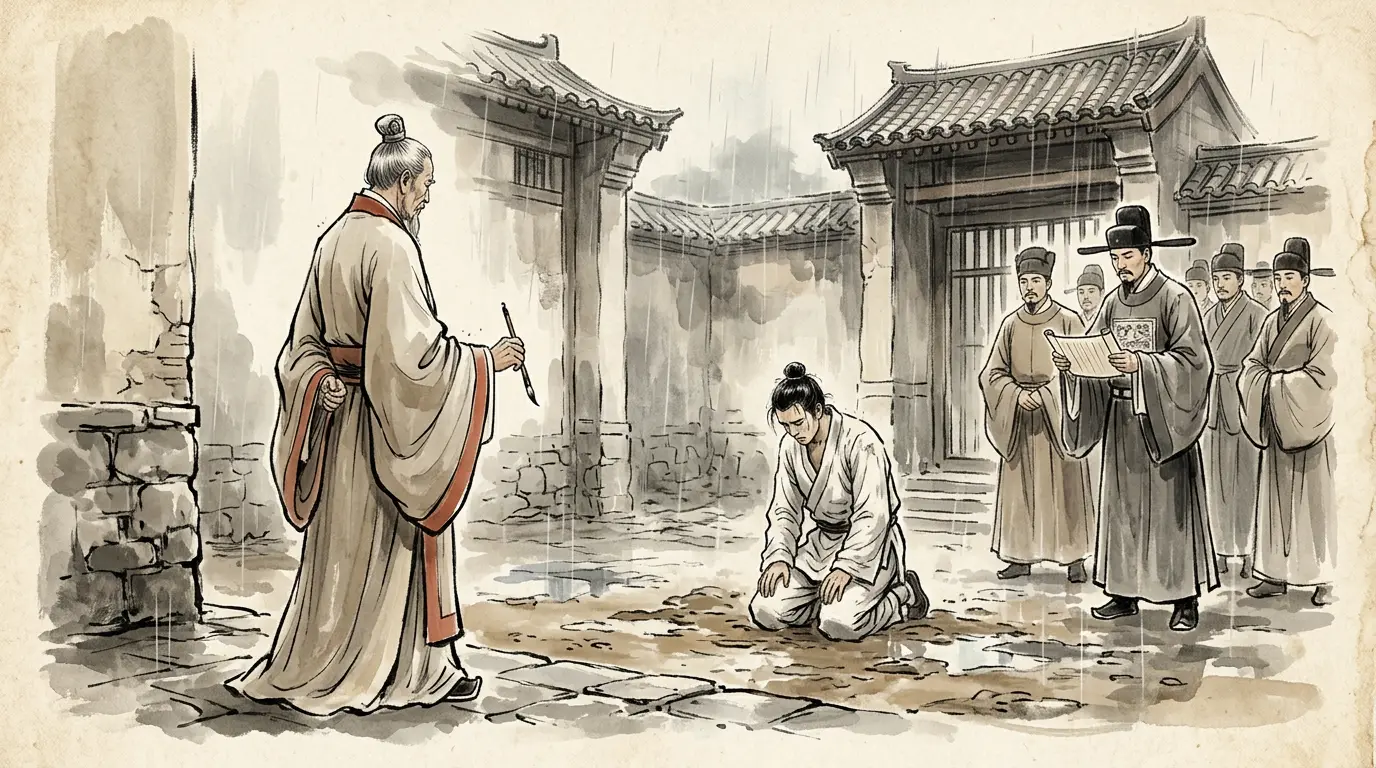
Panel 03: What happened to Ma Su, the histories do not agree: imprisoned and dead of it, says one; executed, says another. Zhuge Liang wept, and asked to be reduced in rank.
What happened to Ma Su, the histories do not agree: imprisoned and dead of it, says one; executed, says another. Zhuge Liang wept, and asked to be reduced in rank.
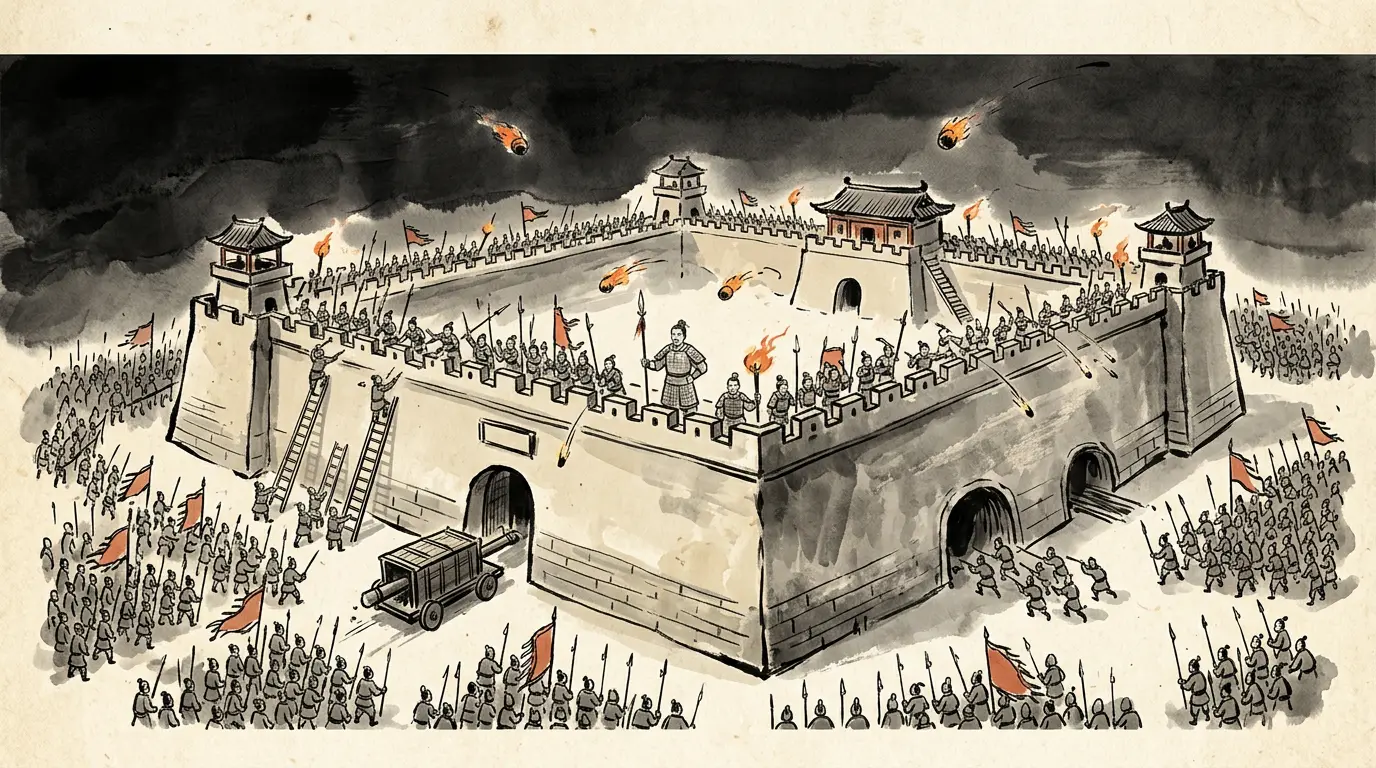
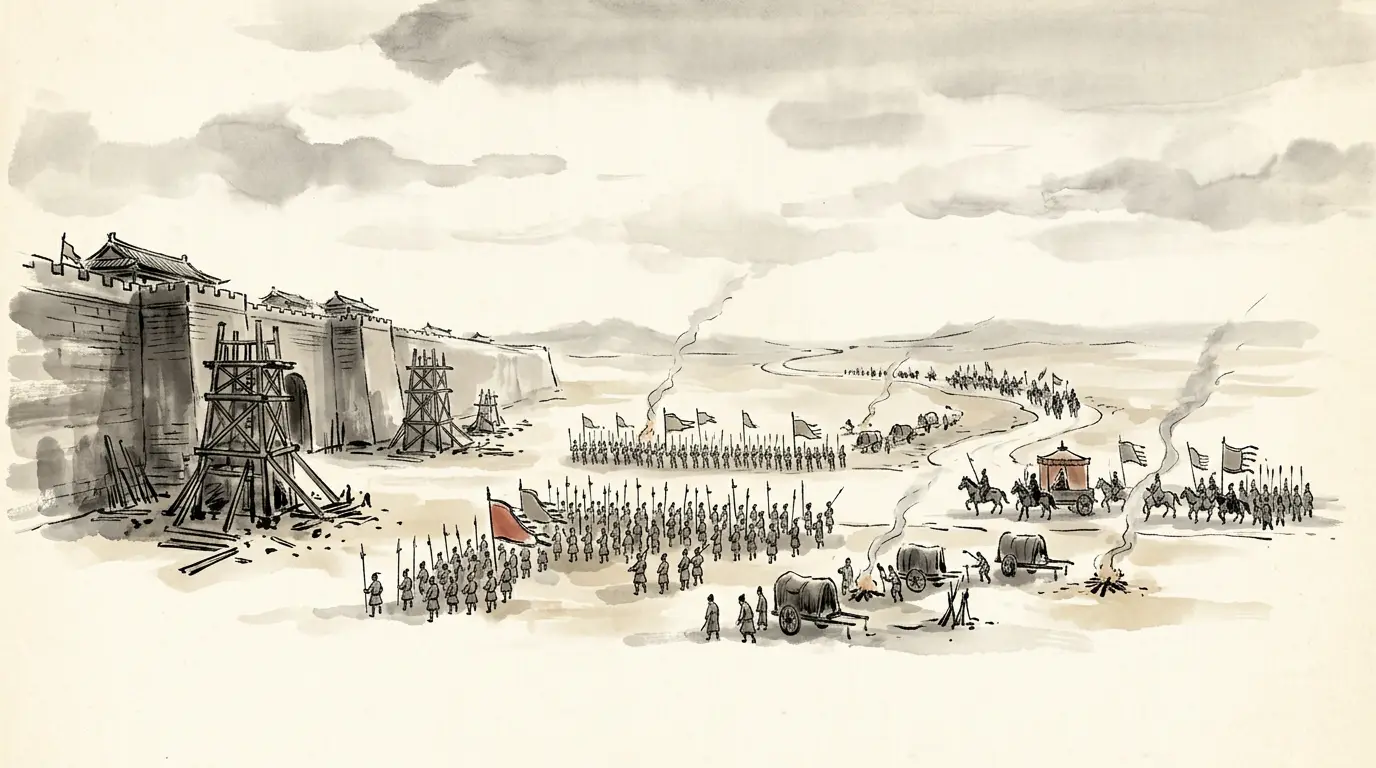
Panel 04: Winter, 228: Chencang, and a thousand men behind its wall. Twenty days of ladders, rams and tunnels against Hao Zhao — then empty grain carts and a retreat, with Wang Shuang killed behind it.
Winter, 228: Chencang, and a thousand men behind its wall. Twenty days of ladders, rams and tunnels against Hao Zhao — then empty grain carts and a retreat, with Wang Shuang killed behind it.
Panel 05: 229: Wudu and Yinping came over, and with them the rank back — chancellor again, as before. The smallest of the five, and the only one that held ground.
229: Wudu and Yinping came over, and with them the rank back — chancellor again, as before. The smallest of the five, and the only one that held ground.
Panel 06: 231: Qishan again, with the wooden ox carrying the grain. Sima Yi kept to his camp and would not gamble; Zhang He chased the retreat and took an arrow in the knee at Mumen pass.
231: Qishan again, with the wooden ox carrying the grain. Sima Yi kept to his camp and would not gamble; Zhang He chased the retreat and took an arrow in the knee at Mumen pass.
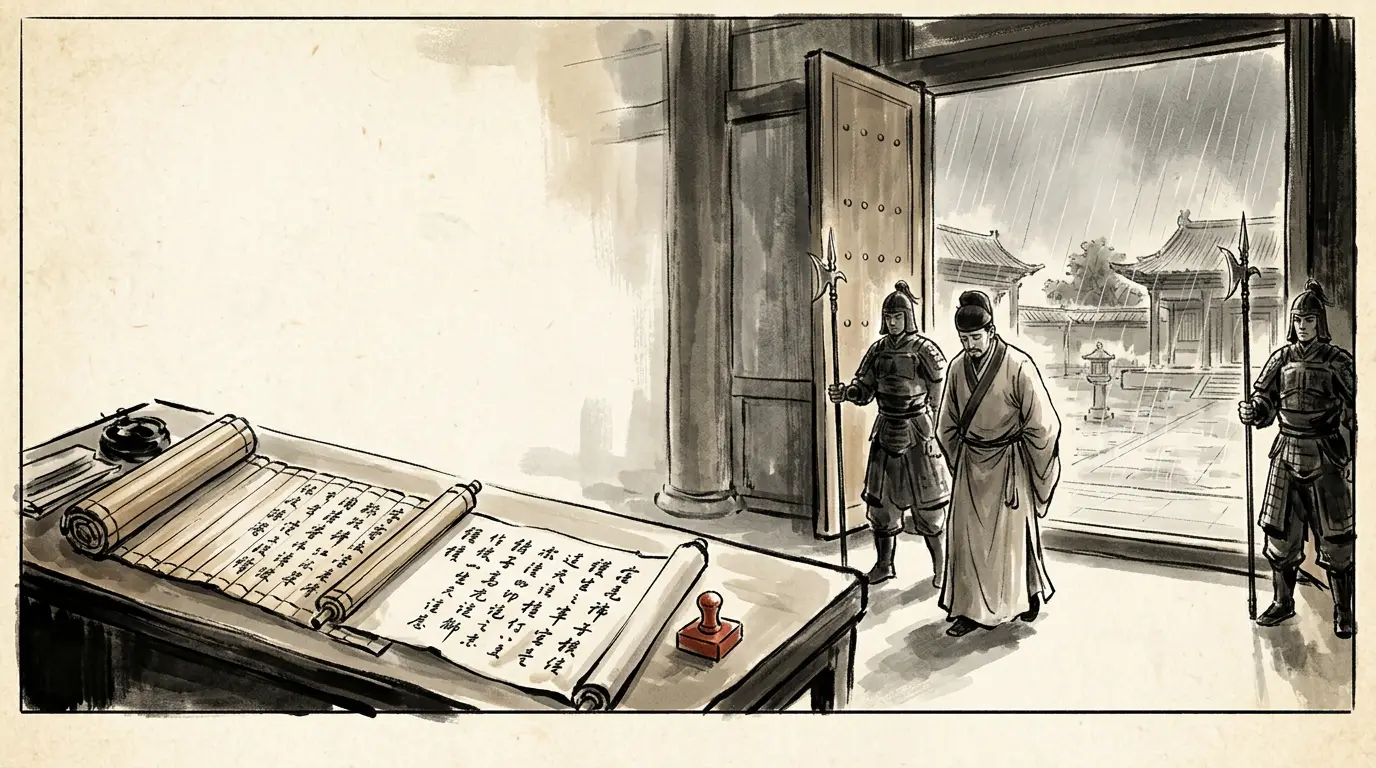
Panel 07: The same year the rain stopped the grain, and Li Yan's letters stopped the army. Afterwards his letters contradicted themselves; the two sets were laid side by side, and he was stripped and exiled.
The same year the rain stopped the grain, and Li Yan's letters stopped the army. Afterwards his letters contradicted themselves; the two sets were laid side by side, and he was stripped and exiled.
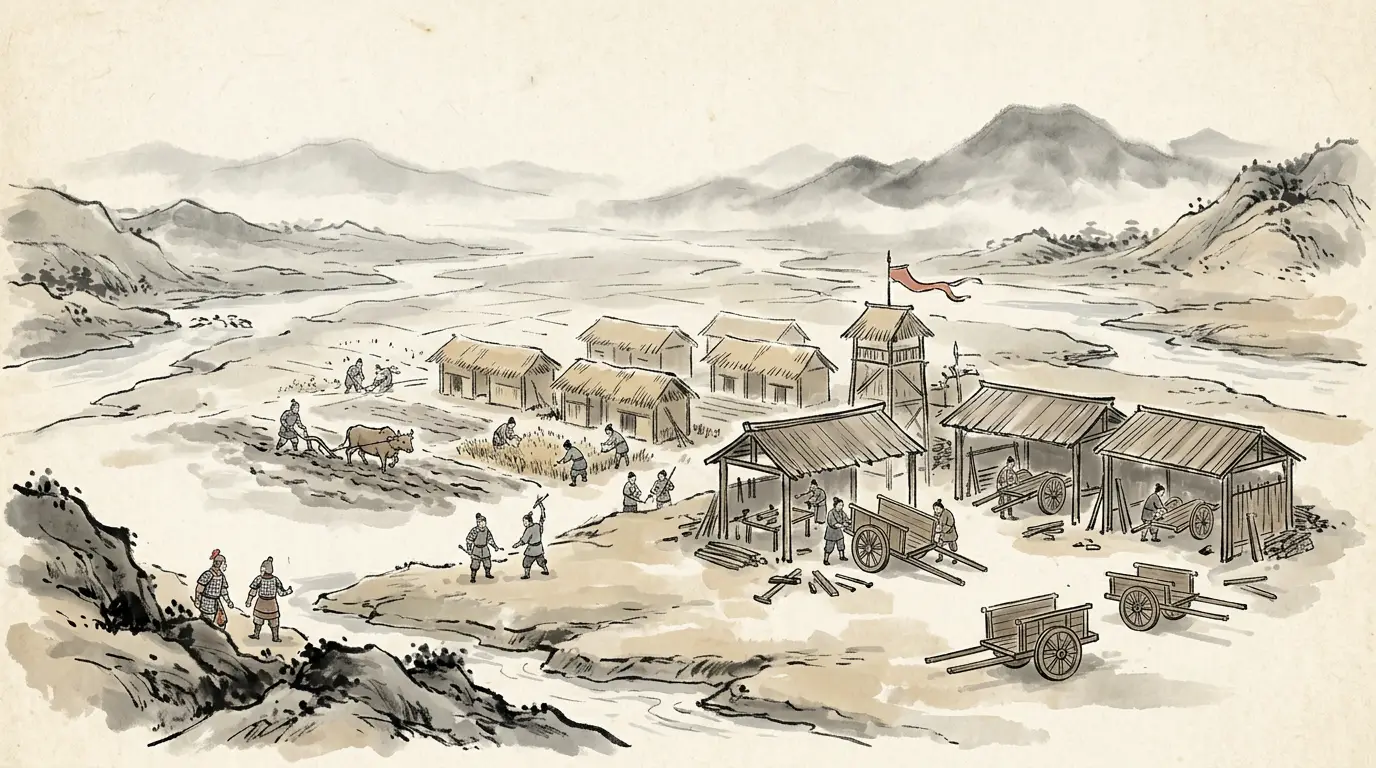
Panel 08: Then three years of quiet: soldiers farming at Huangsha, the flowing horse built in the sheds, and an embassy to Wu to fix a day when both would strike at once.
Then three years of quiet: soldiers farming at Huangsha, the flowing horse built in the sheds, and an embassy to Wu to fix a day when both would strike at once.
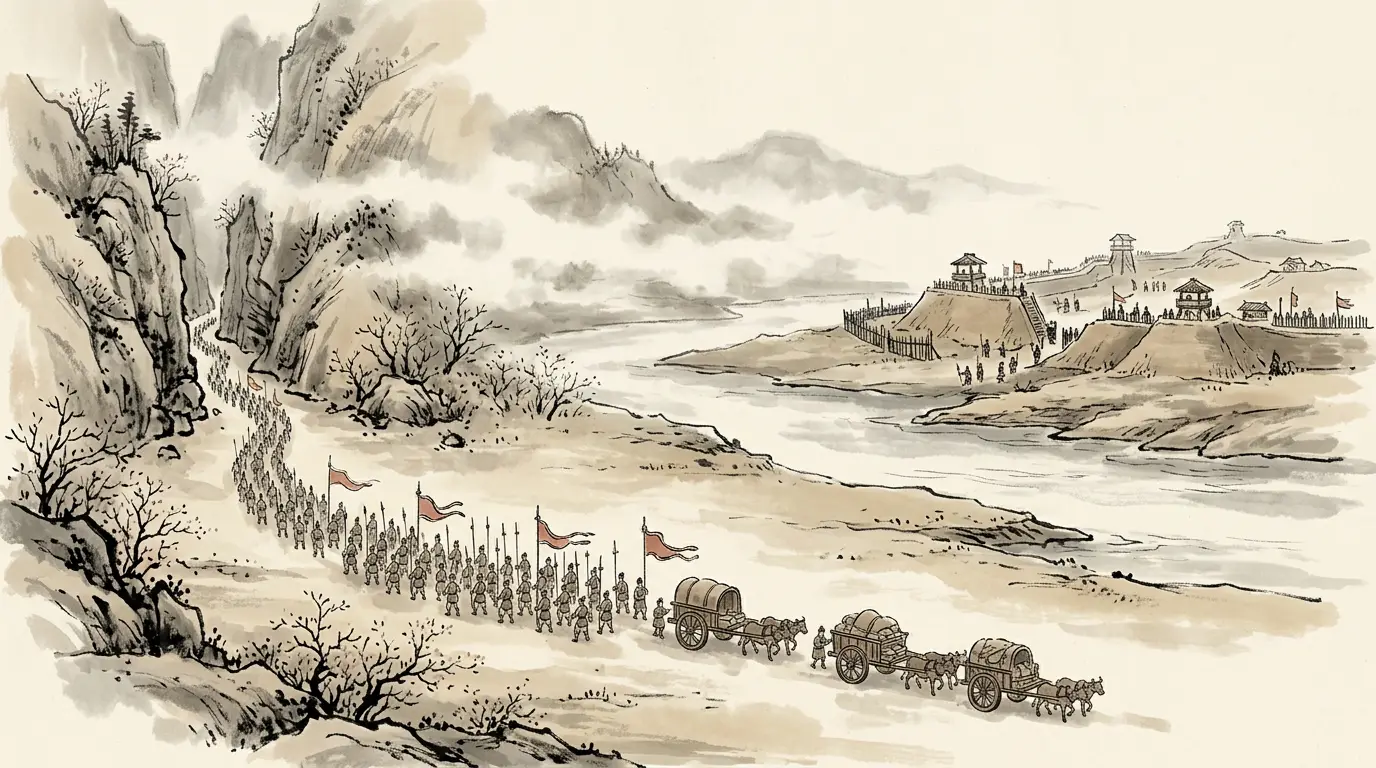
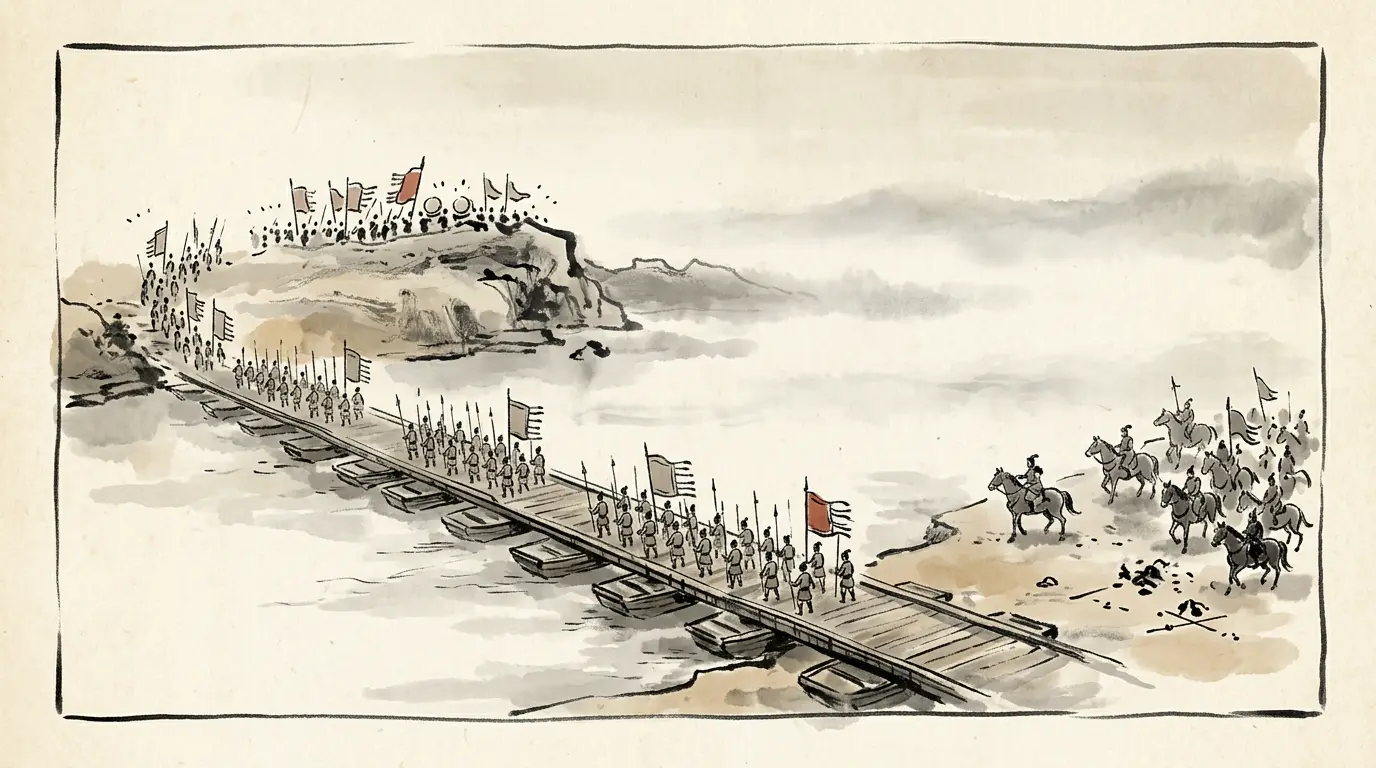
Panel 09: Second month, 234: the whole army out by the Xie valley, the flowing horse on the road, a hundred thousand on the Wuzhang Plains. Sima Yi crossed to the north bank of the Wei and dug in.
Second month, 234: the whole army out by the Xie valley, the flowing horse on the road, a hundred thousand on the Wuzhang Plains. Sima Yi crossed to the north bank of the Wei and dug in.
Panel 10: The agreed stroke: Sun Quan at Hefei's new city with a hundred thousand, and Zhuge Liang in the west. Then Cao Rui came east in person, sickness went through the Wu camps, and the stroke came to nothing.
The agreed stroke: Sun Quan at Hefei's new city with a hundred thousand, and Zhuge Liang in the west. Then Cao Rui came east in person, sickness went through the Wu camps, and the stroke came to nothing.
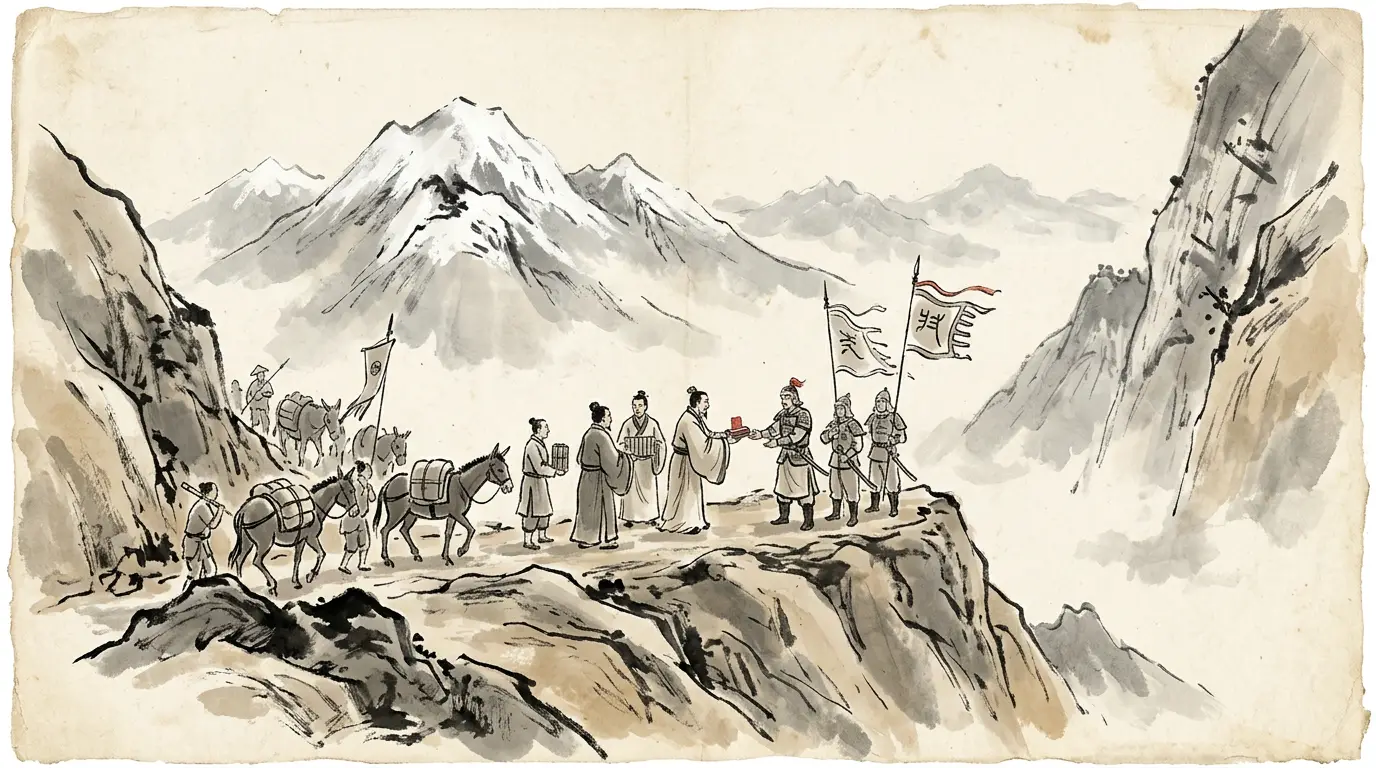
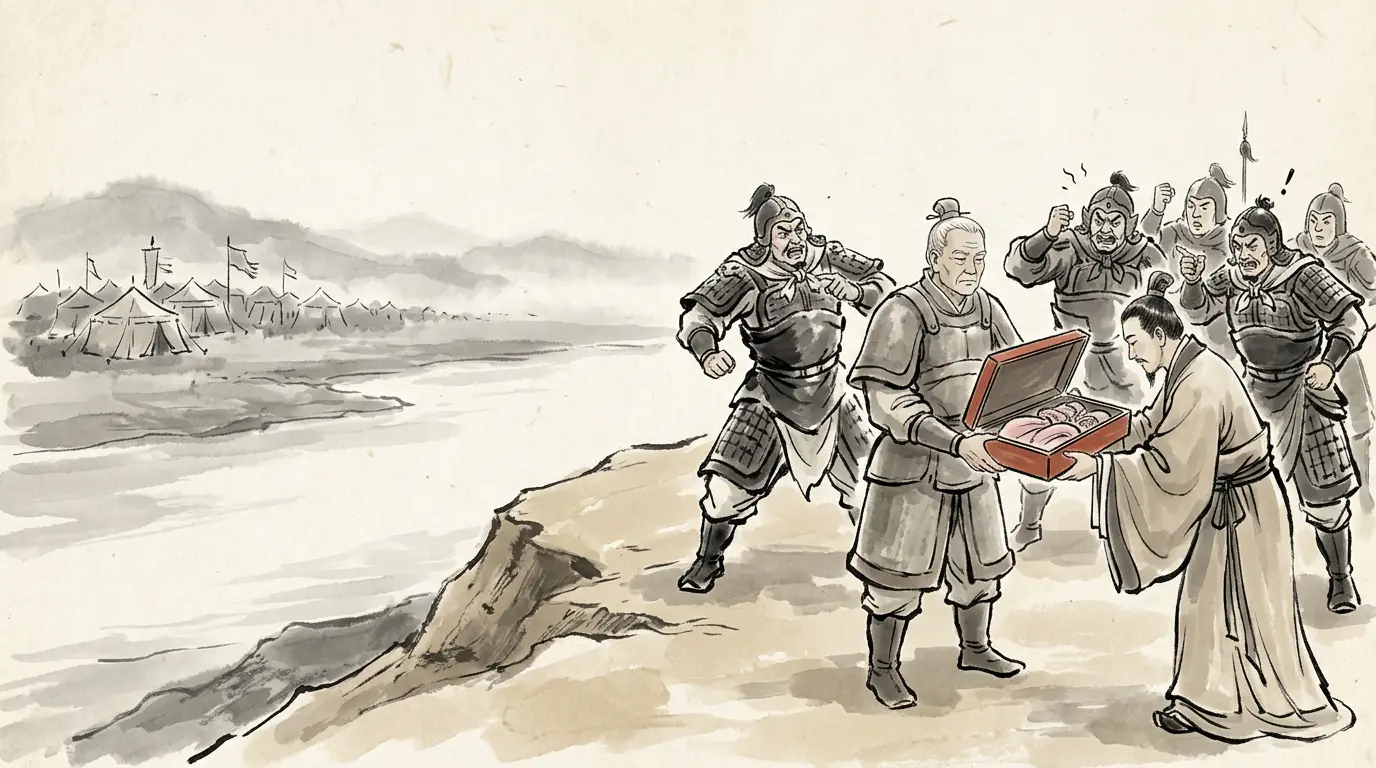
Panel 11: So Zhuge Liang sent him women's clothes and ornaments, to shame him into the open. Sima Yi asked the court for permission to fight — and the emperor sent an officer with the staff of authority to forbid it.
So Zhuge Liang sent him women's clothes and ornaments, to shame him into the open. Sima Yi asked the court for permission to fight — and the emperor sent an officer with the staff of authority to forbid it.
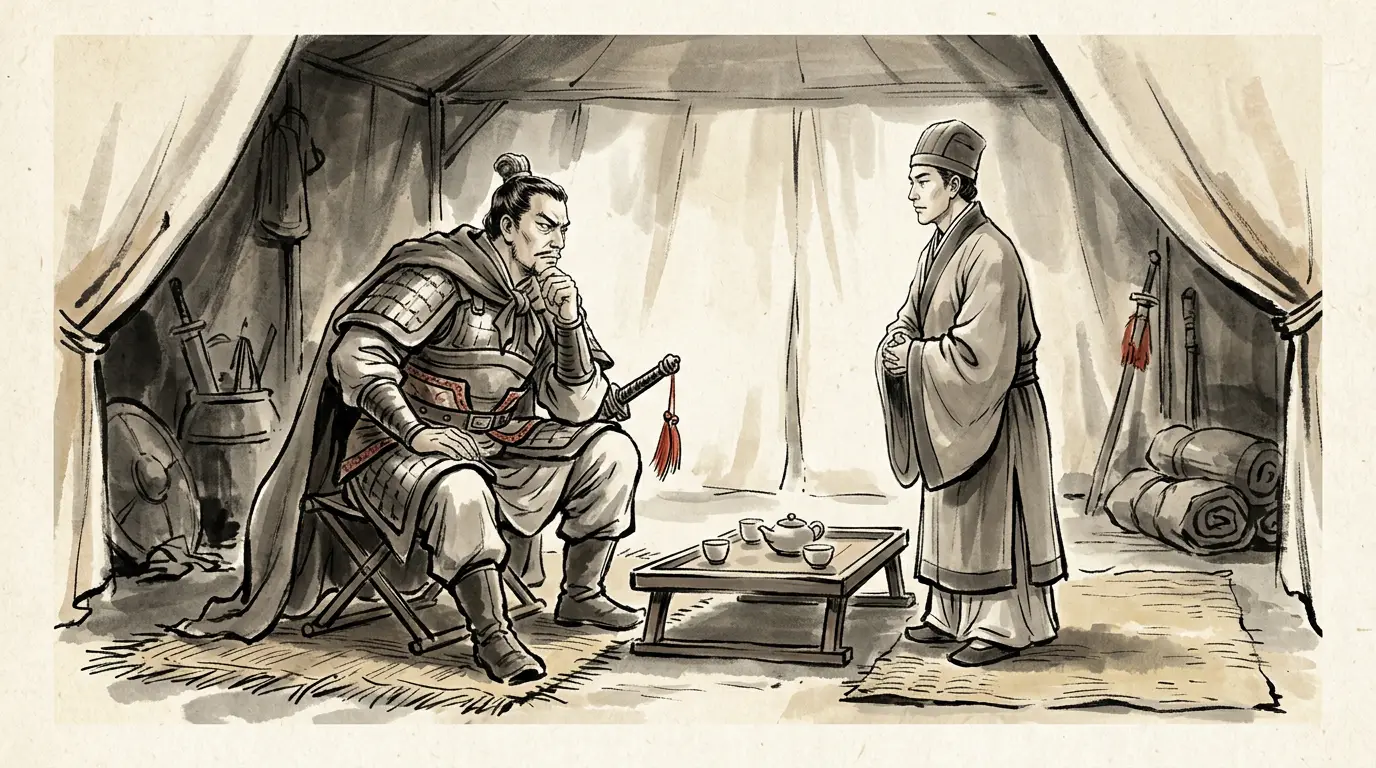
Panel 12: He asked the envoy nothing about the army — only how the chancellor slept, and what he ate. The answers were small. Sima Yi smiled.
Sima Yi He rises early and sleeps late; what he eats would not fill a few cups. How long can he last?
He asked the envoy nothing about the army — only how the chancellor slept, and what he ate. The answers were small. Sima Yi smiled.
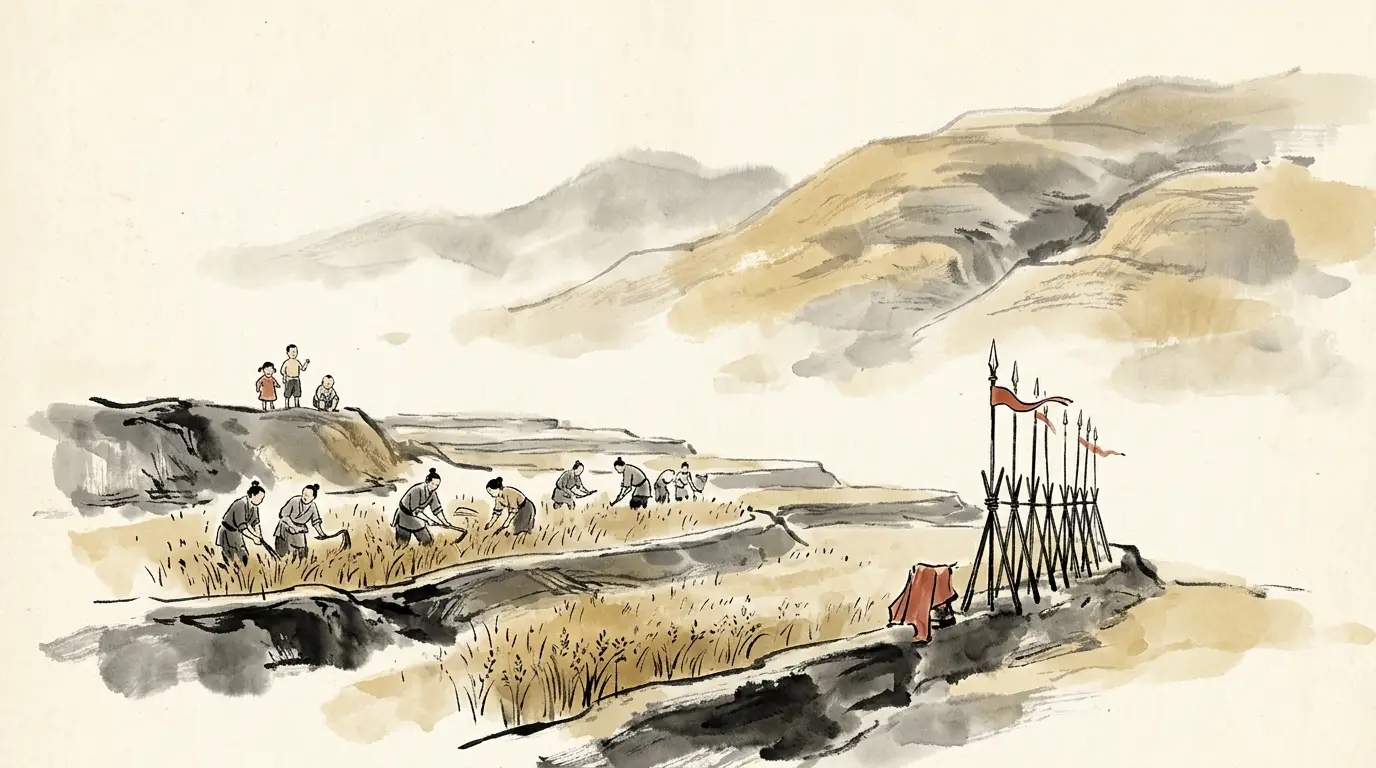
Panel 13: Then the strangest sight of the war: Shu soldiers farming the fields at the foot of the hills among the Wei farmers, harming no one, meaning to stay a year.
Then the strangest sight of the war: Shu soldiers farming the fields at the foot of the hills among the Wei farmers, harming no one, meaning to stay a year.
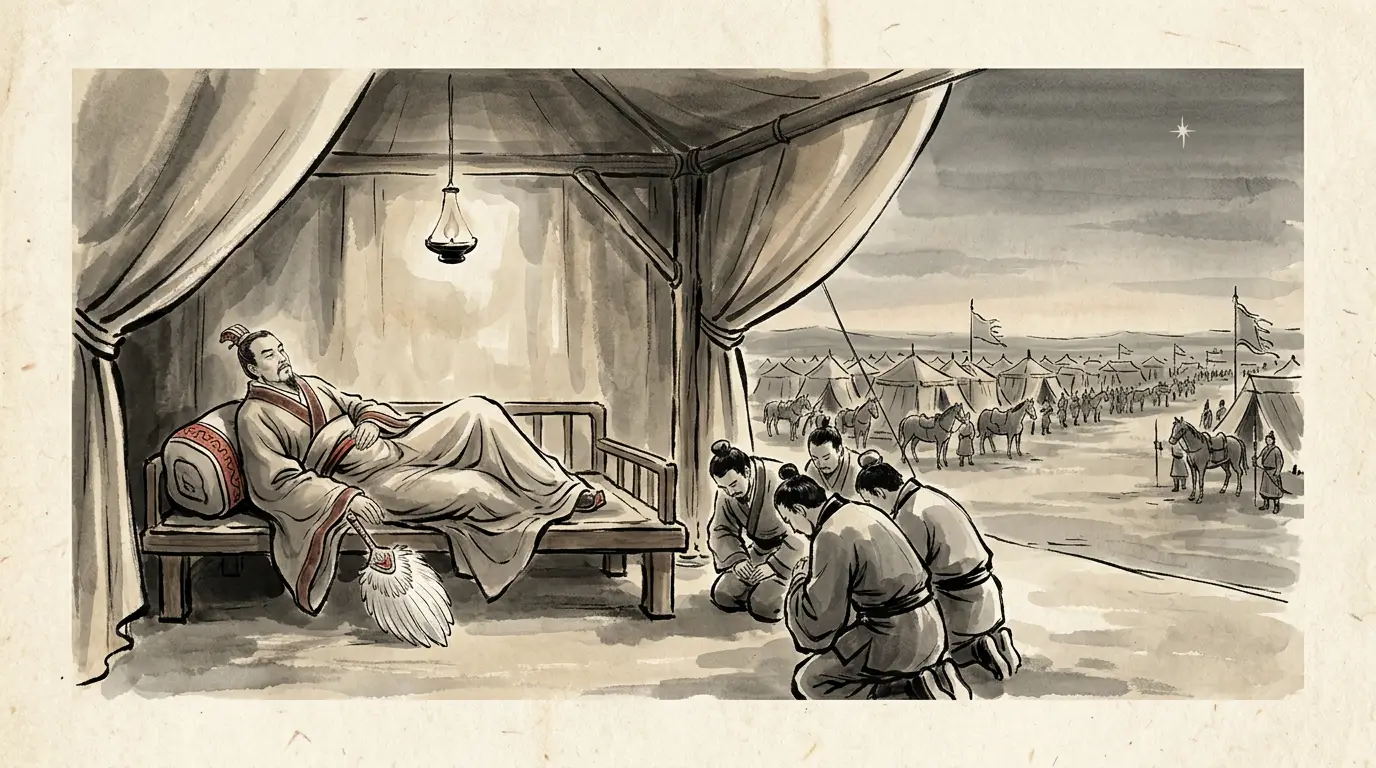
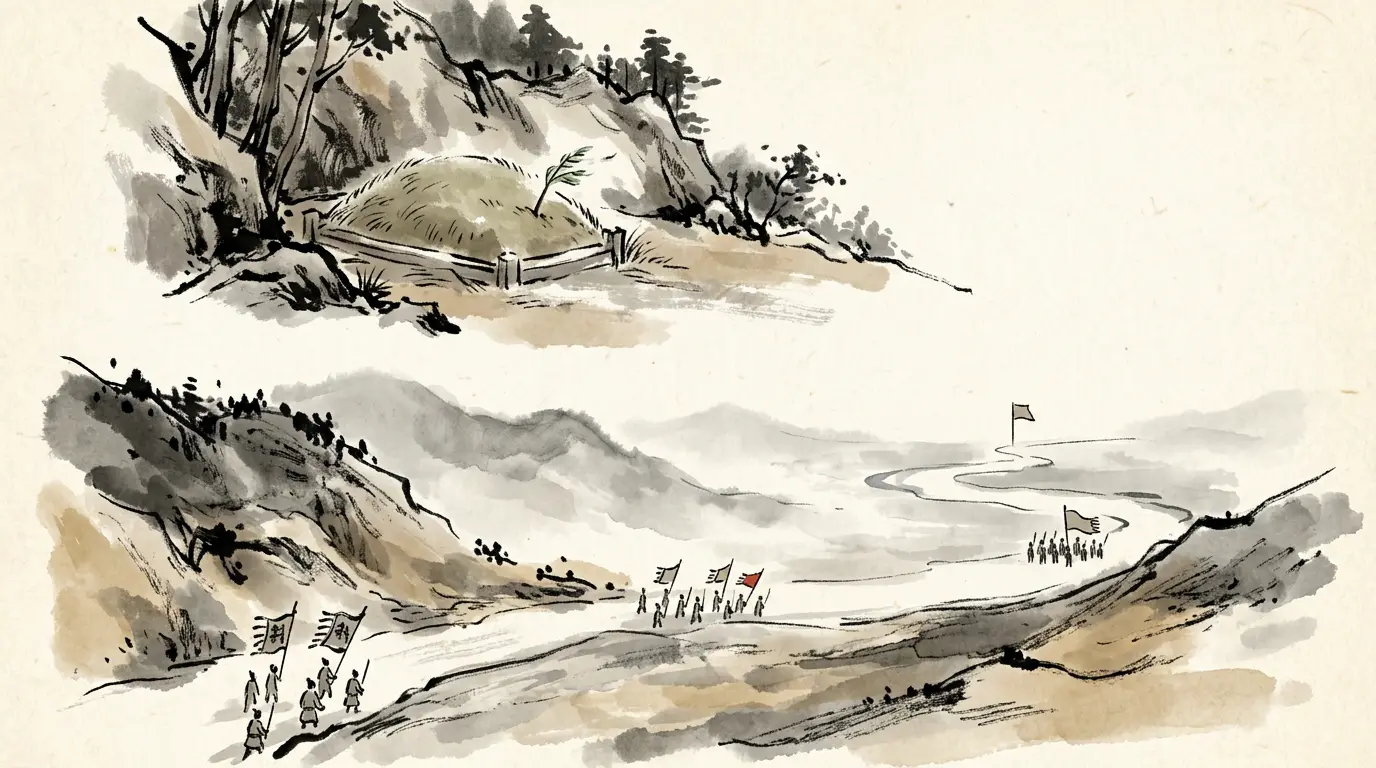
Panel 14: Eighth month, 234: Zhuge Liang died of illness in camp, aged fifty-four. His orders: a grave cut into Mount Dingjun, just big enough for the coffin, in the clothes he wore, with nothing buried in it.
Eighth month, 234: Zhuge Liang died of illness in camp, aged fifty-four. His orders: a grave cut into Mount Dingjun, just big enough for the coffin, in the clothes he wore, with nothing buried in it.
Panel 15: The army went home in order. At the pursuit Yang Yi turned the banners and beat the drums, and Sima Yi drew back. The people said: the dead Zhuge Liang routed the living Zhongda.
Sima Yi I can judge the living. I cannot judge the dead.
The army went home in order. At the pursuit Yang Yi turned the banners and beat the drums, and Sima Yi drew back. The people said: the dead Zhuge Liang routed the living Zhongda.
Panel 16: After him, Jiang Wan and Fei Yi held the line and did not cross it. In 249 Wei fell to Sima Yi's own coup; in 263 Deng Ai came over the Yinping road and Shu surrendered; in 280 Wu followed. The river was one again.
After him, Jiang Wan and Fei Yi held the line and did not cross it. In 249 Wei fell to Sima Yi's own coup; in 263 Deng Ai came over the Yinping road and Shu surrendered; in 280 Wu followed. The river was one again.

In this episode

One man carried these seven years and five campaigns, and one man answered every one of them by refusing to fight. Neither lost the argument: the grain did, and then the body did.

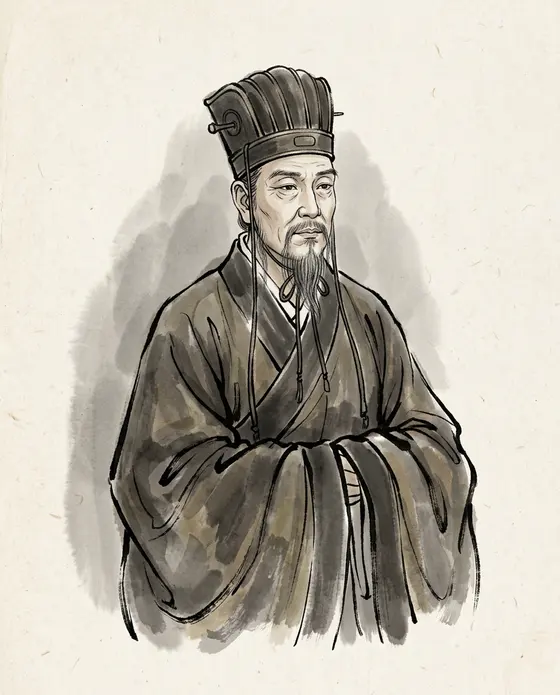
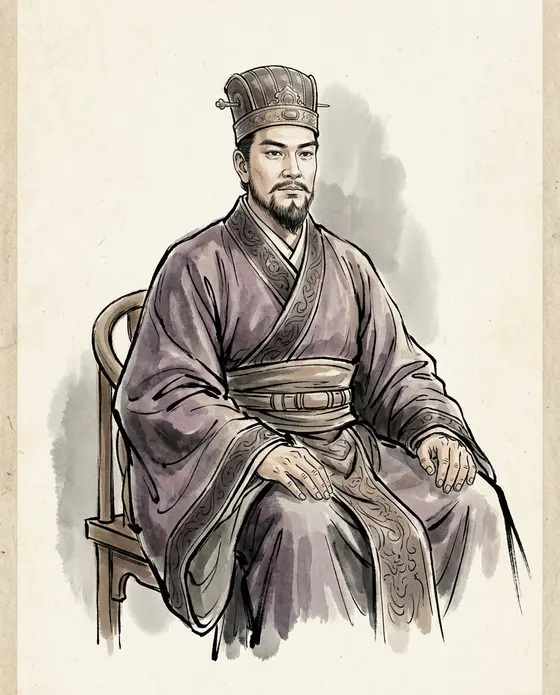
Portrait of Zhuge Liang
Zhuge Liang諸葛亮
181–234 CE
Chancellor of Shu-Han. Five expeditions north, one grave in Mount Dingjun, and an appraisal that praises the administrator first.
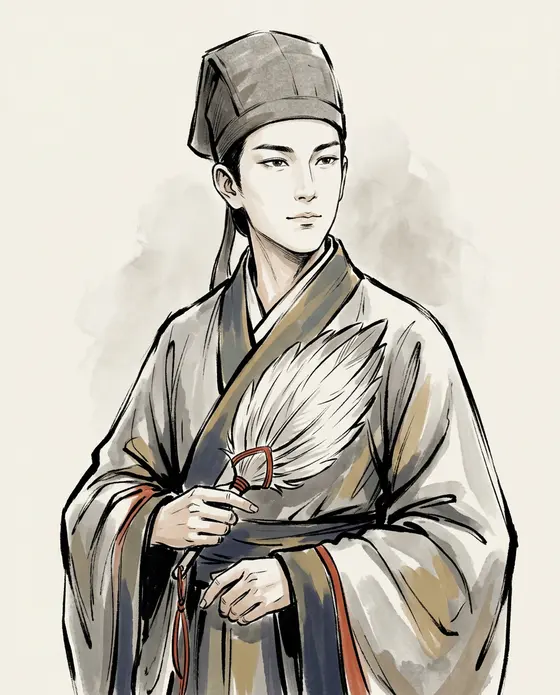
Portrait of Sima Yi
Sima Yi司馬懿
179–251 CE
Wei's commander in the west from 231. Refused battle at the Wuzhang Plains, outlived his enemy, and left his house the empire.
Portrait of Sun Quan
Sun Quan孫權
182–252 CE
Agreed the two-front war for 234, marched on Hefei's new city, and was turned back by an emperor and a sickness.

Myth Check

The novel Romance of the Three Kingdoms is a masterpiece — and not a source. Where its famous scenes depart from the histories, we leave them out of the story and put them here.

The story you may know

The Empty City: gates flung open, Zhuge Liang on the wall with a lute, and Sima Yi turning his army away from nothing.

What the sources say

The only source that carries it — Guo Chong's Three Matters — is quoted by Pei Songzhi precisely in order to refute it: Sima Yi was not at Yangping in those years, and the geography and the numbers do not stand. We quote it here, as a correction, and nowhere else.

Sanguozhi, Shu shu 5, Pei Songzhi commentary quoting and rejecting Guo Chong
The story you may know

Zhuge Liang was unbeatable in the field, and only fate stopped him at the walls of Chang'an.

What the sources say

Chen Shou's own appraisal is colder and kinder: able in governing armies, short in stratagem; his civil administration exceeded his generalship. The expeditions died on the grain road through the Qinling — and Sima Yi's refusal of battle was the correct answer to that, not cowardice.

Sanguozhi, Shu shu 5, appraisal; Zizhi Tongjian 72
The story you may know

Ma Su was beheaded at Zhuge Liang's order while Zhuge Liang wept — the scene exactly as everyone knows it.

What the sources say

The Sanguozhi says Ma Su was imprisoned and died there; the execution and the tears come from later telling. The histories disagree, and this site leaves the disagreement standing rather than choosing the better story.

Sanguozhi, Shu shu 5 & Shu shu 9, Pei Songzhi commentary; Zizhi Tongjian 71

Sources

Every caption and quotation in this episode traces to one of these. Where scholars disagree, the panel says so.

Next

This is the last episode of the age so far, and the last panel carries the end of it: Shu-Han's surrender in 263, Wu's in 280. Behind it — Episode 3 · Fire at Yiling (222 CE), Episode 1 · Fire on the Yangtze (208 CE), Episode 2 · The Road to Guandu (200 CE). Meanwhile — meet the cast, or read the chronology of the age.