Bamboo Scroll竹簡 Ep. 2 · The Road to Guandu
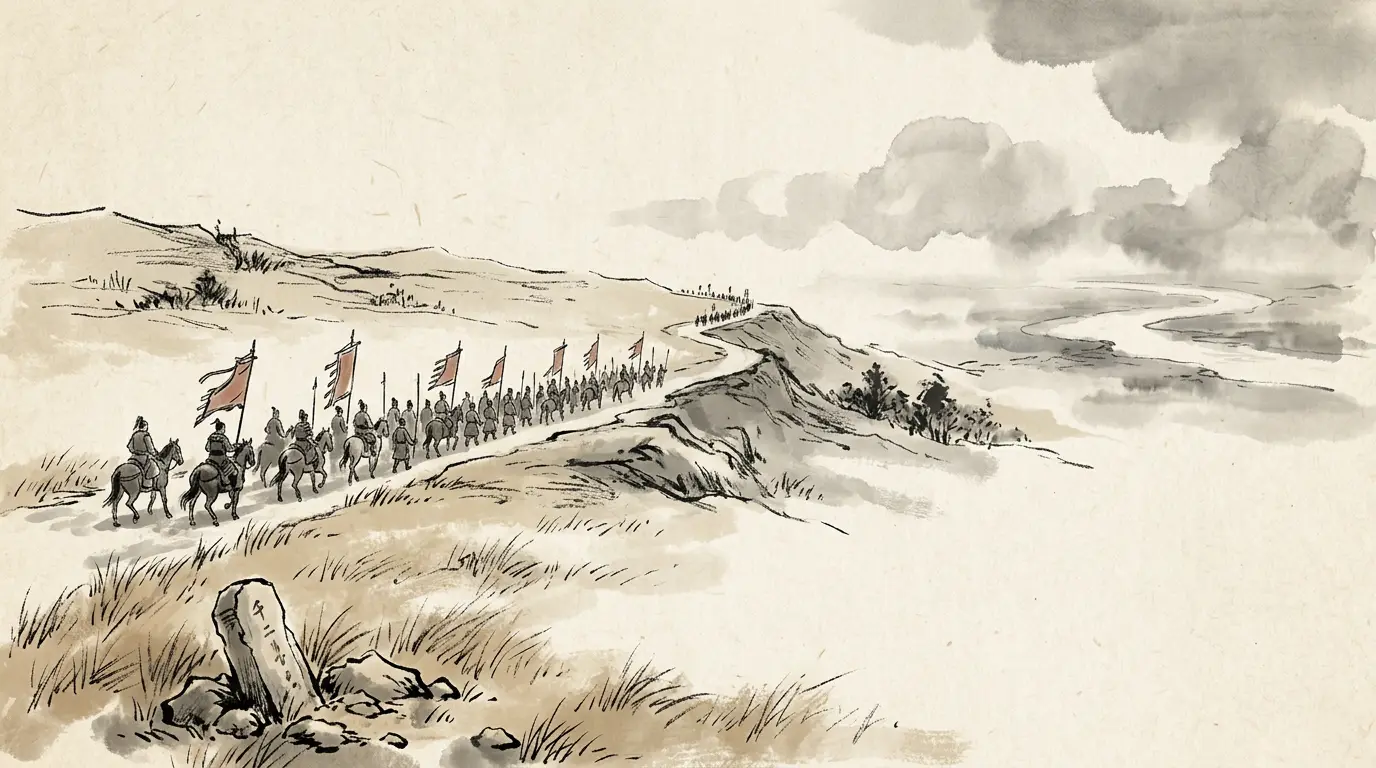
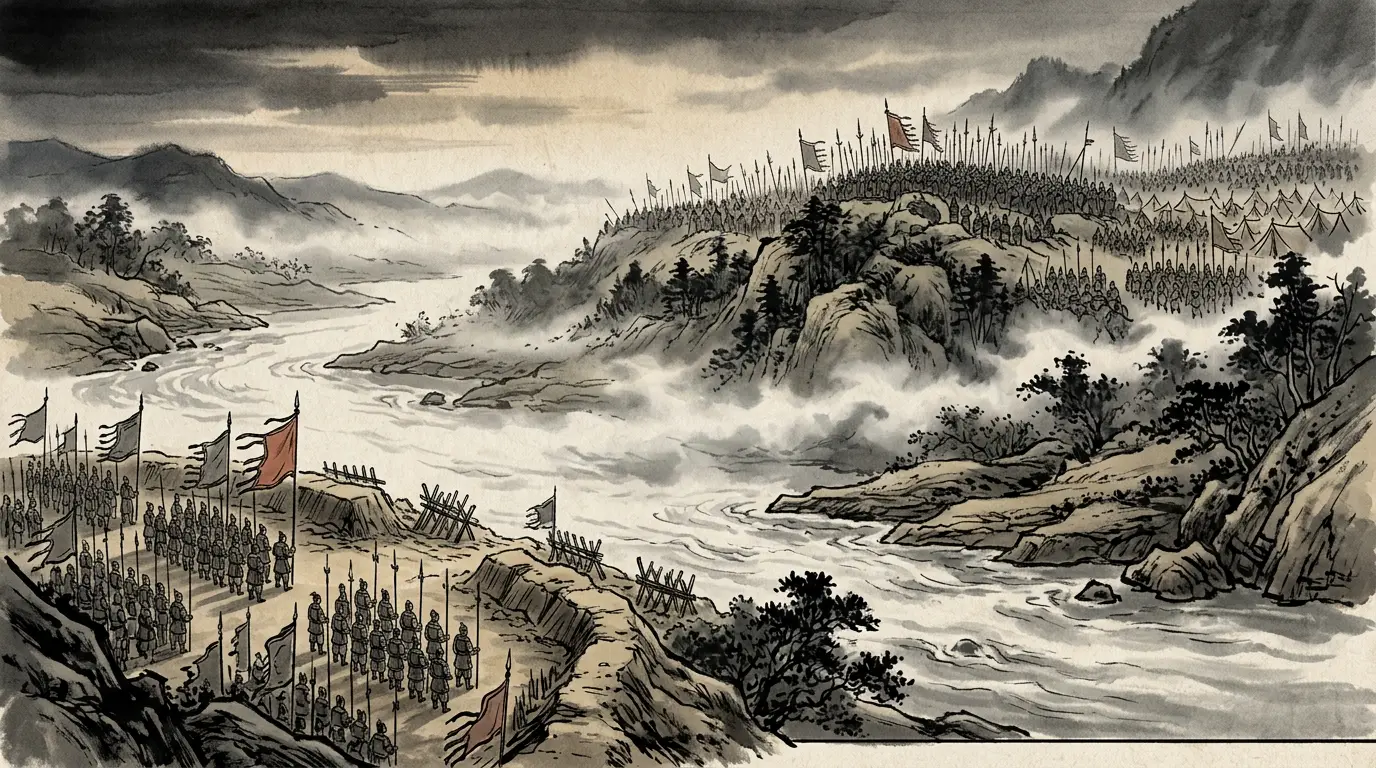
Banners and camps of two armies facing each other across the plain at Guandu, 200 CE
Bamboo Scroll · Three Kingdoms · Episode 2

The Road to Guandu

Guandu, 200 CE — Eight years before the Yangtze burned, Cao Cao won the north with the shorter supply line and the better decisions — and then burned his own officers' treason unread.
16 panels~7 min read free to readevery line sourced
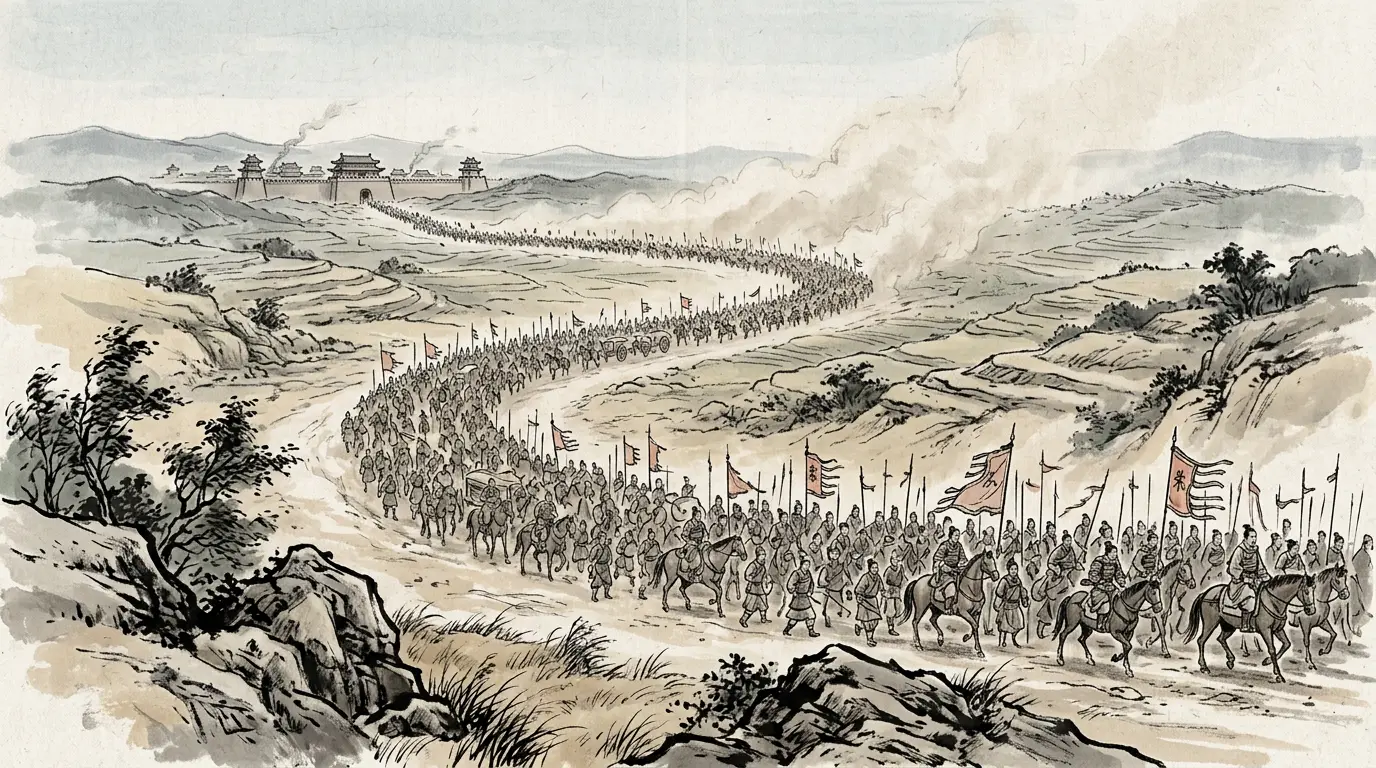
Panel 01: Spring, 200 CE. North of the Yellow River, Yuan Shao's host gathers; south of it, Cao Cao holds the line at a ford called Guandu.
Spring, 200 CE. North of the Yellow River, Yuan Shao's host gathers; south of it, Cao Cao holds the line at a ford called Guandu.
Panel 02: Yuan Shao moved south from Ye with the strength of four provinces. Two years earlier he had crushed Gongsun Zan; now he meant to finish the south in one campaign.
Yuan Shao moved south from Ye with the strength of four provinces. Two years earlier he had crushed Gongsun Zan; now he meant to finish the south in one campaign.
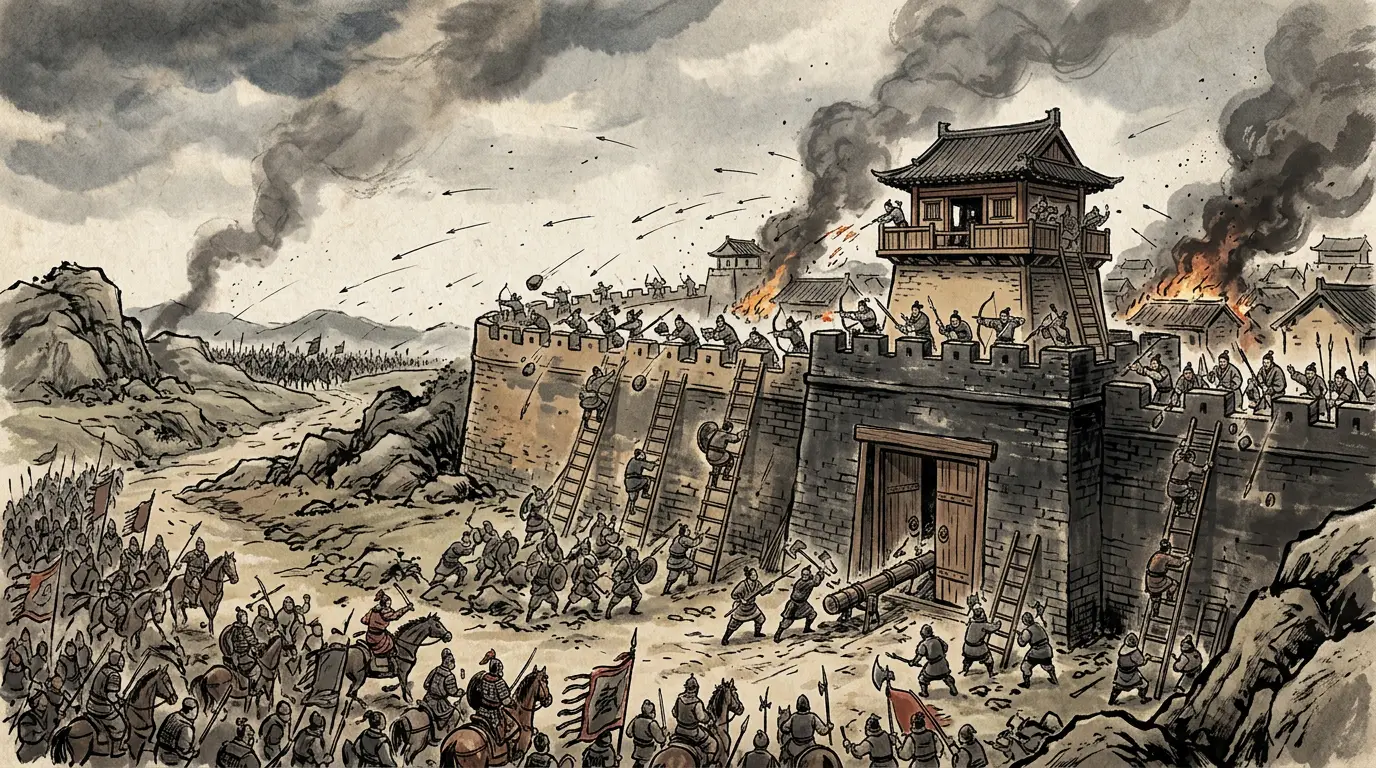
Panel 03: At Boma, Yan Liang closed the siege. The ford across the river was the first prize of the war.
At Boma, Yan Liang closed the siege. The ford across the river was the first prize of the war.
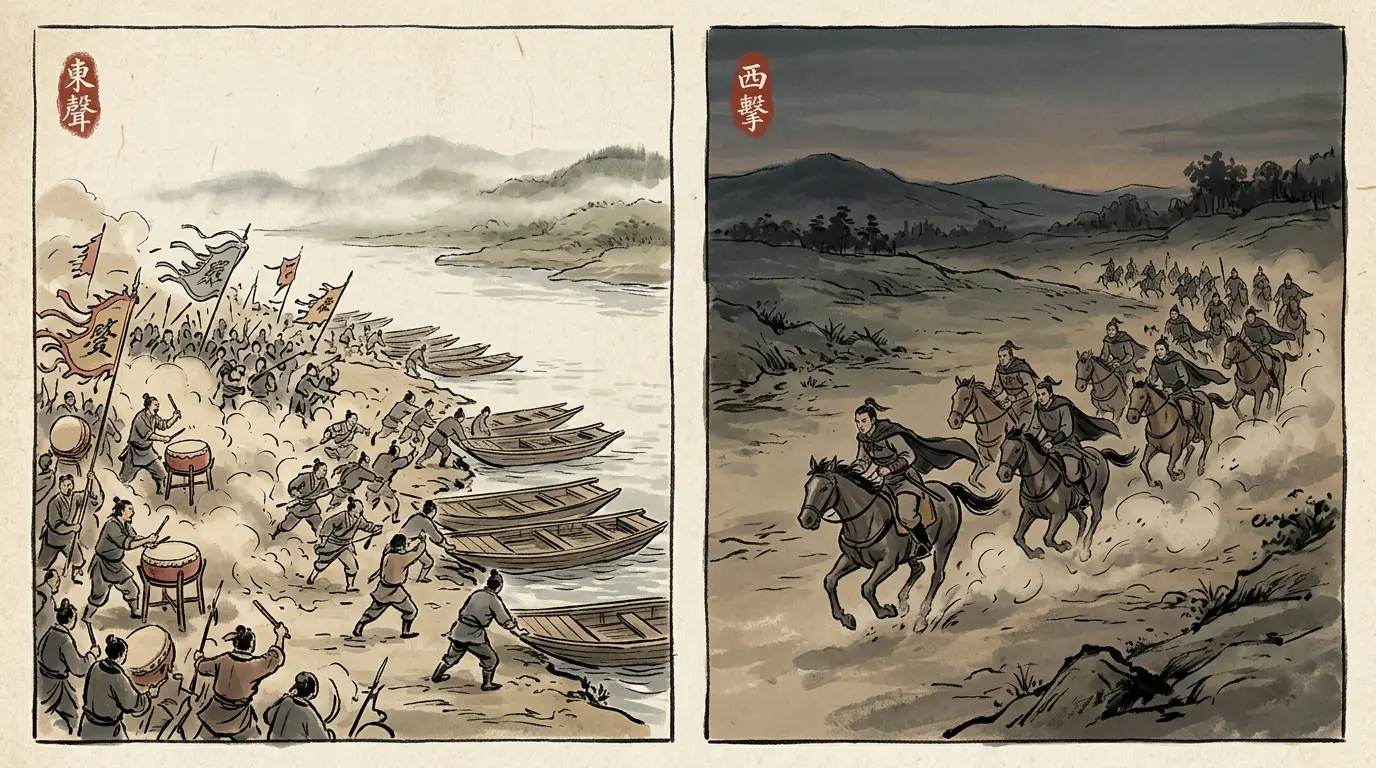
Panel 04: Show a crossing at Yanjin, as if to cut his road home — and Yuan Shao turned his army west to meet a crossing that was never meant.
Xun You Make a show at Yanjin. He will turn west to guard his road home, and Boma will stand bare.
Show a crossing at Yanjin, as if to cut his road home — and Yuan Shao turned his army west to meet a crossing that was never meant.
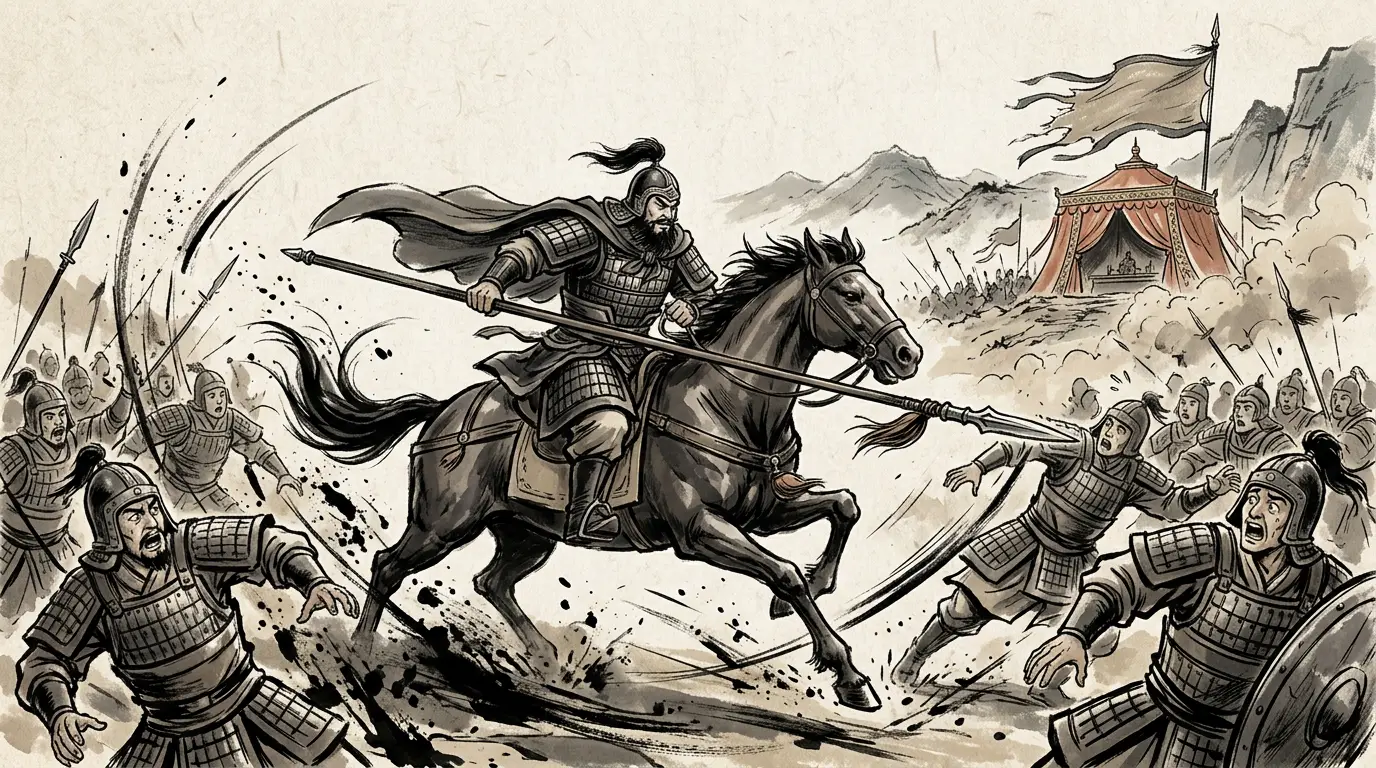
Panel 05: Guan Yu, then in Cao Cao's camp, saw Yan Liang's canopy in the distance. He went in, took the head, and came back through the ranks.
Guan Yu, then in Cao Cao's camp, saw Yan Liang's canopy in the distance. He went in, took the head, and came back through the ranks.
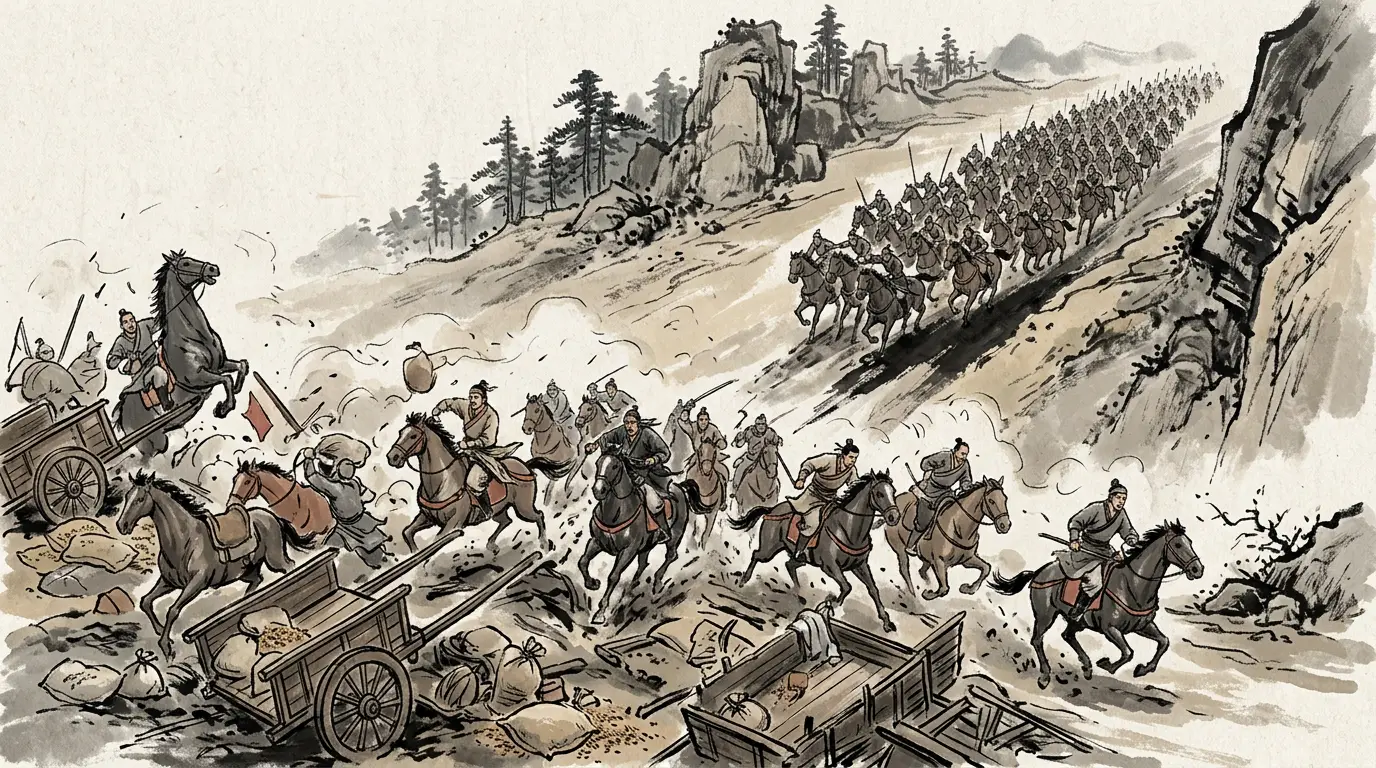
Panel 06: At Yanjin, Cao Cao left baggage on the road as bait. Wen Chou's cavalry broke formation to loot it — and six hundred horsemen fell on them. Wen Chou died in the melee.
At Yanjin, Cao Cao left baggage on the road as bait. Wen Chou's cavalry broke formation to loot it — and six hundred horsemen fell on them. Wen Chou died in the melee.
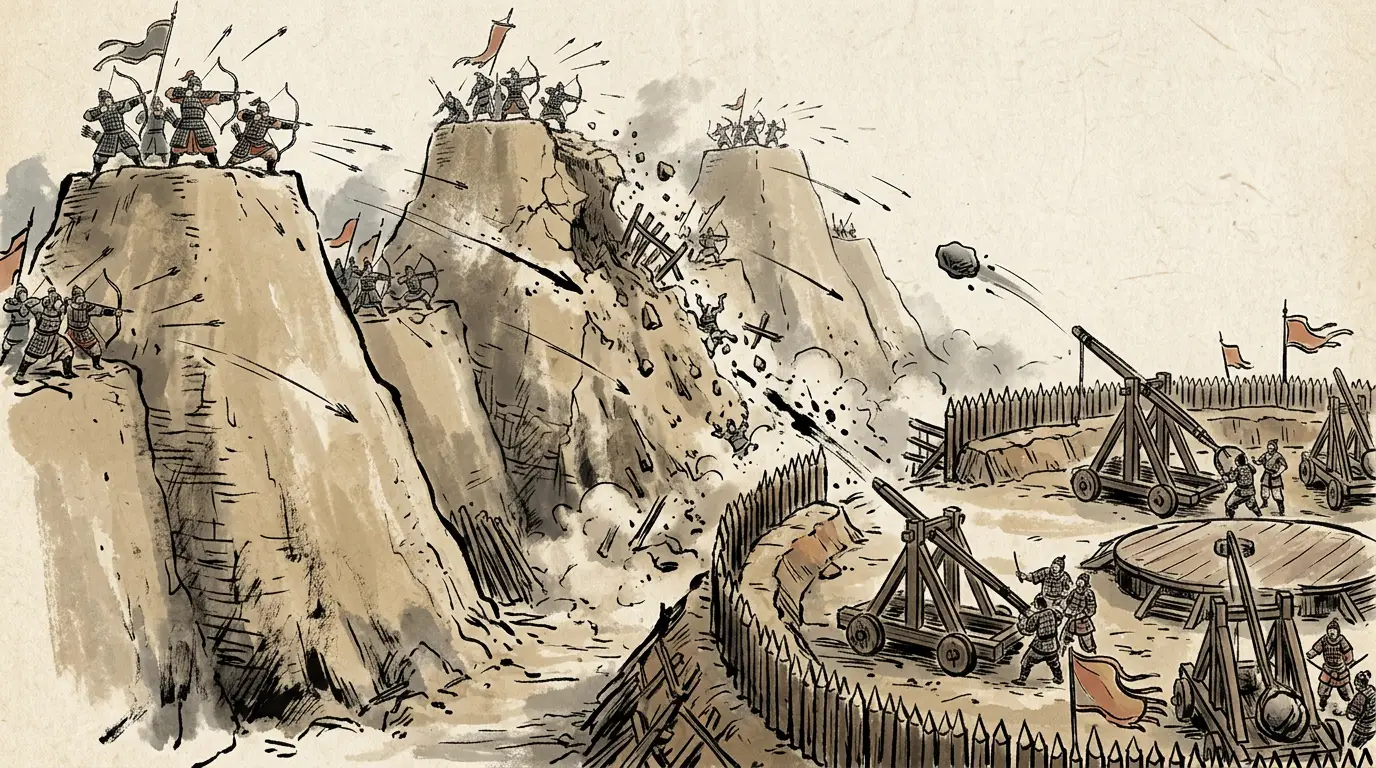
Panel 07: At Guandu itself Yuan Shao raised earth mounds and shot arrows down into the camp; Cao Cao answered with catapults the soldiers called thunder-carts, and the mounds came down.
At Guandu itself Yuan Shao raised earth mounds and shot arrows down into the camp; Cao Cao answered with catapults the soldiers called thunder-carts, and the mounds came down.
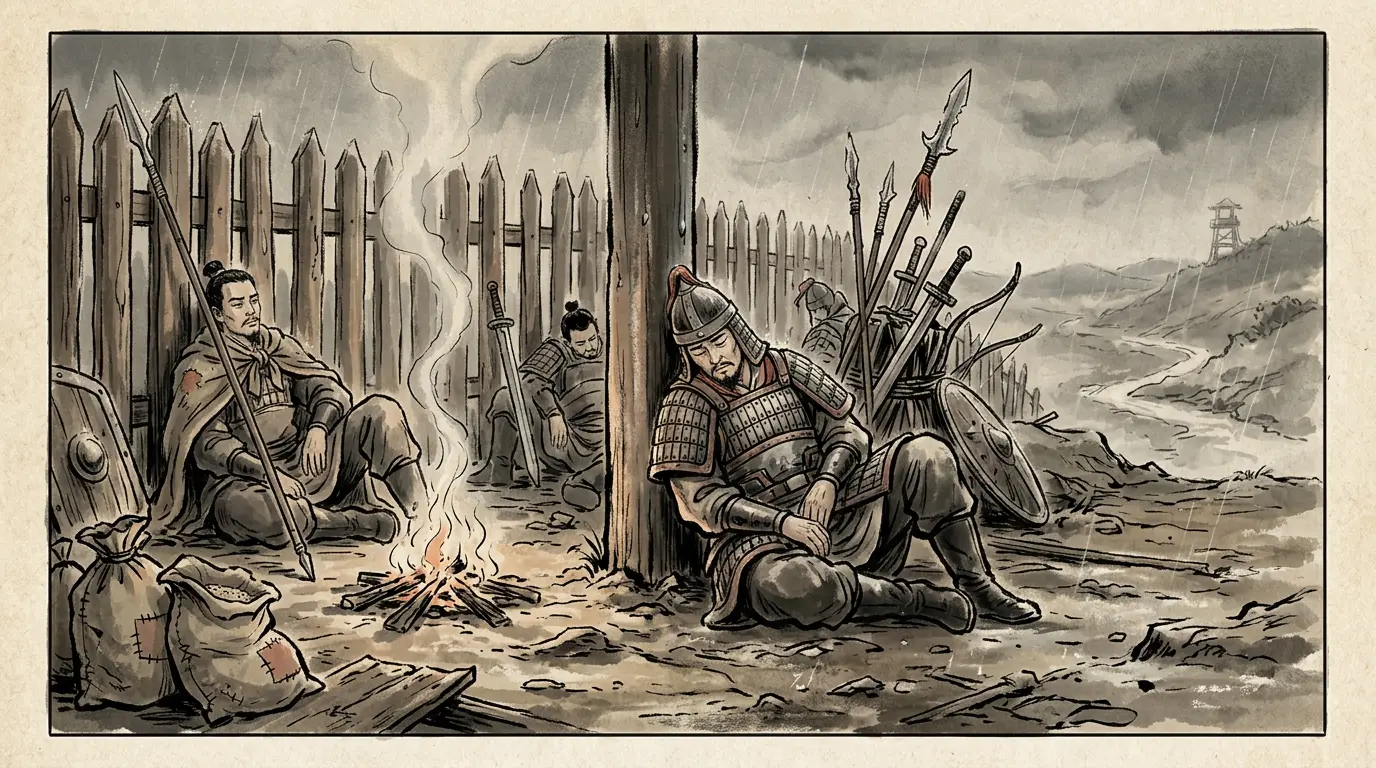
Panel 08: Months of it. Cao Cao's men were exhausted and their grain thin; he wrote to Xun Yu at Xu that he meant to withdraw. In the same months Liu Bei, Yuan Shao's guest, went south to Runan to open a second front in Cao Cao's rear.
Months of it. Cao Cao's men were exhausted and their grain thin; he wrote to Xun Yu at Xu that he meant to withdraw. In the same months Liu Bei, Yuan Shao's guest, went south to Runan to open a second front in Cao Cao's rear.
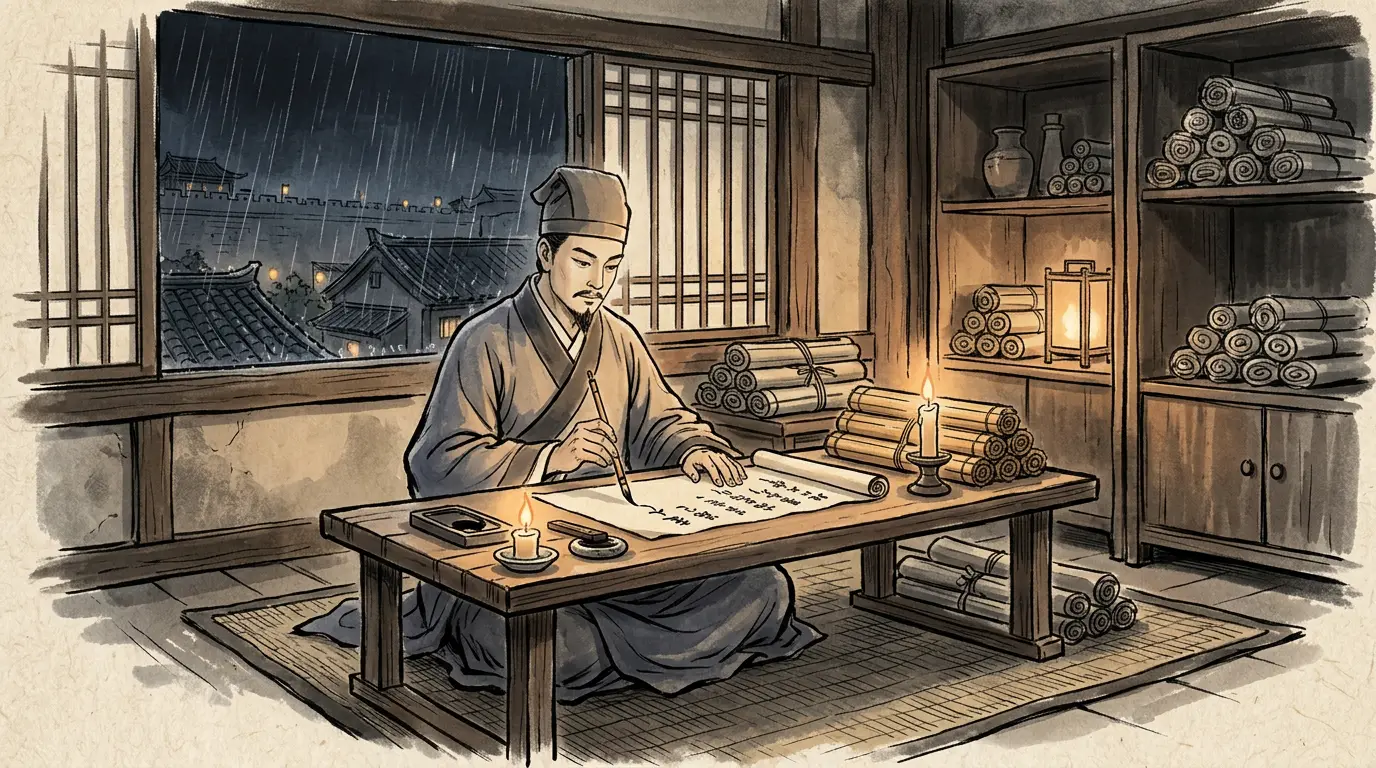
Panel 09: Xun Yu's answer: hold. Yuan Shao has brought everything to one place; if you cannot break him now, he will break you. This is the hour the whole war turns on.
Xun Yu's answer: hold. Yuan Shao has brought everything to one place; if you cannot break him now, he will break you. This is the hour the whole war turns on.
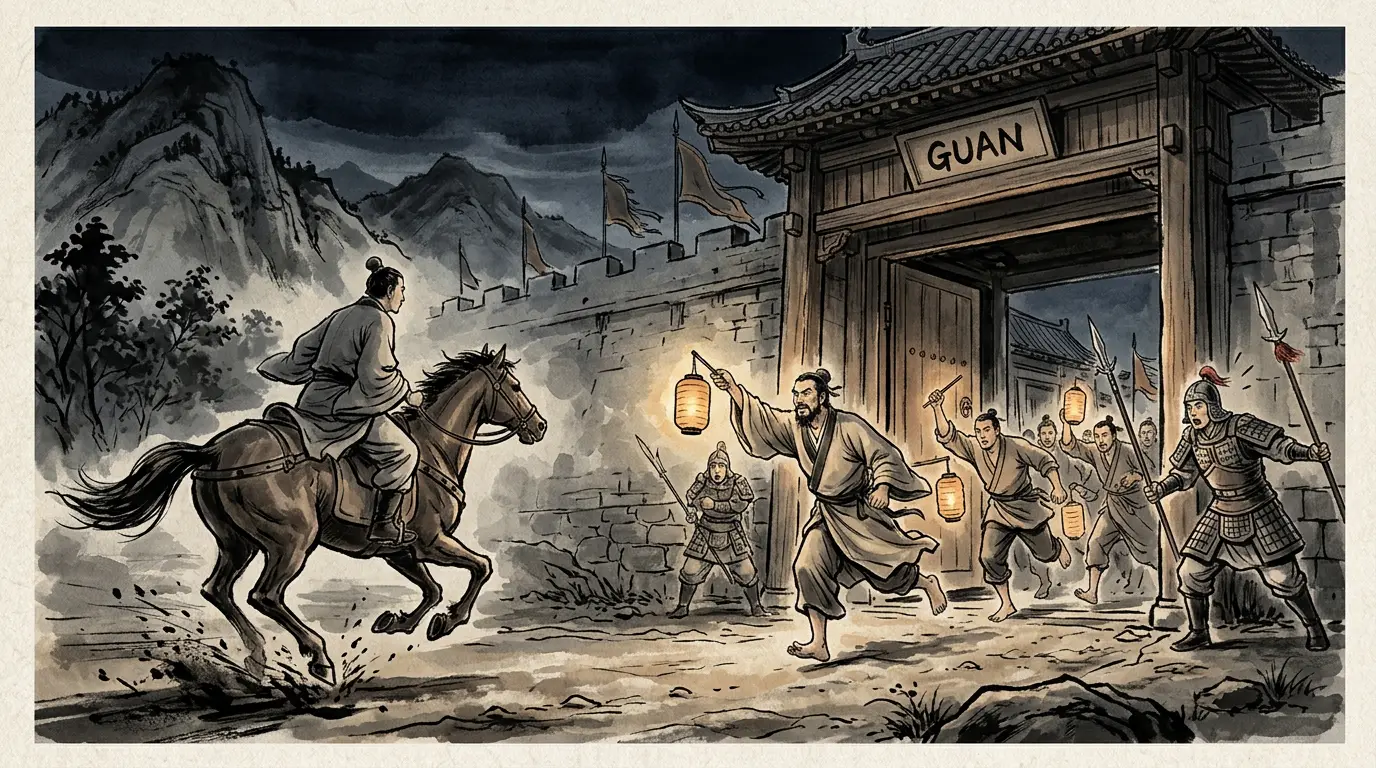
Panel 10: At night a rider came over from Yuan Shao's camp: Xu You, whose advice had been refused and whose family had been arrested at Ye. Cao Cao ran out barefoot to greet him.
Xu You His grain — ten thousand carts — sits at Wuchao, and the guard on it is light. Strike it, and in three days his army is a hunger.
At night a rider came over from Yuan Shao's camp: Xu You, whose advice had been refused and whose family had been arrested at Ye. Cao Cao ran out barefoot to greet him.
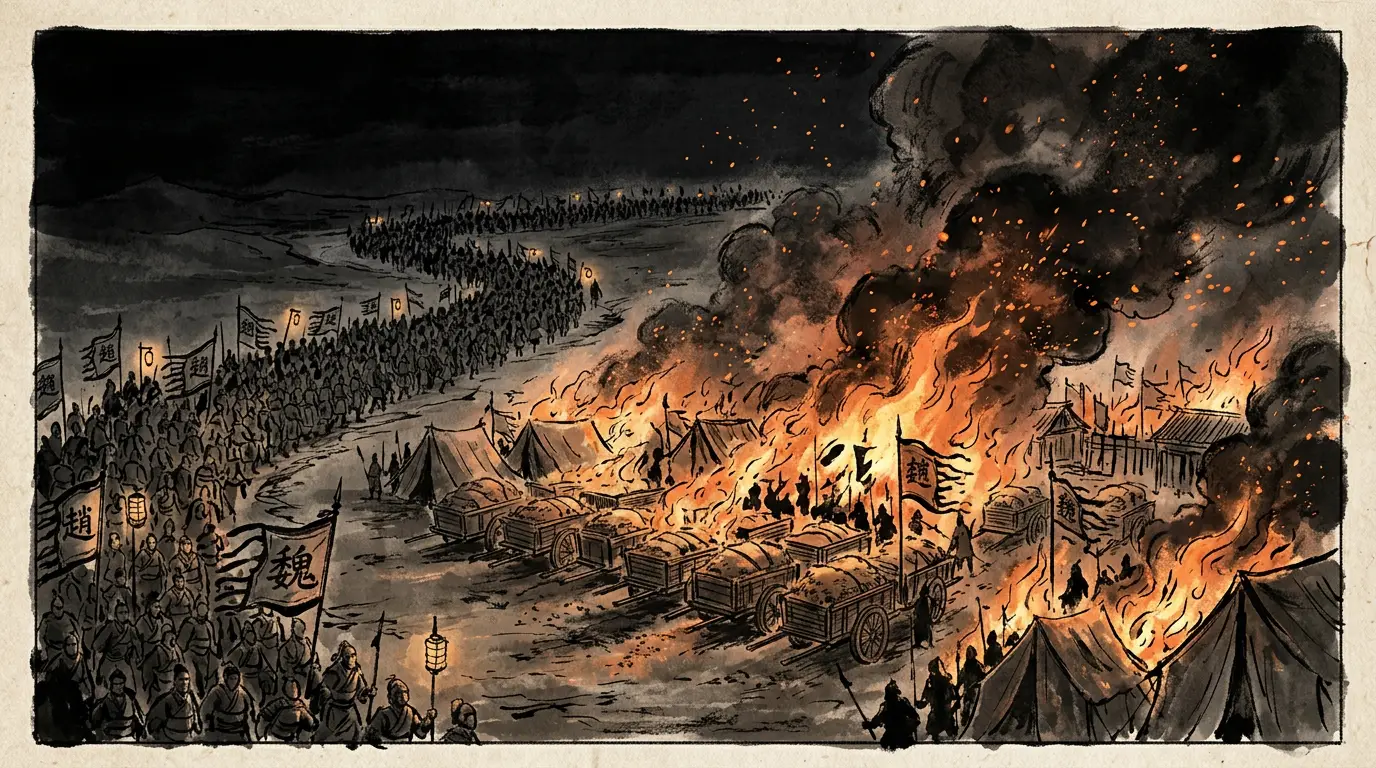
Panel 11: Five thousand step and horse, moving at night under Yuan Shao's own banners, with fire carried in the baggage. At Wuchao they burned the grain.
Five thousand step and horse, moving at night under Yuan Shao's own banners, with fire carried in the baggage. At Wuchao they burned the grain.
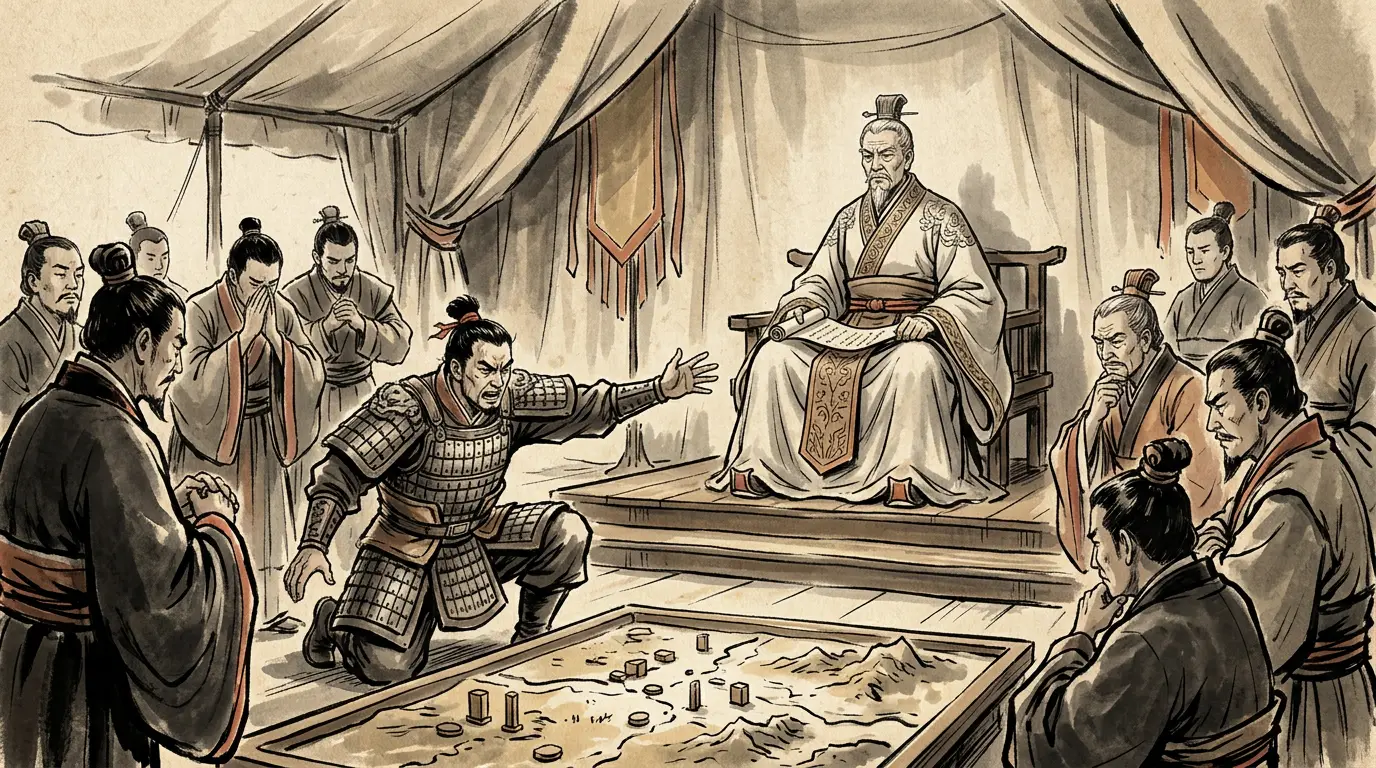
Panel 12: Told that Wuchao was burning, Yuan Shao chose to attack Cao Cao's near-empty camp instead of relieving his grain. Zhang He said the camp would not fall in time and the grain would. He was overruled.
Zhang He The camp will not fall before the grain burns. Send the heavy column to Wuchao, or we have no army to come home to.
Told that Wuchao was burning, Yuan Shao chose to attack Cao Cao's near-empty camp instead of relieving his grain. Zhang He said the camp would not fall in time and the grain would. He was overruled.
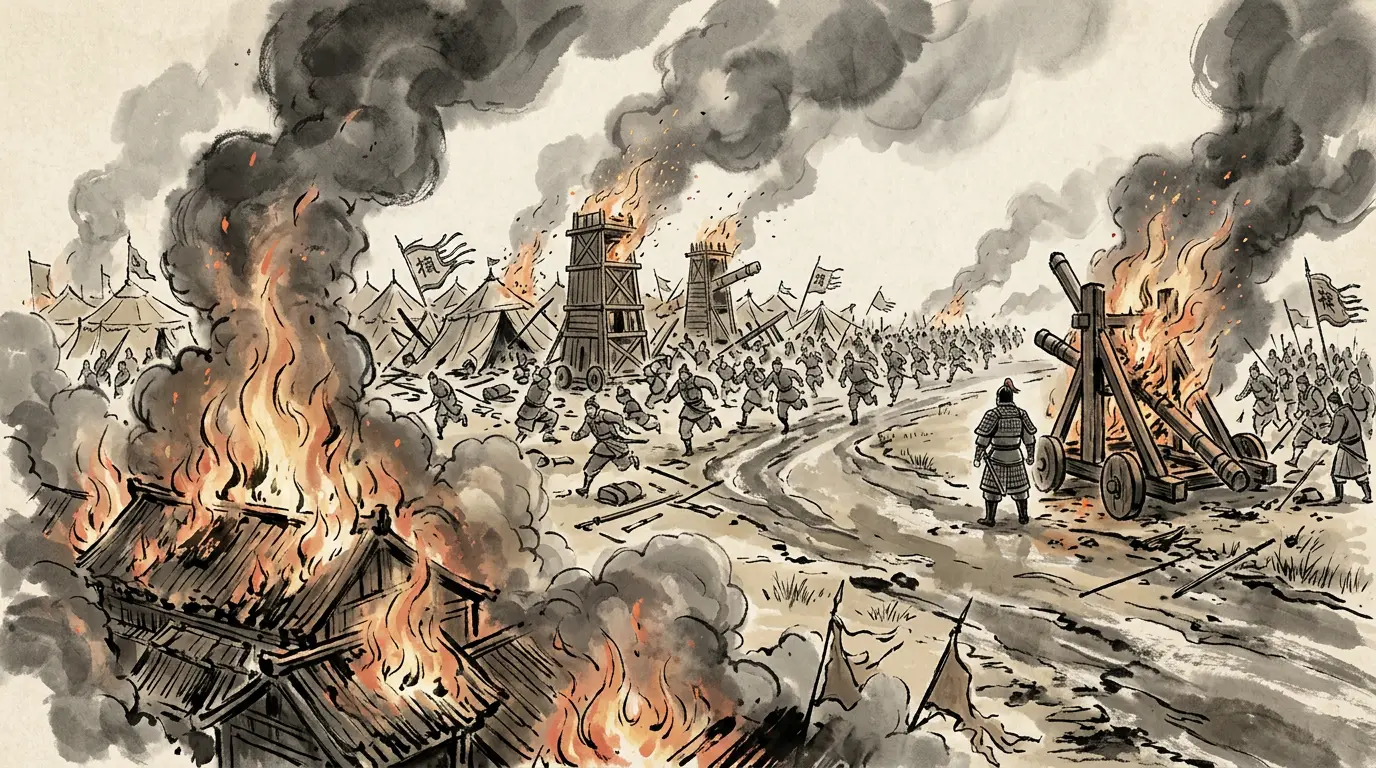
Panel 13: Wuchao burned to the ground. Zhang He, blamed for a defeat he had predicted, burned his siege engines and walked into Cao Cao's camp. Yuan Shao's army came apart.
Wuchao burned to the ground. Zhang He, blamed for a defeat he had predicted, burned his siege engines and walked into Cao Cao's camp. Yuan Shao's army came apart.
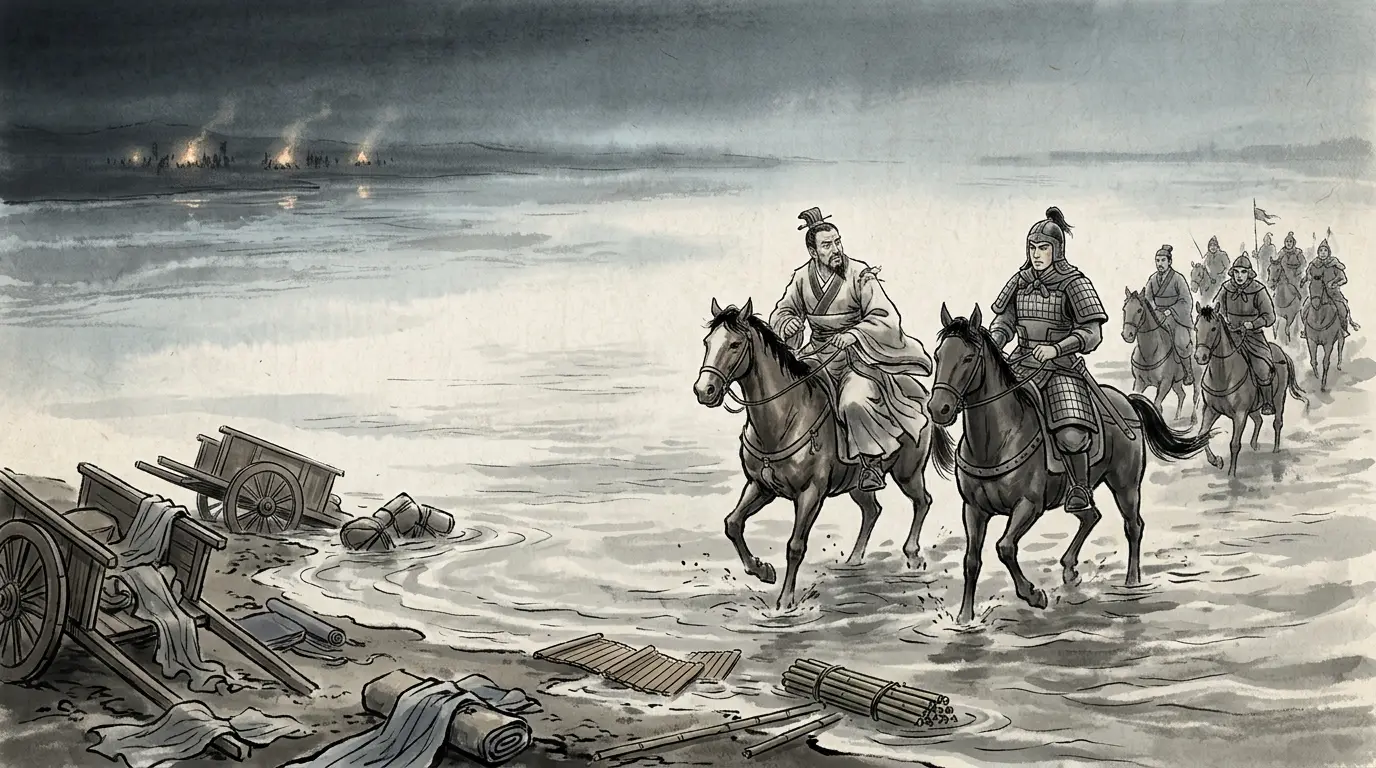
Panel 14: Yuan Shao and his son Yuan Tan crossed the river with a handful of horsemen — the Tongjian puts it at eight hundred — leaving maps, letters and treasure behind.
Yuan Shao and his son Yuan Tan crossed the river with a handful of horsemen — the Tongjian puts it at eight hundred — leaving maps, letters and treasure behind.
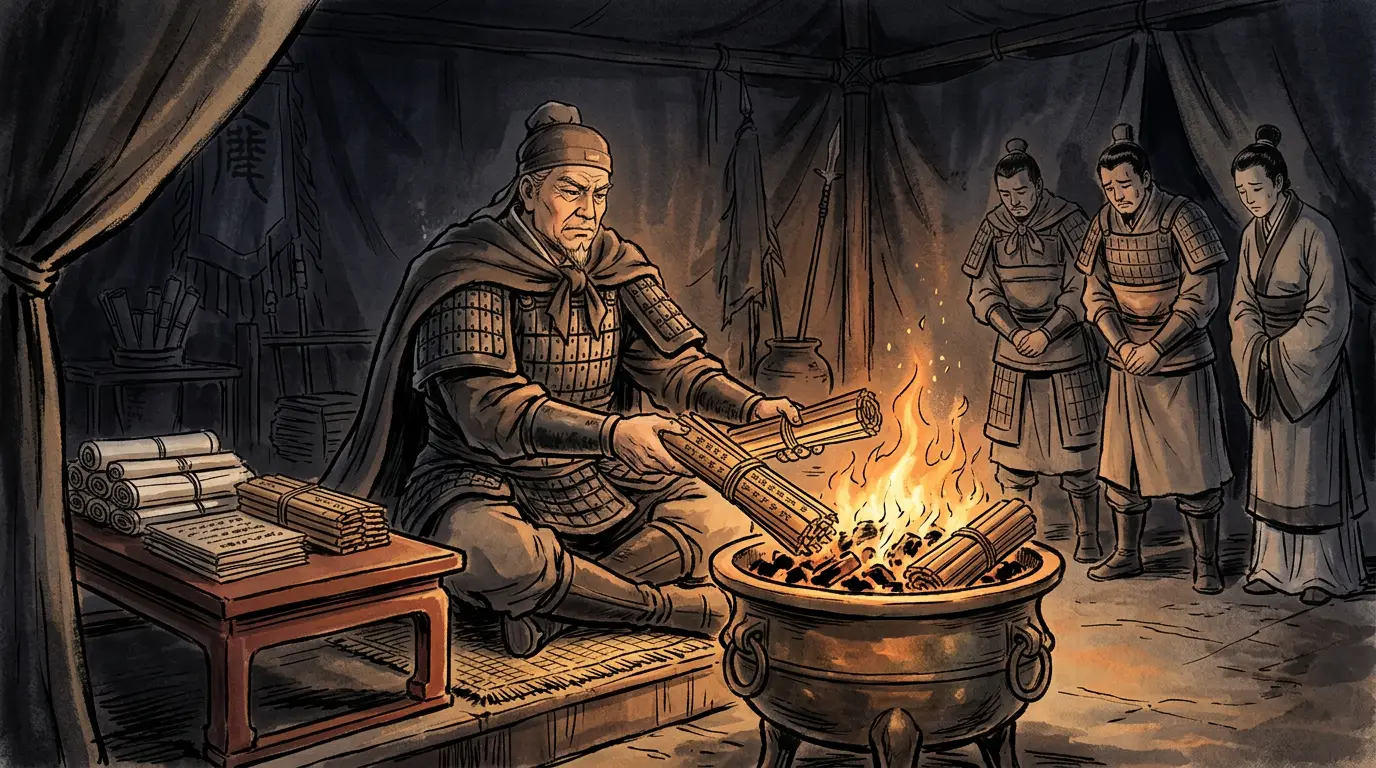
Panel 15: In Yuan Shao's abandoned files were letters from Cao Cao's own officers in Xu, hedging their bets. Cao Cao burned them without reading.
Cao Cao When Shao was strong, I myself could not be sure of safety — how much less the men of the province? Burn them.
In Yuan Shao's abandoned files were letters from Cao Cao's own officers in Xu, hedging their bets. Cao Cao burned them without reading.
Panel 16: In 202 Yuan Shao died of sickness and shame; by 207 the north was Cao Cao's. The road he had opened led south, to a river called Red Cliff.
In 202 Yuan Shao died of sickness and shame; by 207 the north was Cao Cao's. The road he had opened led south, to a river called Red Cliff.

In this episode

Two decision-makers carried this year — the one who could decide, and the one who could not. One sentence in a biography did the rest.

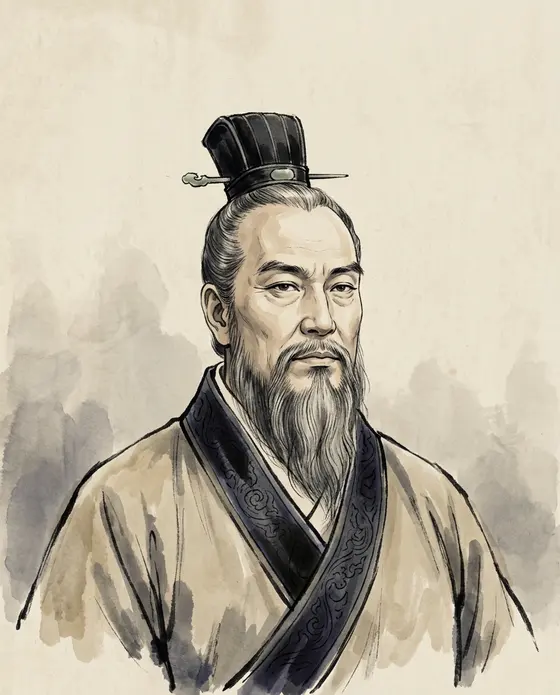
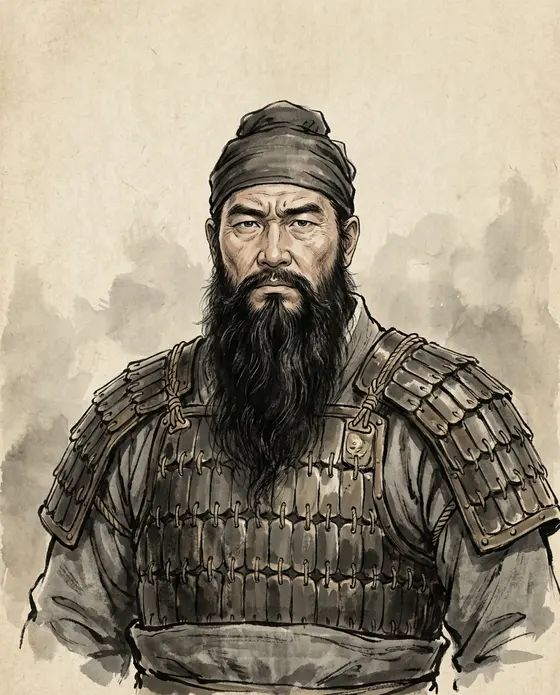
Portrait of Cao Cao
Cao Cao曹操
155–220 CE
Held the line at Guandu with fewer provinces, less grain, and every decision that mattered.
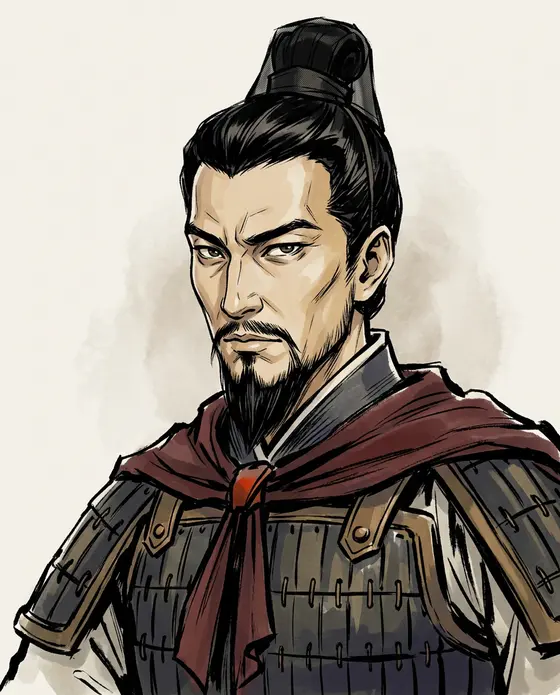
Portrait of Yuan Shao
Yuan Shao袁紹
d. 202 CE
Heir of the Yuan clan of Runan, master of four provinces north of the river. Lost the one battle that decided the north.
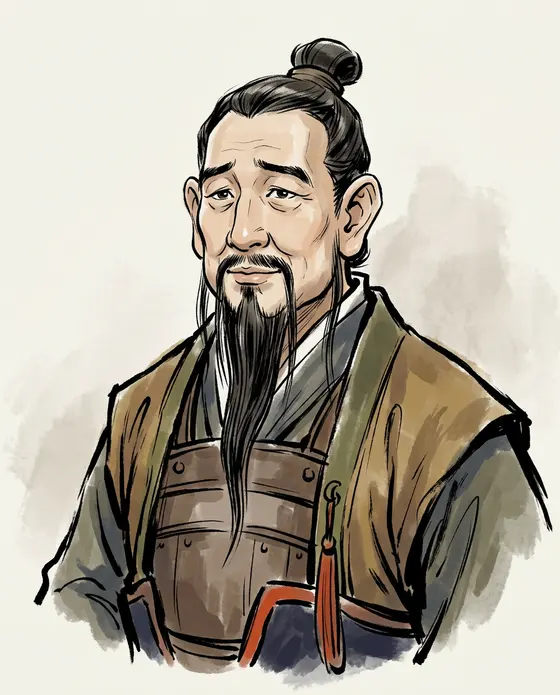
Portrait of Guan Yu
Guan Yu關羽
d. 220 CE
In 200 a general in Cao Cao's camp. Ended Yan Liang at Boma, then went back to Liu Bei.
Portrait of Liu Bei
Liu Bei劉備
161–223 CE
Yuan Shao's guest and Cao Cao's problem; sent south to raise trouble in Cao Cao's rear.

Myth Check

The novel Romance of the Three Kingdoms is a masterpiece — and not a source. Where its famous scenes depart from the histories, we leave them out of the story and put them here.

The story you may know

Guan Yu killed both Yan Liang and Wen Chou, the two great names of the north, in single combats.

What the sources say

The sources give Guan Yu Yan Liang, killed in the battle of Boma. Wen Chou died at Yanjin in the disorder of Cao Cao's baggage trap; the histories name no killer, and Guan Yu's own biography does not claim him.

Sanguozhi, Shu shu 6; Wei shu 1
The story you may know

Cao Cao won at Guandu with a handful of men against a host of a million — the eternal odds of the story.

What the sources say

The annals' own figure for Cao Cao (fewer than ten thousand) is disputed by Pei Songzhi, who counts the garrisons and campaigns to show it impossible; Yuan Shao's host is put at some hundred thousand in the Tongjian. The ratio is a claim in the sources, not a fact.

Sanguozhi, Wei shu 1, Pei Songzhi commentary; Zizhi Tongjian 63
The story you may know

Xu You was a greedy clown who betrayed Yuan Shao for money and died boasting at a city gate.

What the sources say

The histories record a counsellor whose plan to strike Xu was refused and whose family was arrested at Ye by Shen Pei; his death came later, from insolence toward Cao Cao, not from the novel's scene of boasting at the gate.

Sanguozhi, Wei shu 12, Pei Songzhi commentary; Zizhi Tongjian 63–64

Sources

Every caption and quotation in this episode traces to one of these. Where scholars disagree, the panel says so.

Next

The road opened here leads south, eight years on, to Episode 1 · Fire on the Yangtze (208 CE). From there the age runs forward: Episode 3 · Fire at Yiling (222 CE), and Episode 4 · The Last Campaign (234 CE). Meanwhile — meet the cast, or read the chronology of the age.