Bamboo Scroll竹簡 Ep. 1 · Fire on the Yangtze
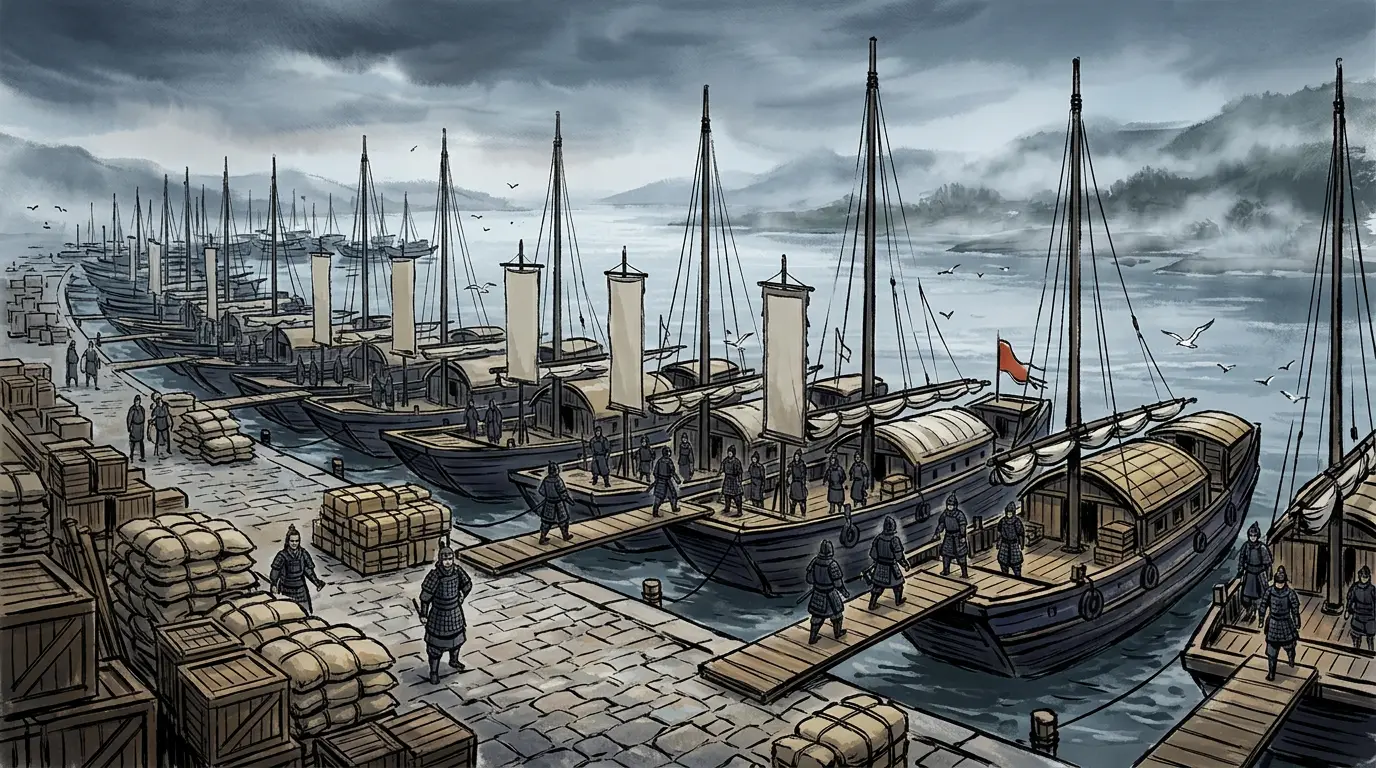
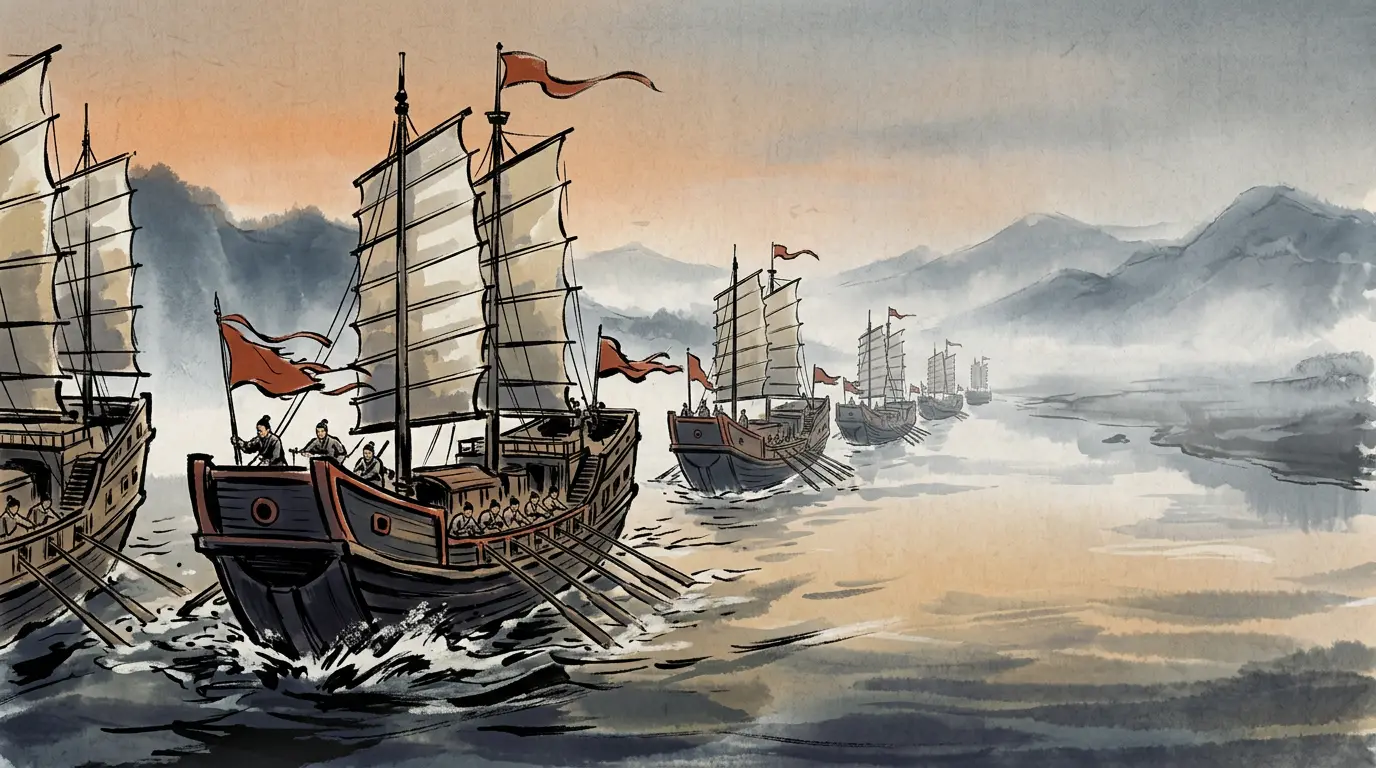
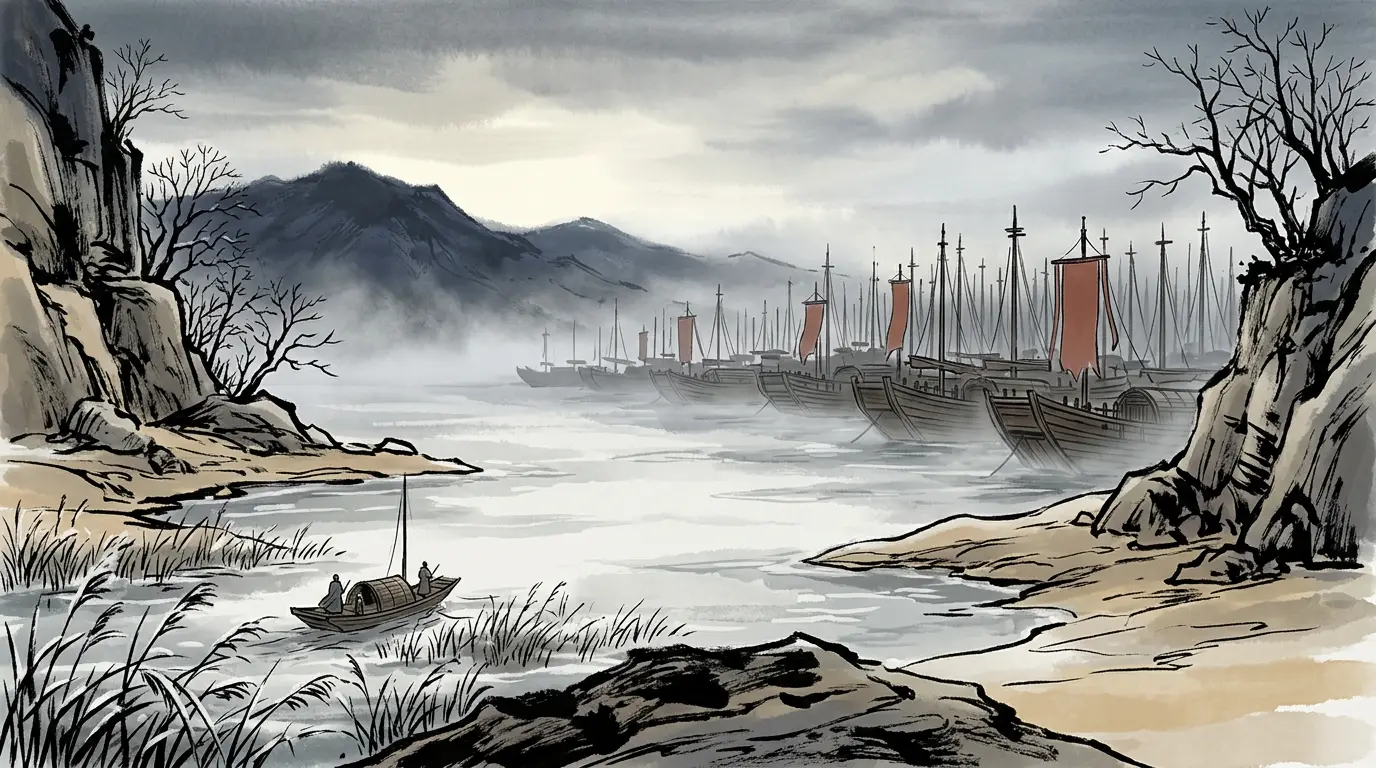
Warships in winter mist on the Yangtze, 208 CE
Bamboo Scroll · Three Kingdoms · Episode 1

Fire on the Yangtze

Red Cliff, 208 CE — One river. Three warlords. A fire that decided China would not be united for sixty years.
20 panels~8 min read free to readevery line sourced
Panel 01: Winter, 208 CE. The Yangtze at a place the histories call Red Cliff.
Winter, 208 CE. The Yangtze at a place the histories call Red Cliff.
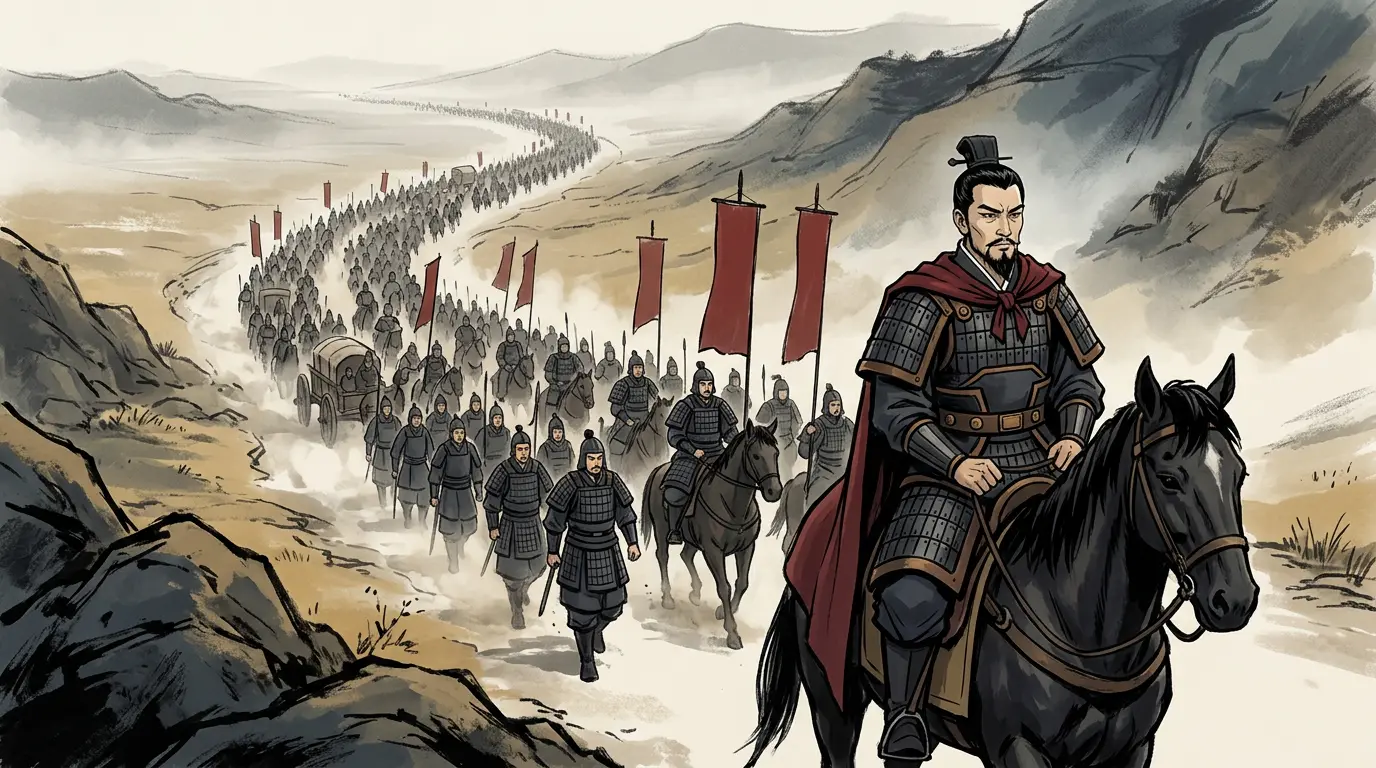
Panel 02: That autumn, Cao Cao turned south. The north was his. He meant to finish the empire in one campaign.
That autumn, Cao Cao turned south. The north was his. He meant to finish the empire in one campaign.
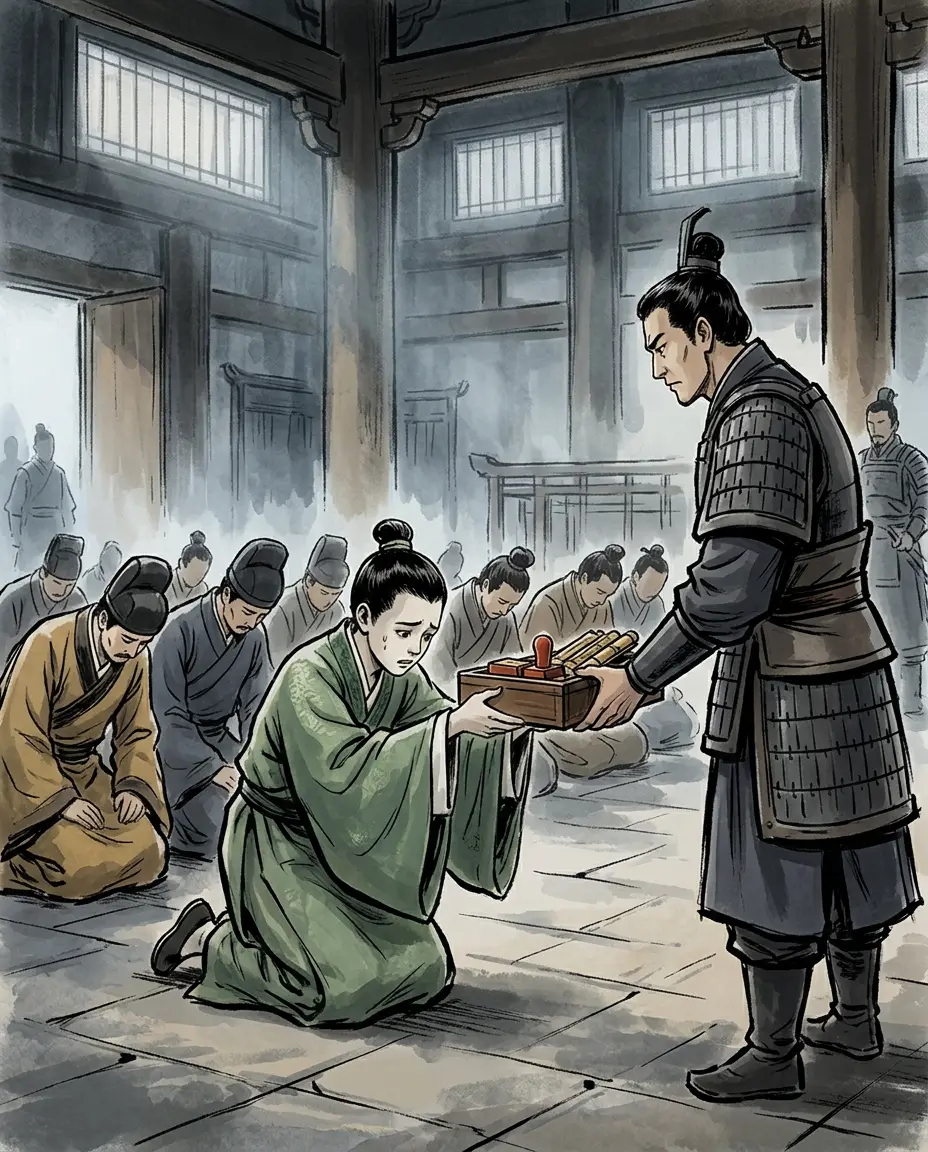
Panel 03: But Liu Biao died first. His younger son Liu Cong chose not to fight.
But Liu Biao died first. His younger son Liu Cong chose not to fight.
Panel 04: With Jiangling came the thing Cao Cao had always lacked: a fleet, and the south's grain.
With Jiangling came the thing Cao Cao had always lacked: a fleet, and the south's grain.
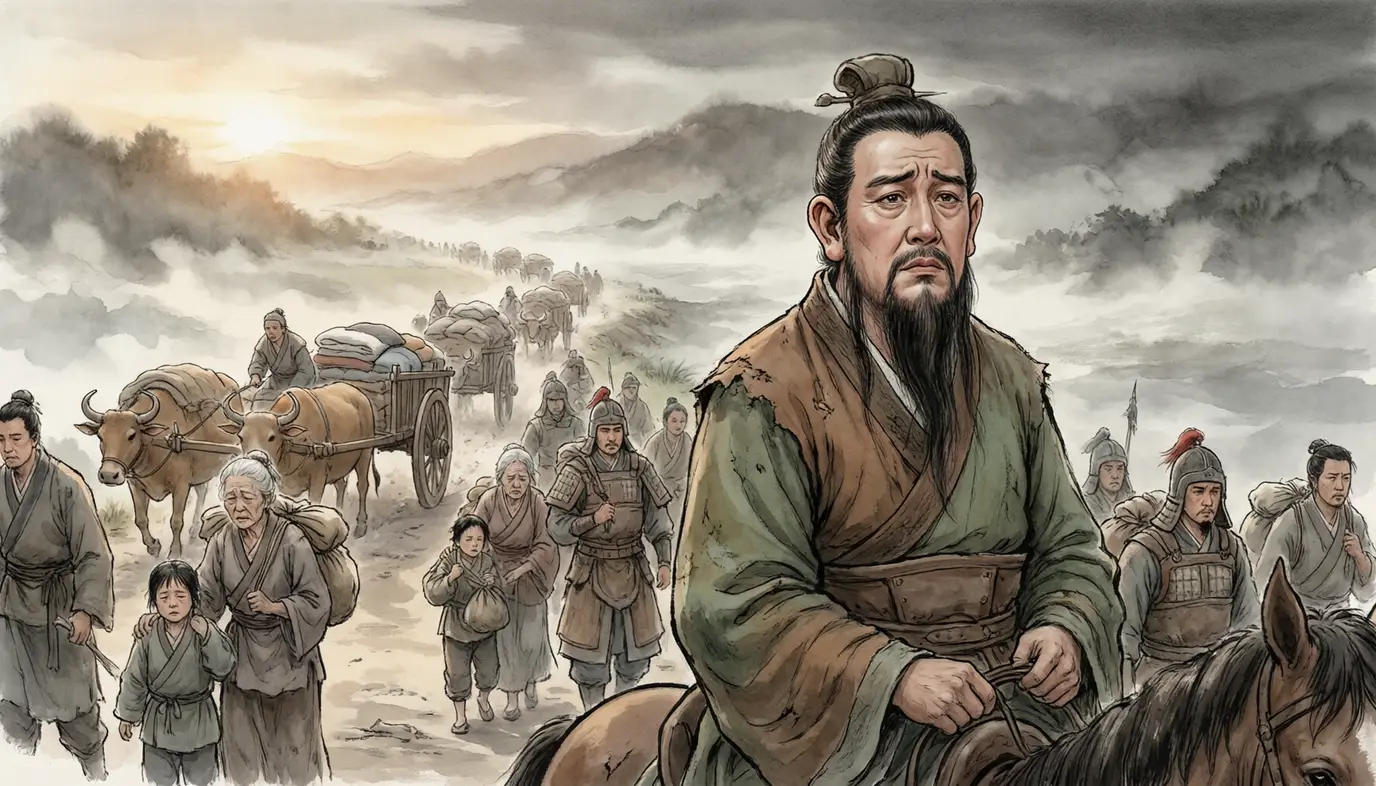
Panel 05: Liu Bei fled south — and over a hundred thousand people fled with him. He would not leave them behind.
Liu Bei Great affairs are built on people. They have come to me — how could I bear to abandon them?
Liu Bei fled south — and over a hundred thousand people fled with him. He would not leave them behind.
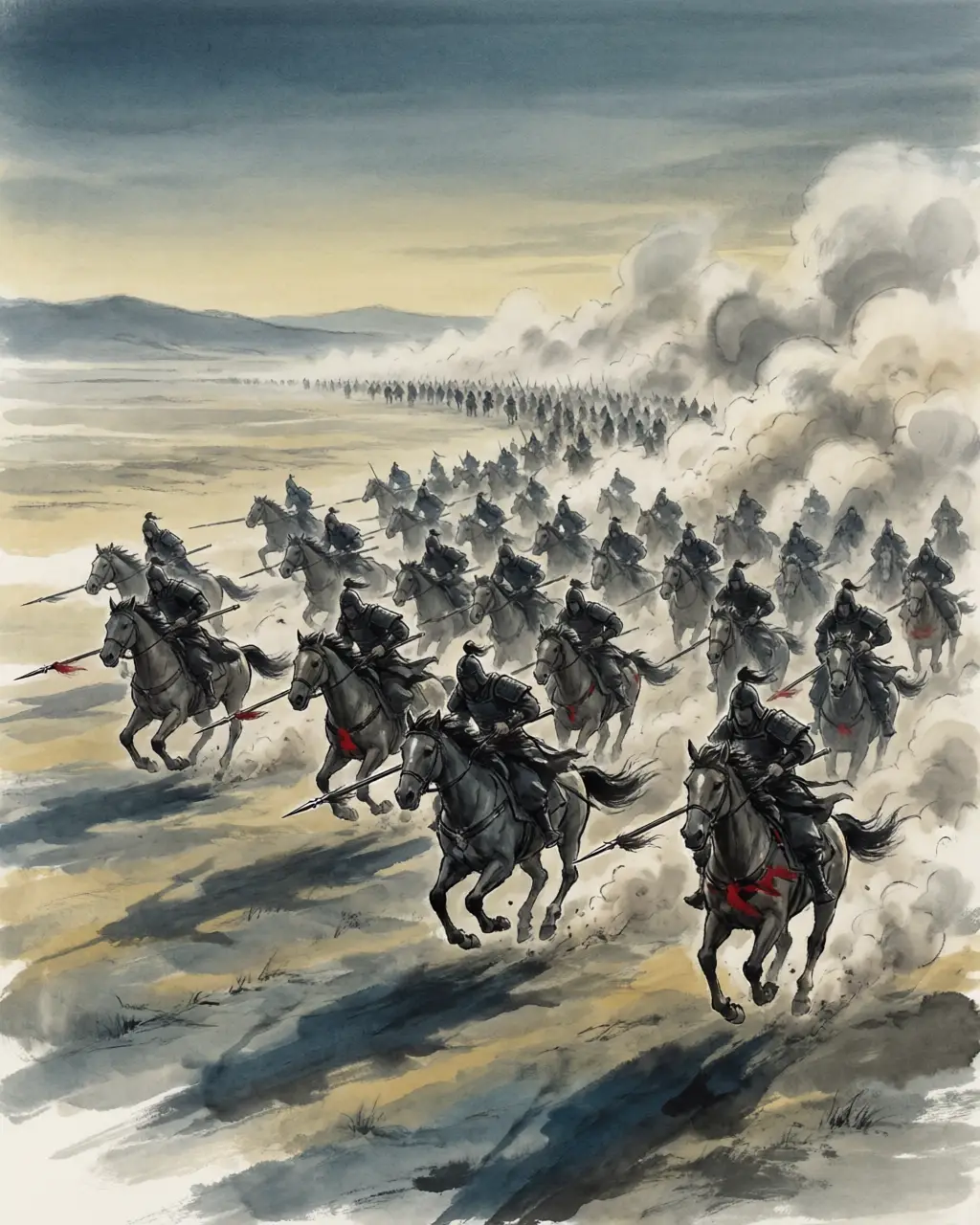
Panel 06: Cao Cao sent five thousand light cavalry after him. In one day and one night they rode three hundred li.
Cao Cao sent five thousand light cavalry after him. In one day and one night they rode three hundred li.
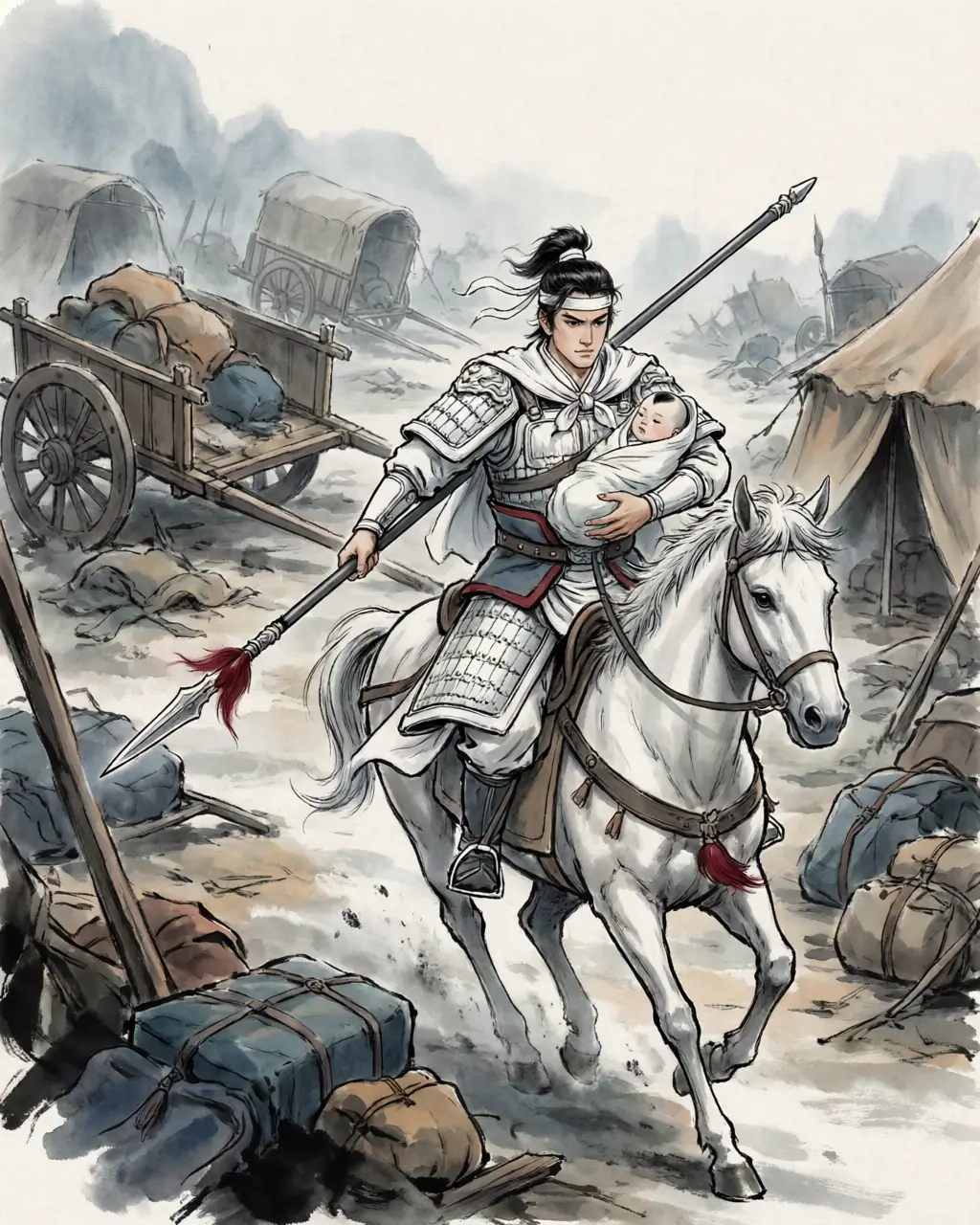
Panel 07: Liu Bei rode ahead and left his family. Zhao Yun came through the wreckage holding the infant son and protecting Lady Gan.
Liu Bei rode ahead and left his family. Zhao Yun came through the wreckage holding the infant son and protecting Lady Gan.
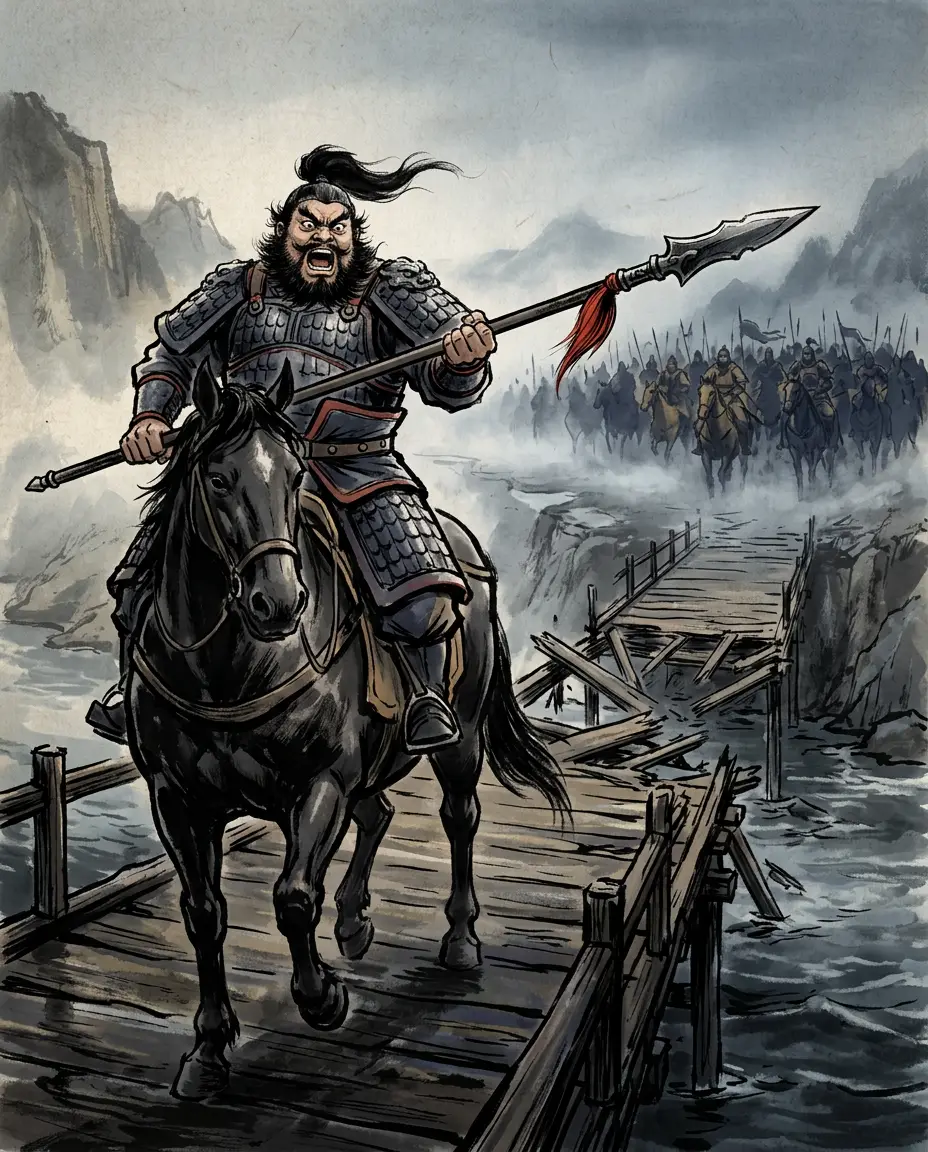
Panel 08: Twenty horsemen held a river crossing while the army escaped. Zhang Fei tore up the bridge behind him, and waited.
Zhang Fei I am Zhang Yide! Come over and settle it to the death!
Twenty horsemen held a river crossing while the army escaped. Zhang Fei tore up the bridge behind him, and waited.
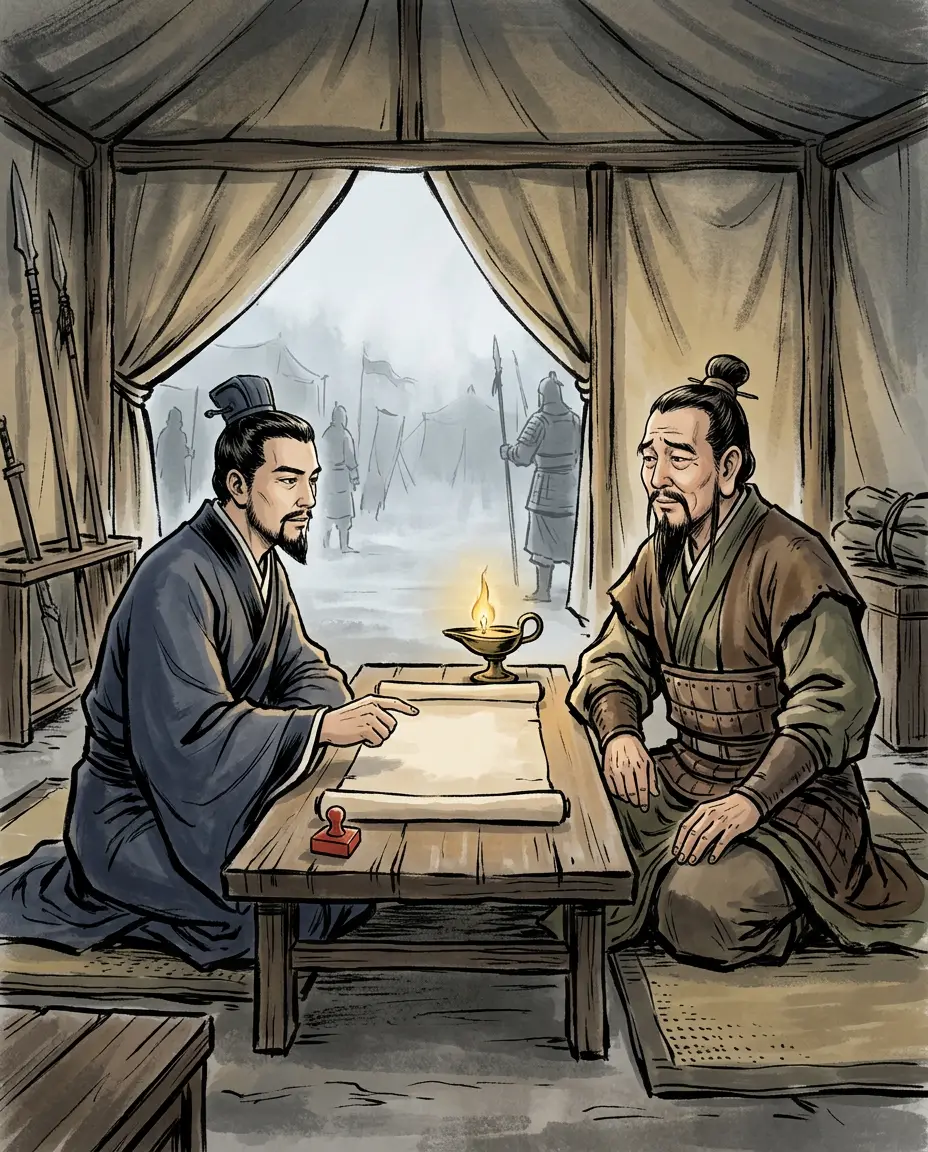
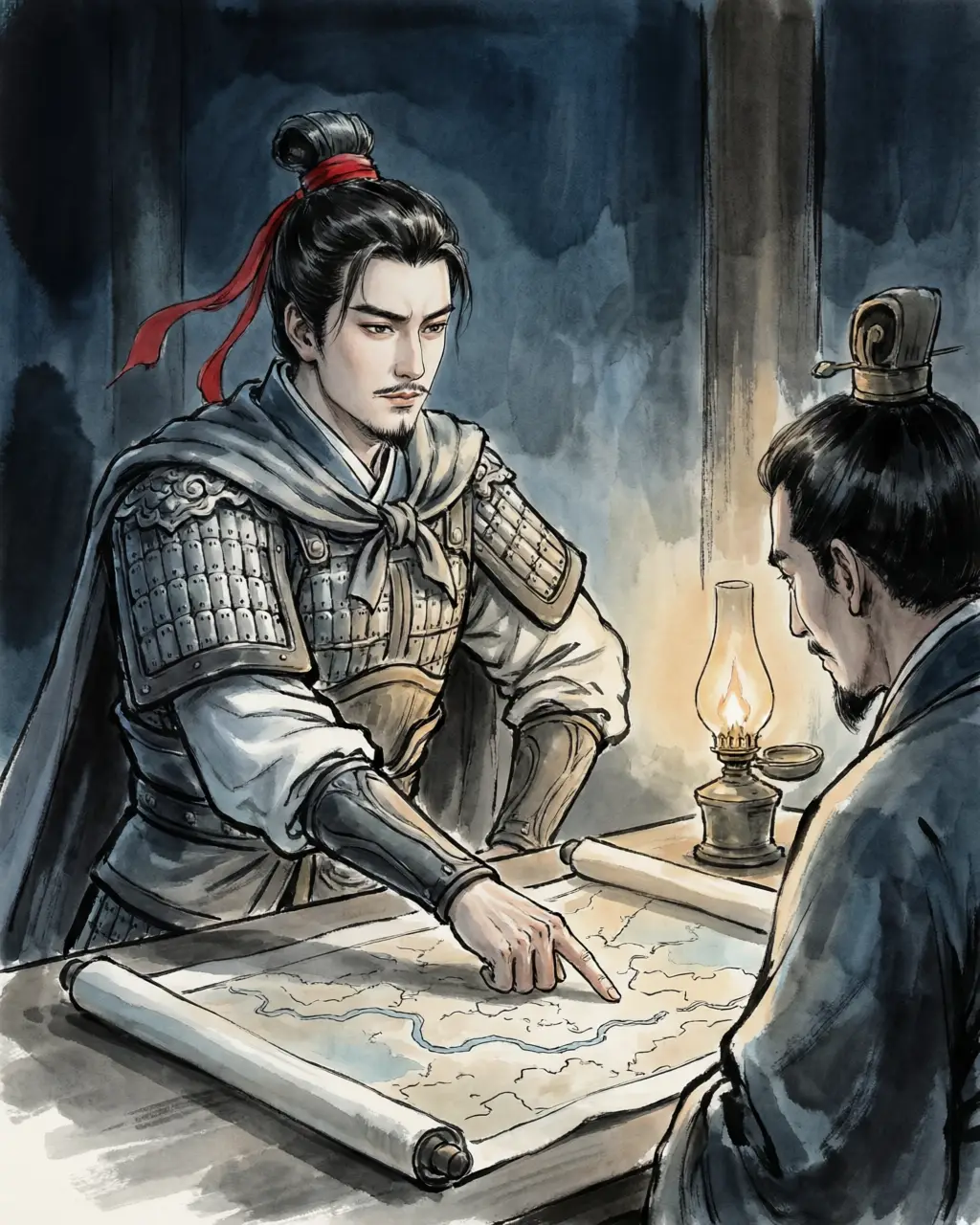
Panel 09: Sun Quan's envoy Lu Su found Liu Bei in the wreckage — and proposed the alliance that made the battle possible.
Sun Quan's envoy Lu Su found Liu Bei in the wreckage — and proposed the alliance that made the battle possible.
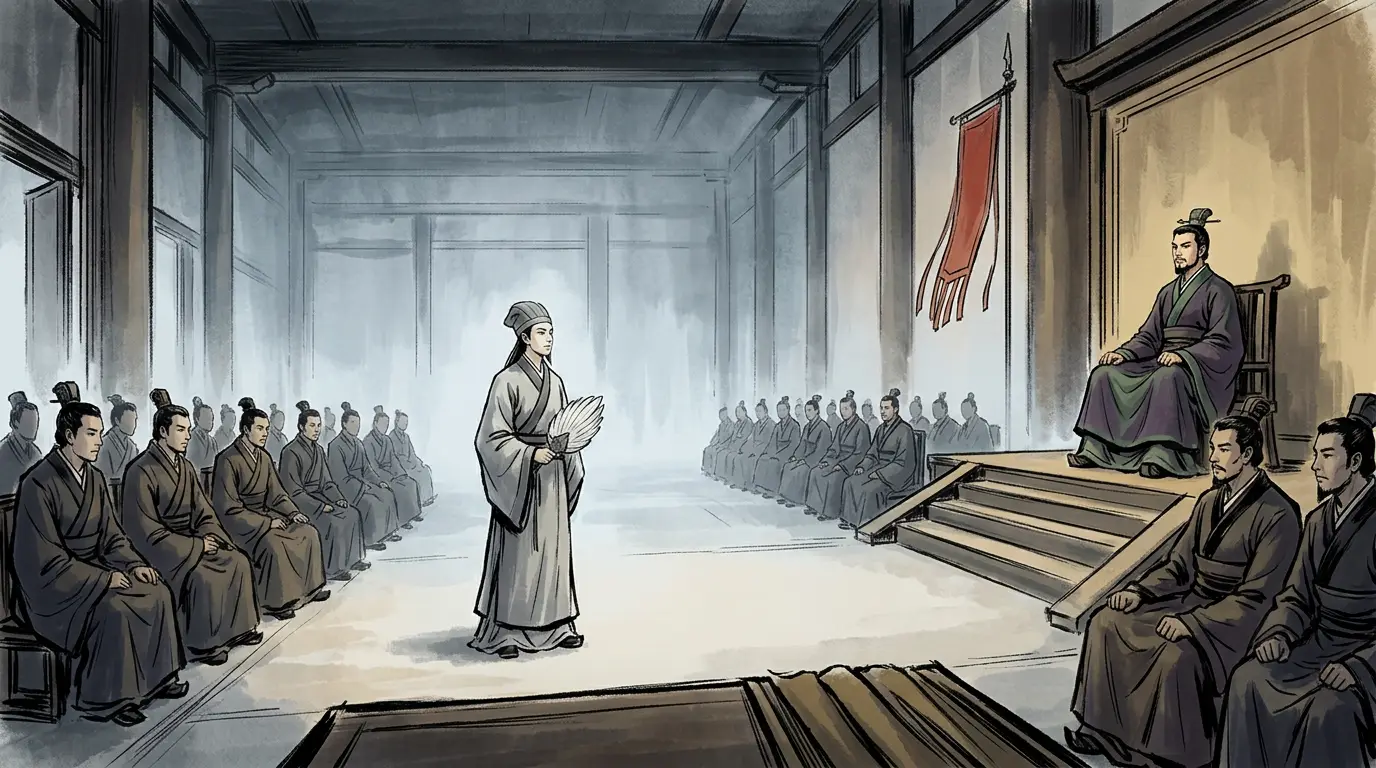
Panel 10: At Chaisang, a twenty-seven-year-old with no army of his own stood in front of the court of Wu.
At Chaisang, a twenty-seven-year-old with no army of his own stood in front of the court of Wu.
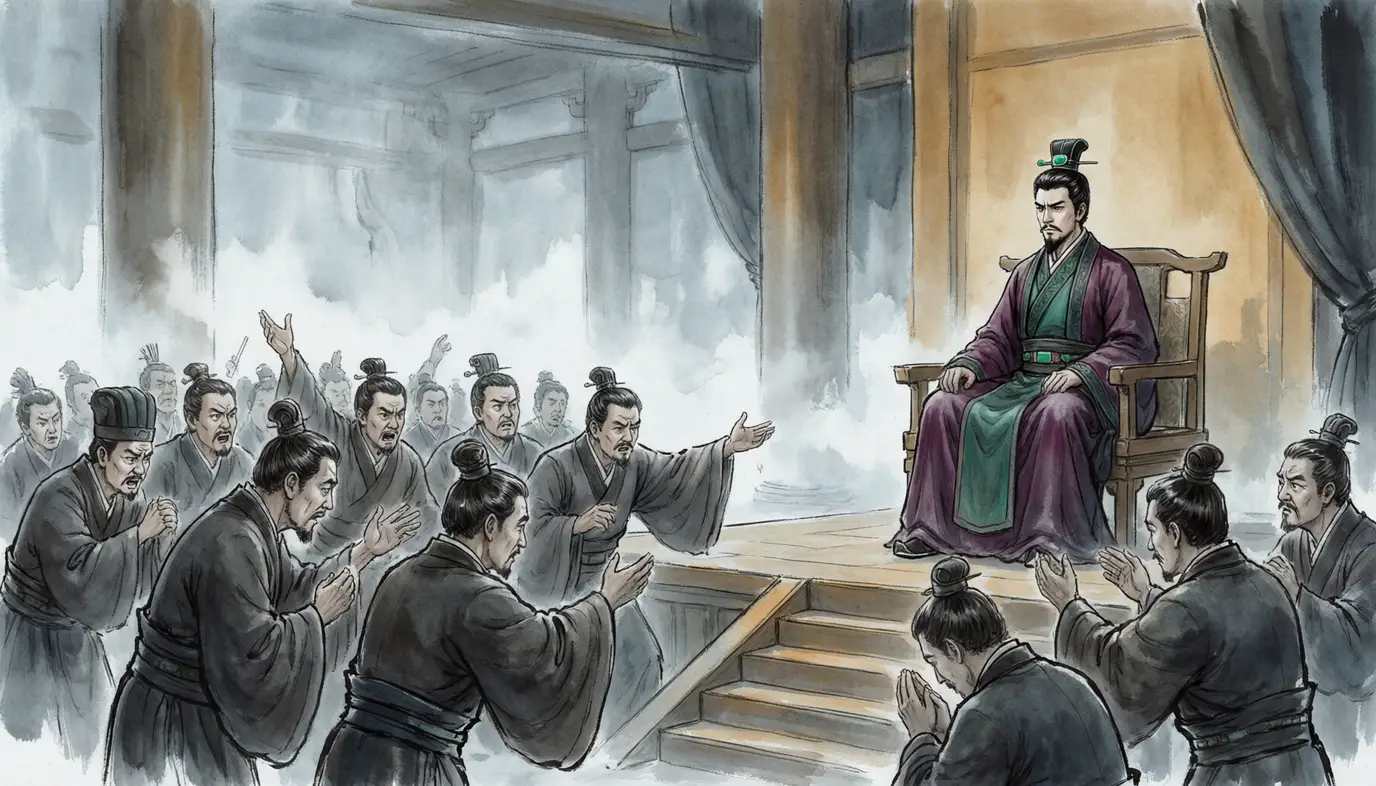
Panel 11: Most of Sun Quan's advisers wanted peace. Cao Cao's letter had claimed eight hundred thousand men.
Most of Sun Quan's advisers wanted peace. Cao Cao's letter had claimed eight hundred thousand men.
Panel 12: Zhou Yu stood up and counted Cao Cao's real weaknesses on his fingers.
Zhou Yu His north is not pacified. His men are northerners and cannot fight on water. It is deep winter, his horses have no grass, and his soldiers, unused to this water and climate, will sicken. This is not a numbers problem. It is a river problem.
Zhou Yu stood up and counted Cao Cao's real weaknesses on his fingers.
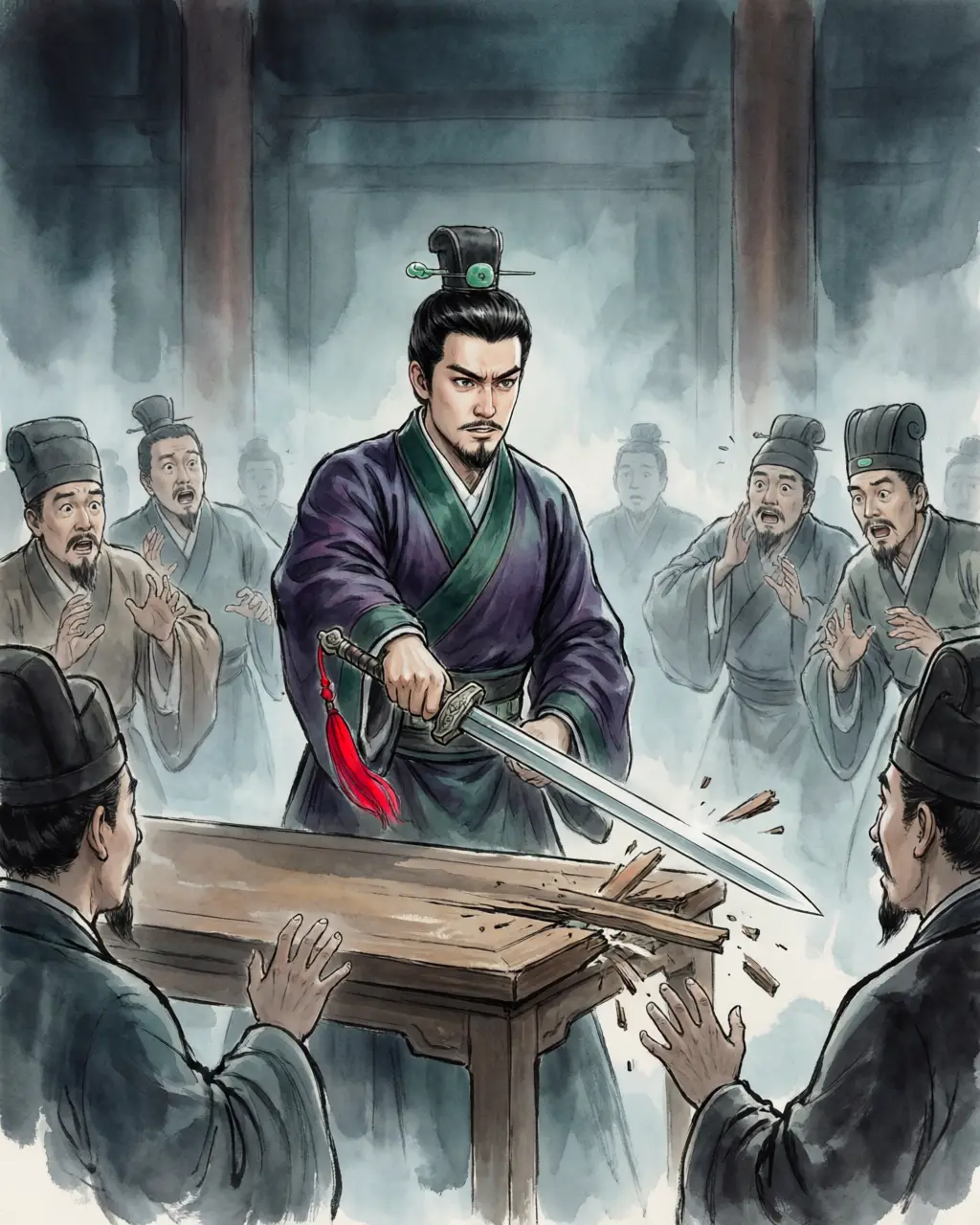
Panel 13: Sun Quan cut the corner from his own desk, and gave Zhou Yu thirty thousand men.
Sun Quan Whoever speaks of surrender again will look like this desk.
Sun Quan cut the corner from his own desk, and gave Zhou Yu thirty thousand men.
Panel 14: The allied fleet went upriver to meet him. Neither side yet knew the other's strength for certain.
The allied fleet went upriver to meet him. Neither side yet knew the other's strength for certain.
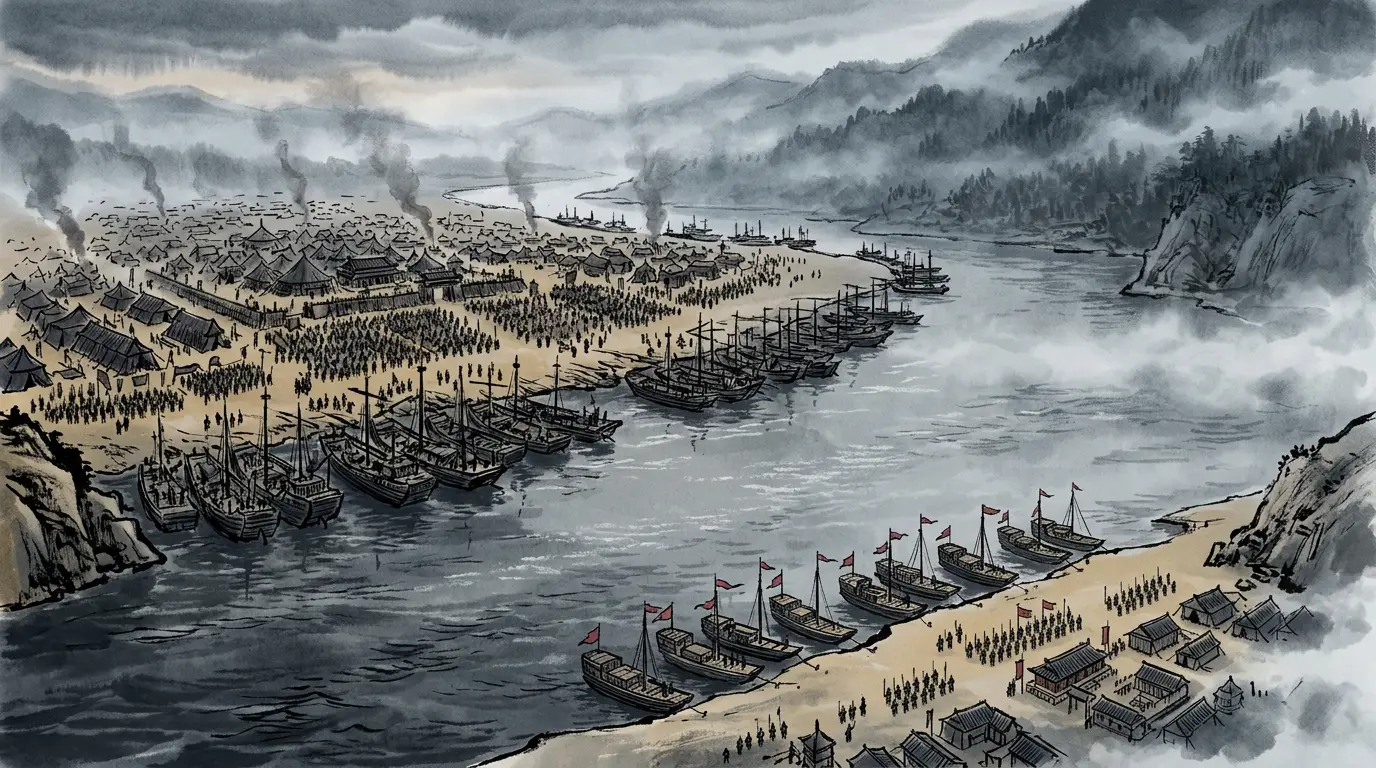
Panel 15: They met at Red Cliff. The first engagement went against Cao Cao, and he pulled back to the north bank, at Wulin.
They met at Red Cliff. The first engagement went against Cao Cao, and he pulled back to the north bank, at Wulin.
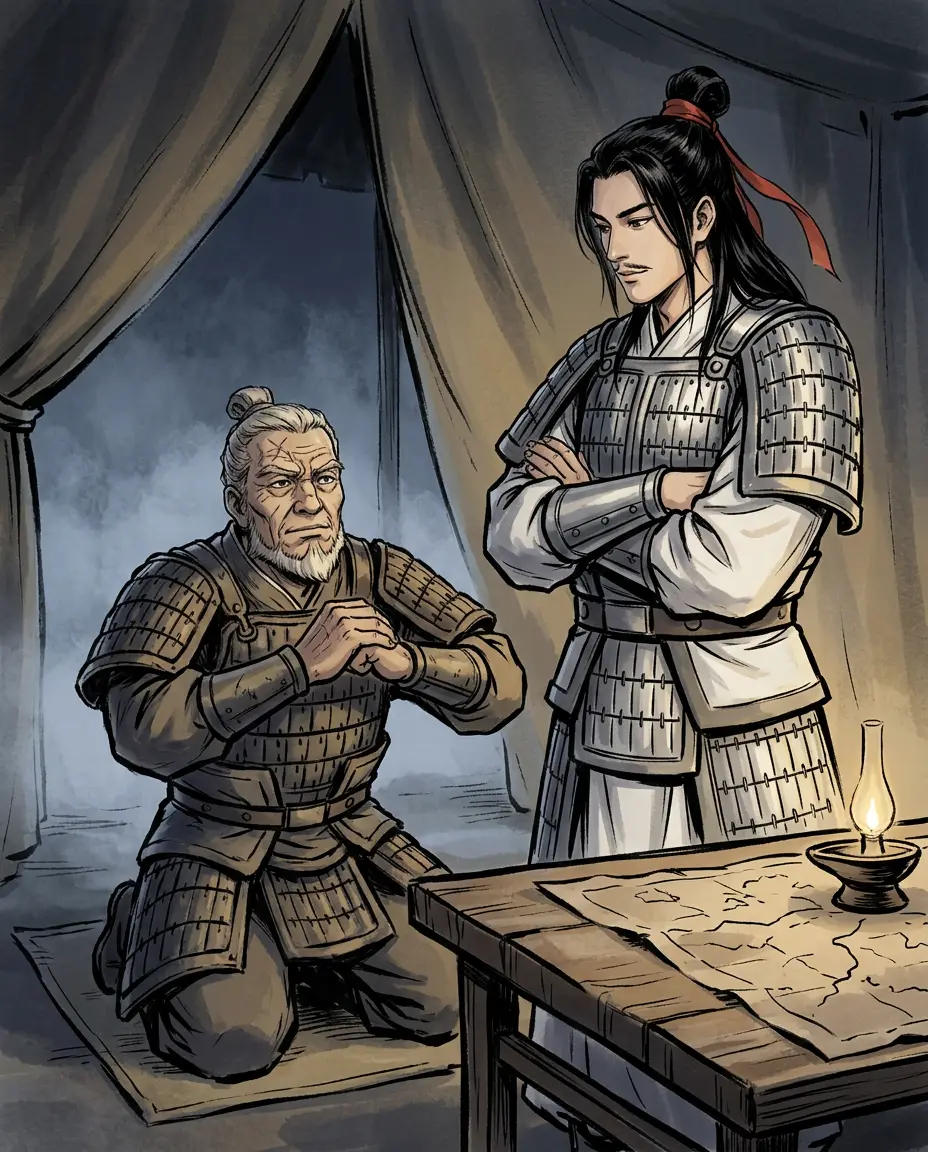
Panel 16: That night, an old general knelt and offered Zhou Yu the only plan that could work.
Huang Gai They have the numbers; we cannot outlast them. But look — their ships lie head to tail, packed close. Fire will do what our arrows cannot.
That night, an old general knelt and offered Zhou Yu the only plan that could work.
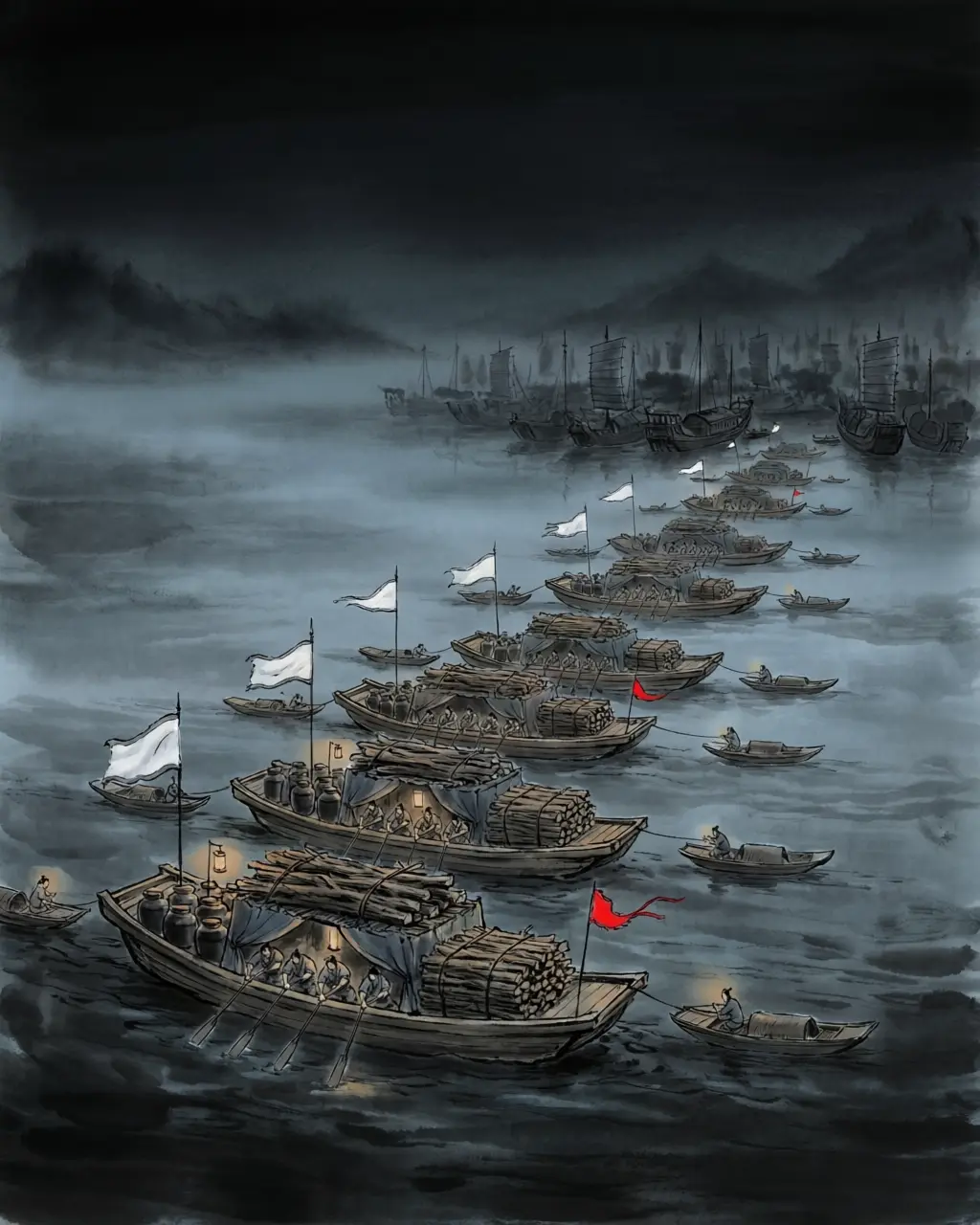
Panel 17: Ten fast ships, loaded with dry wood and oil, screened with curtains, banners flying as if they came in peace. Behind each, a small boat on a rope.
Ten fast ships, loaded with dry wood and oil, screened with curtains, banners flying as if they came in peace. Behind each, a small boat on a rope.
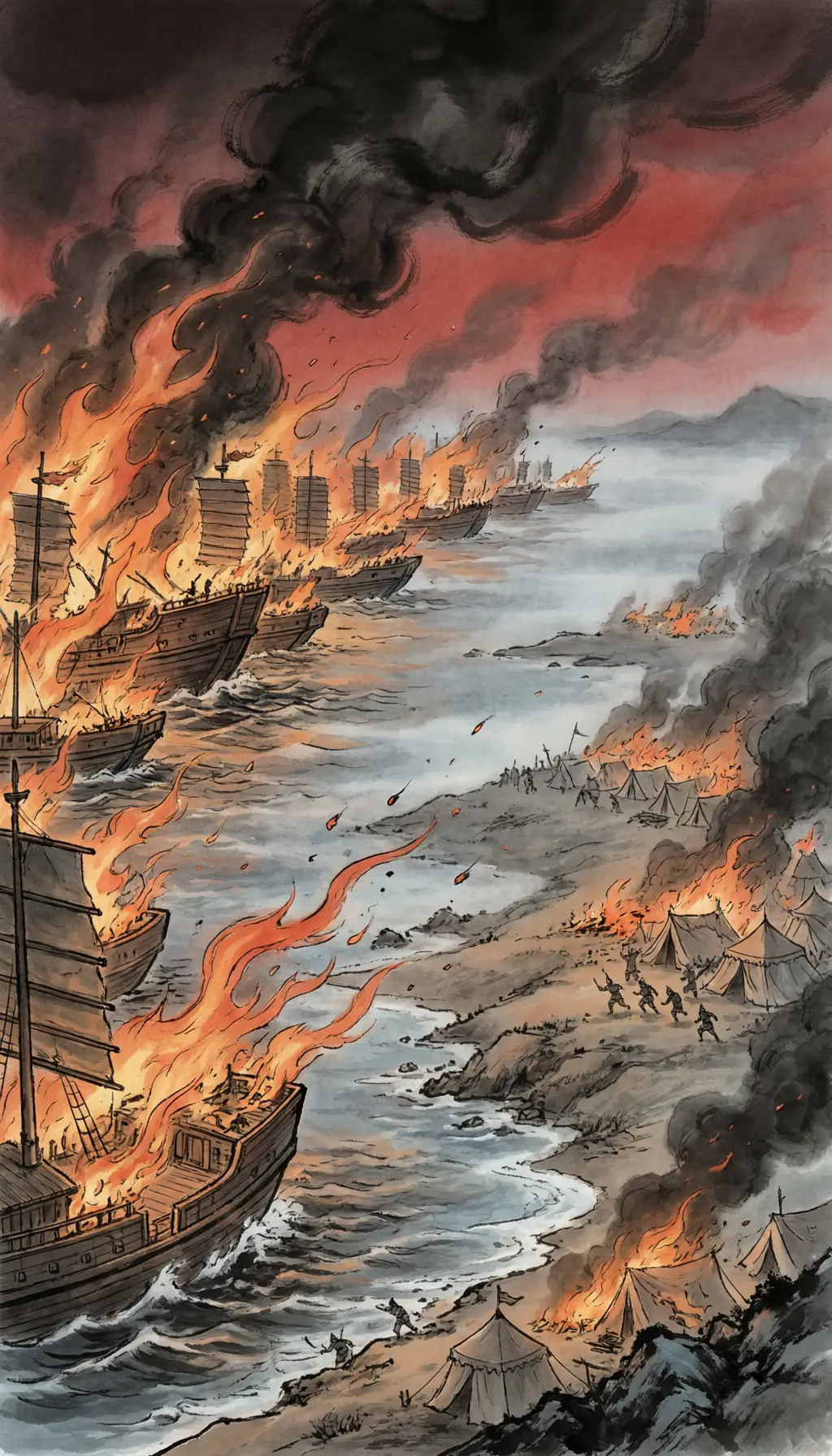
Panel 18: Mid-river, the ships were set alight. The wind was strong. Fire ran from hull to hull — and up the bank, into the camps.
Mid-river, the ships were set alight. The wind was strong. Fire ran from hull to hull — and up the bank, into the camps.
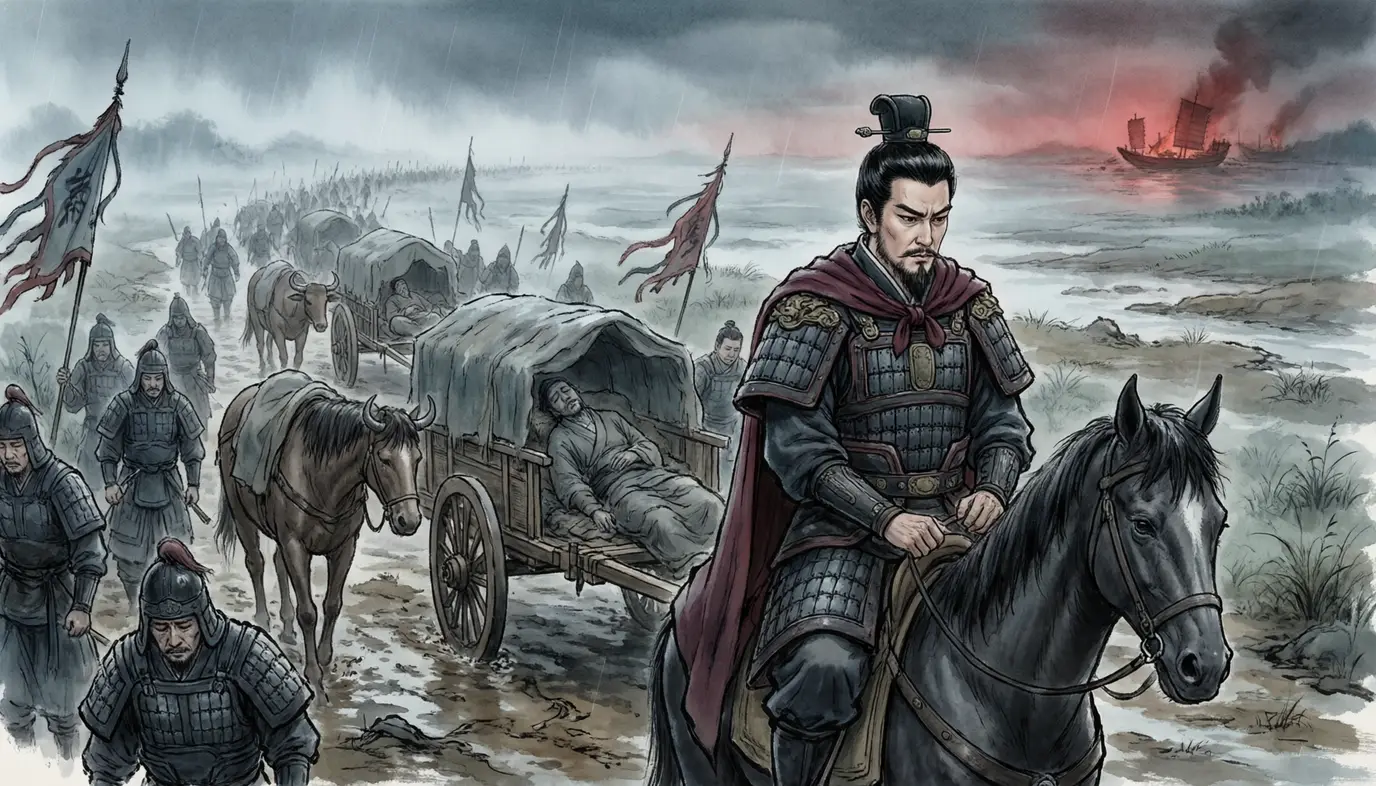
Panel 19: Then the plague finished what the fire began. Cao Cao's own annals say it in one flat line.
Then the plague finished what the fire began. Cao Cao's own annals say it in one flat line.
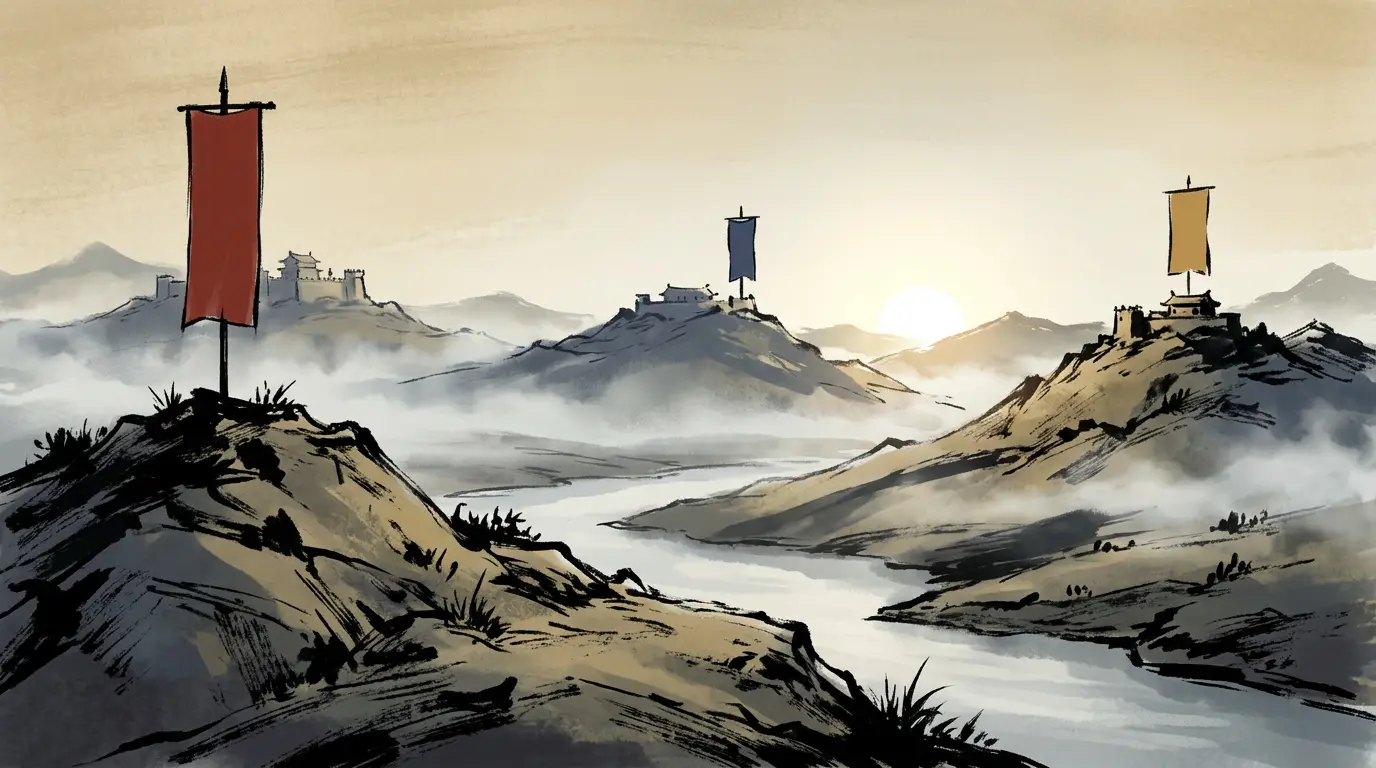
Panel 20: The north stayed Cao Cao's. The river stayed Sun Quan's. Liu Bei, who began this year in flight, took the south of Jing. Three states became possible.
The north stayed Cao Cao's. The river stayed Sun Quan's. Liu Bei, who began this year in flight, took the south of Jing. Three states became possible.

In this episode

Four people carried this year. The sources disagree about almost everything else.

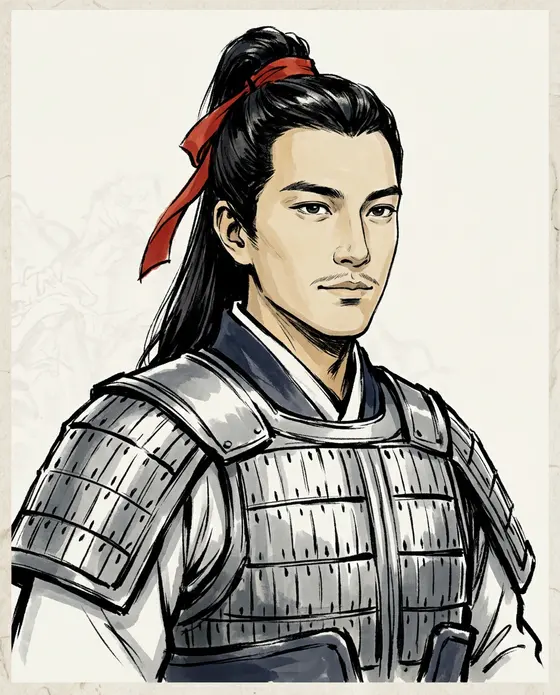
Portrait of Cao Cao
Cao Cao曹操
155–220 CE
Chancellor of Han, master of the north. Came south to finish the empire in one campaign.
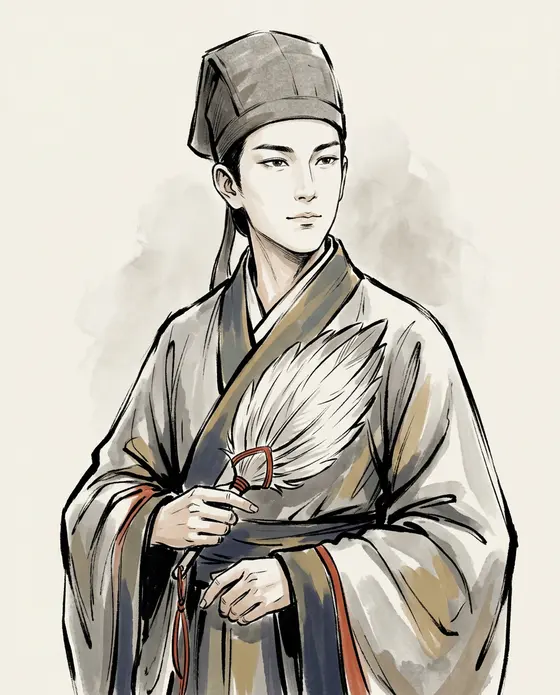
Portrait of Liu Bei
Liu Bei劉備
161–223 CE
A claimant with a famous name and almost nothing else. Began this year in flight; ended it with a province.
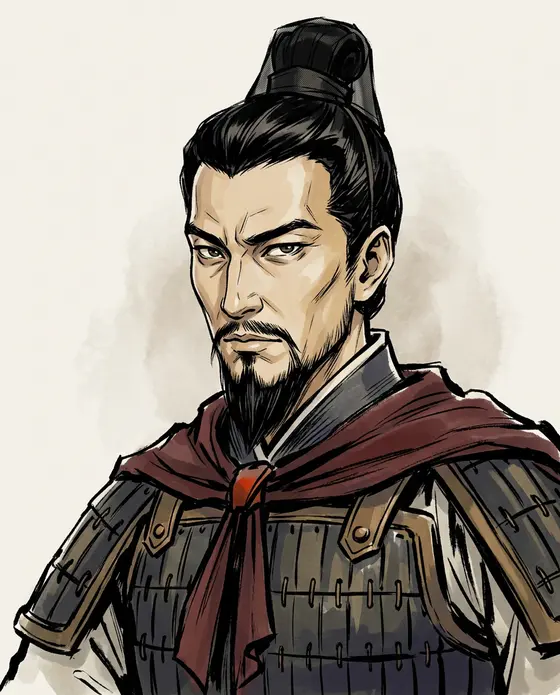
Portrait of Zhou Yu
Zhou Yu周瑜
175–210 CE
Chief commander of Wu. Read Cao Cao's army correctly and burned it. Died of illness in 210, aged 36.
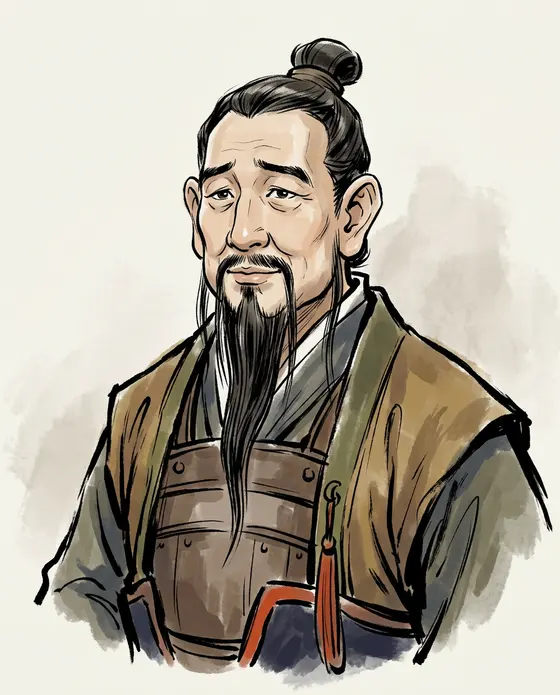
Portrait of Zhuge Liang
Zhuge Liang諸葛亮
181–234 CE
Liu Bei's strategist, 27 years old. Negotiated the alliance that made the battle possible.

Myth Check

The novel Romance of the Three Kingdoms is a masterpiece — and not a source. Where its famous scenes depart from the histories, we leave them out of the story and put them here.

The story you may know

Zhuge Liang borrowed arrows with straw boats.

What the sources say

No such event at Red Cliff appears in any source. A similar incident is attributed to Sun Quan at Ruxu in 213 CE — five years later, a different man, a different river — in the Weilüe quoted by Pei Songzhi.

Weilüe, in Pei Songzhi's commentary
The story you may know

Zhuge Liang summoned the east wind from an altar.

What the sources say

The sources give the wind to Huang Gai, not to magic: “the wind was fierce.” Winter southeasterlies on this reach of the Yangtze are a known local weather pattern. No altar required.

Sanguozhi, Wu shu 10
The story you may know

Pang Tong tricked Cao Cao into chaining his fleet.

What the sources say

The histories never place Pang Tong at Red Cliff. What they record is Huang Gai observing that the enemy ships lay head to tail — a formation he noticed, not a trap he set.

Sanguozhi, Wu shu 10
The story you may know

Zhuge Liang emptied a city to bluff Sima Yi.

What the sources say

Not this battle, not this decade. The story survives in the Guochong sanshi — quoted, then dismantled, by Pei Songzhi himself, who noted that Sima Yi was nowhere near the place and time.

Guochong sanshi, in Pei Songzhi's commentary, with his rebuttal
The story you may know

Zhou Yu died of rage at being outsmartened.

What the sources say

The histories record a commander of generous character who died of illness in 210, aged 36. His old colleague Cheng Pu said of him: “Being with Zhou Yu is like drinking fine wine — you are drunk before you know it.”

Sanguozhi, Wu shu 9; Pei Songzhi commentary

Sources

Every caption and quotation in this episode traces to one of these. Where scholars disagree, the panel says so.

Next

Eight years before this fire, the north was decided: Episode 2 · The Road to Guandu (200 CE). Fourteen years after it, an emperor went east for a lost province and a lost brother: Episode 3 · Fire at Yiling (222 CE). Then Episode 4 · The Last Campaign (234 CE), where Zhuge Liang dies on the Wei river with the grain still short. Meanwhile — meet the cast, or read the chronology of the age.