Bamboo Scroll竹簡 Ep. 5 · The Pass and the River
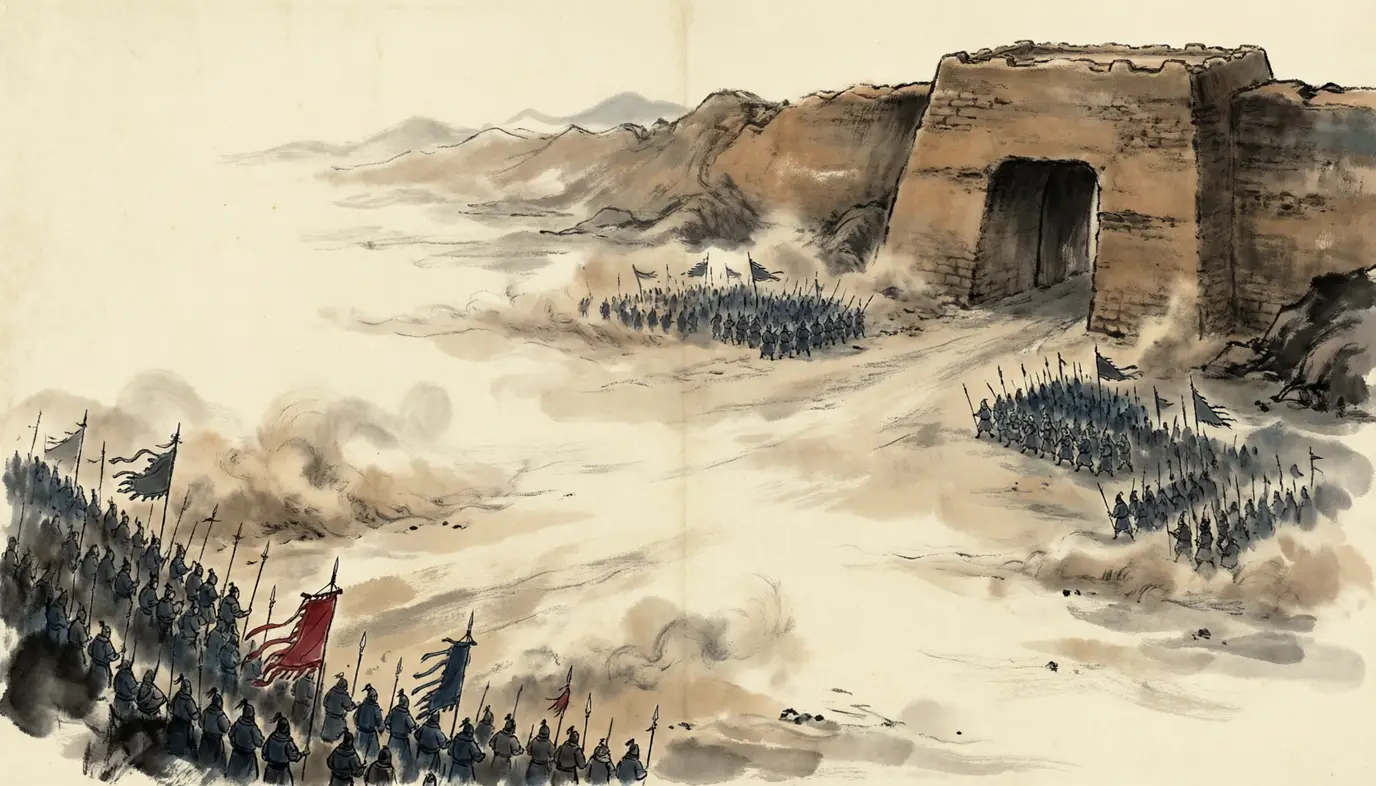
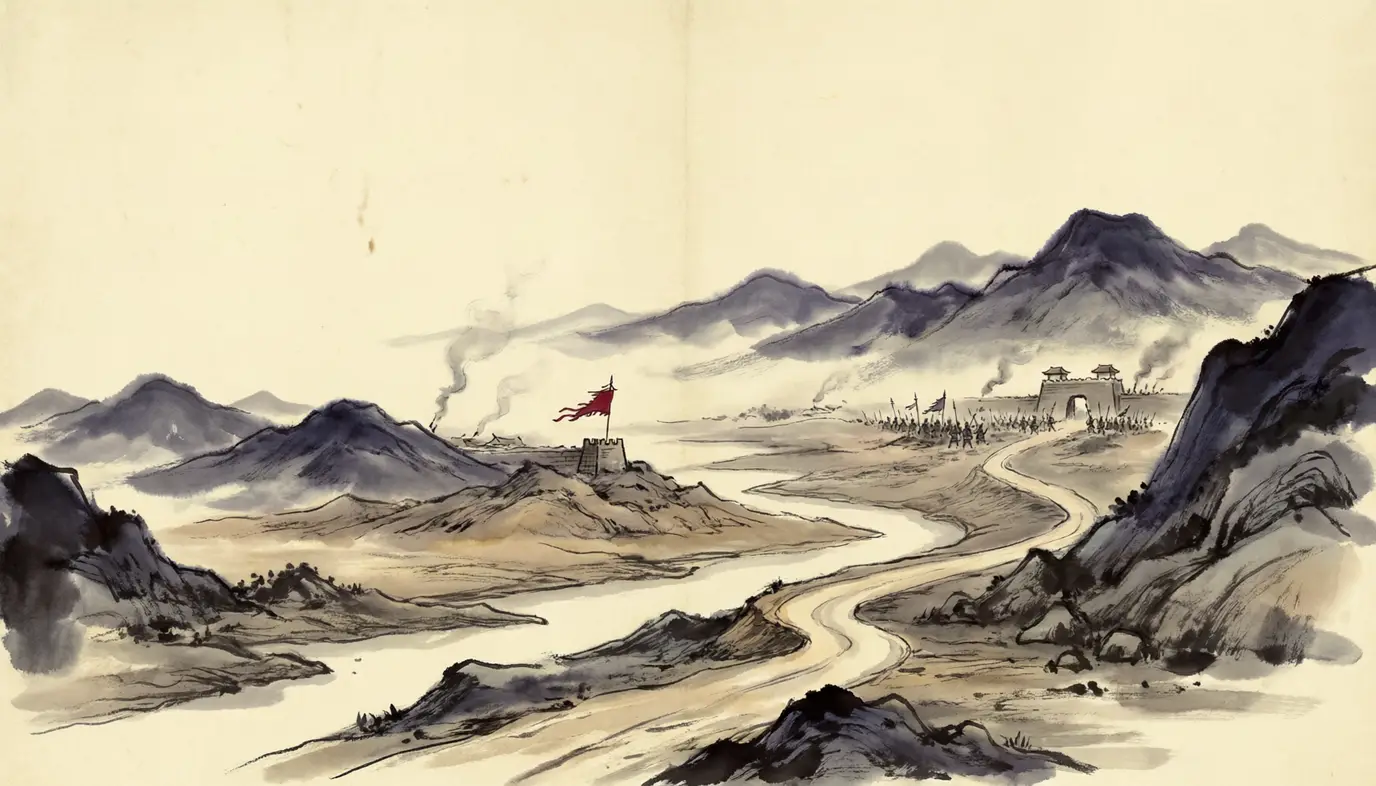
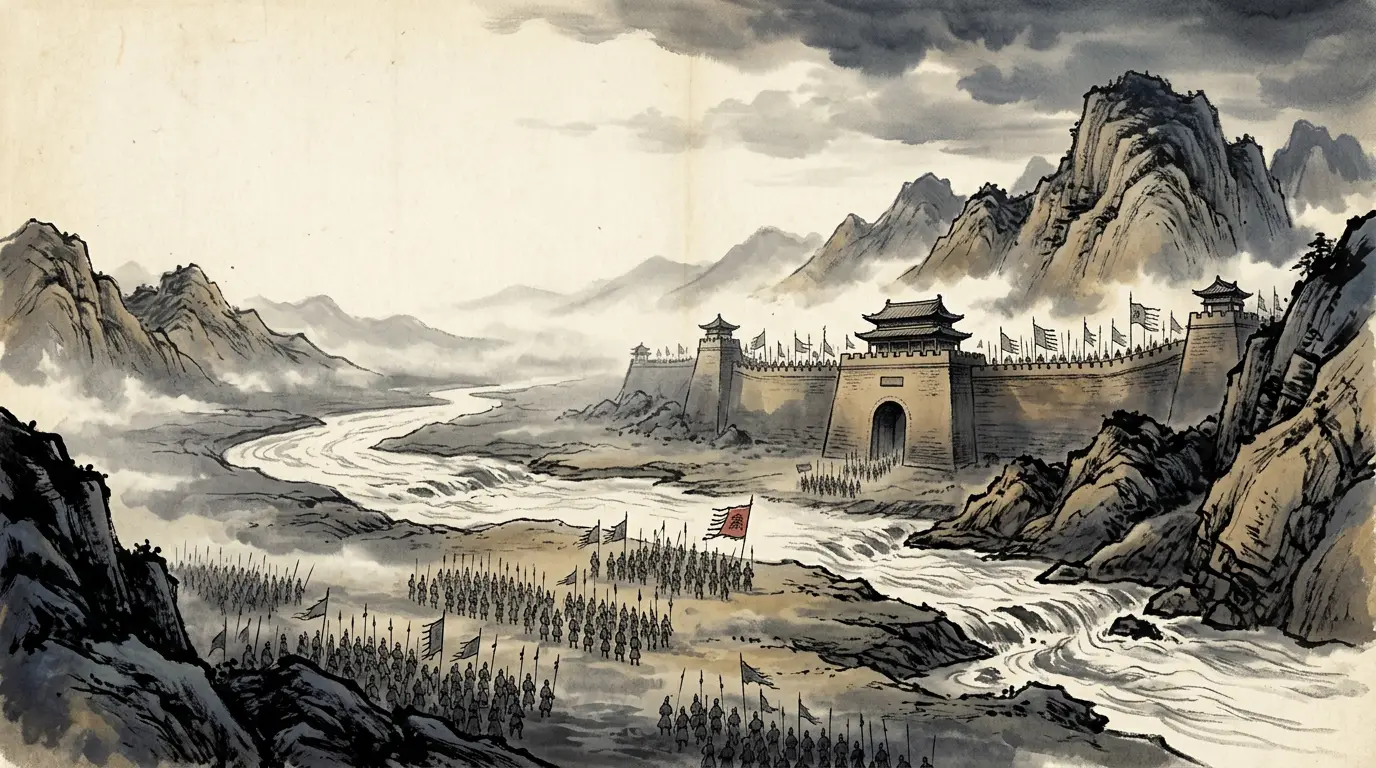
The great rammed-earth gate of Tong Pass between the Yellow River and the mountains, banners of the Guanzhong coalition before it, 211 CE
Bamboo Scroll · Three Kingdoms · Episode 5

The Pass and the River

Tong Pass, 211 CE — An announced march through Guanzhong brought ten warlords to arms at a single pass; the war that followed was won by a saddle held against arrows, a wall of frozen sand, and one letter full of erasures.
16 panels~6 min read free to readevery line sourced
Panel 01: Autumn, 211 CE. Between the bend of the Yellow River and the mountains there is one gate called Tong Pass. The warlords of Guanzhong held it. The chancellor was coming.
Autumn, 211 CE. Between the bend of the Yellow River and the mountains there is one gate called Tong Pass. The warlords of Guanzhong held it. The chancellor was coming.
Panel 02: It began as a war announced against someone else. In the third month of 211, Cao Cao proclaimed a campaign against Zhang Lu in Hanzhong — and every road to Hanzhong ran through Guanzhong.
It began as a war announced against someone else. In the third month of 211, Cao Cao proclaimed a campaign against Zhang Lu in Hanzhong — and every road to Hanzhong ran through Guanzhong.
Panel 03: Ma Chao, Han Sui and ten generals of Guanzhong rose together. The histories say ten divisions and a host of a hundred thousand, holding Tong Pass.
Ma Chao, Han Sui and ten generals of Guanzhong rose together. The histories say ten divisions and a host of a hundred thousand, holding Tong Pass.
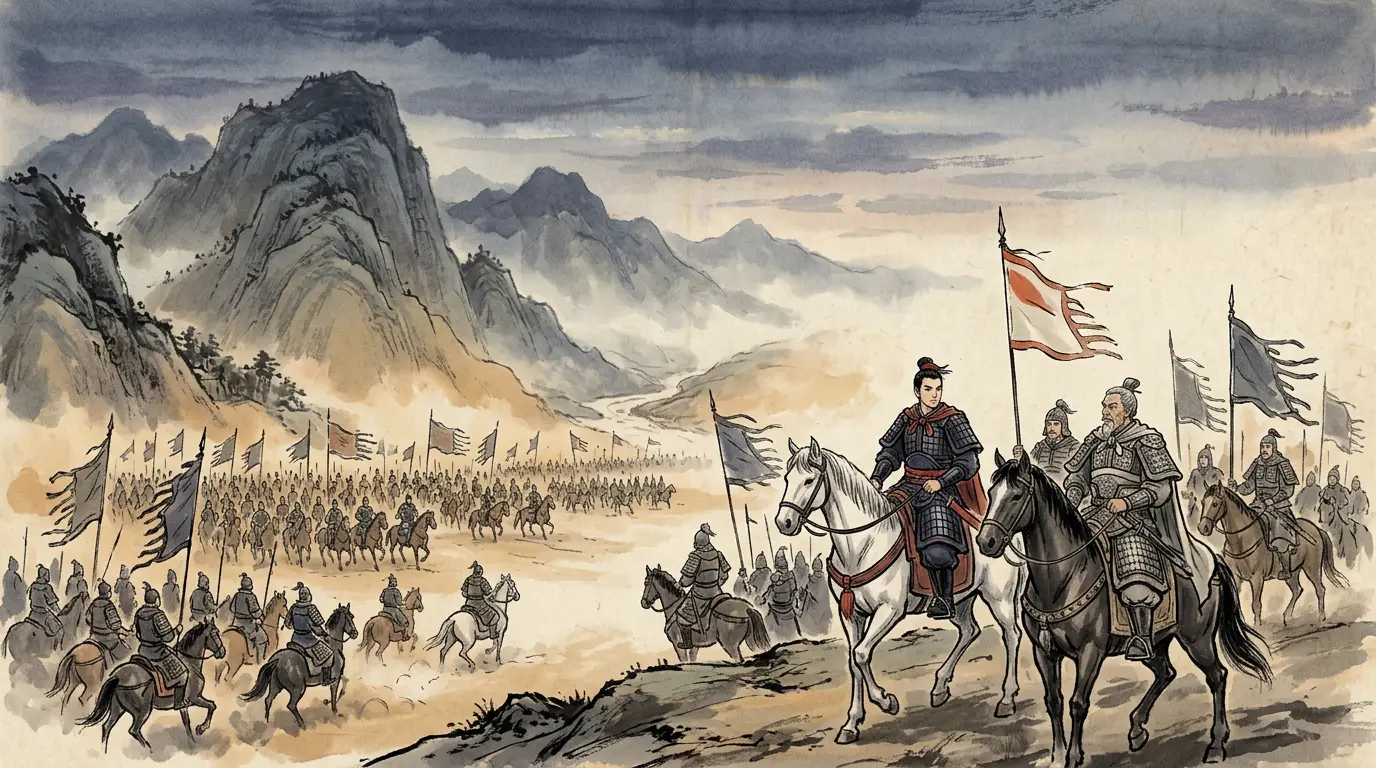
Panel 04: Cao Cao was told that the Guanzhong troops were fierce with the long spear, and that picked vanguard troops must be chosen against them. He answered, and marched west in the seventh month.
Cao Cao The battle is mine to decide, not theirs. Though they have long spears, I will make them unable to use them.
Cao Cao was told that the Guanzhong troops were fierce with the long spear, and that picked vanguard troops must be chosen against them. He answered, and marched west in the seventh month.
Panel 05: In the eighth month, Cao Cao was at Tong Pass. He set his army down across from the pass and made it look as if the pass were the war. It was not.
In the eighth month, Cao Cao was at Tong Pass. He set his army down across from the pass and made it look as if the pass were the war. It was not.
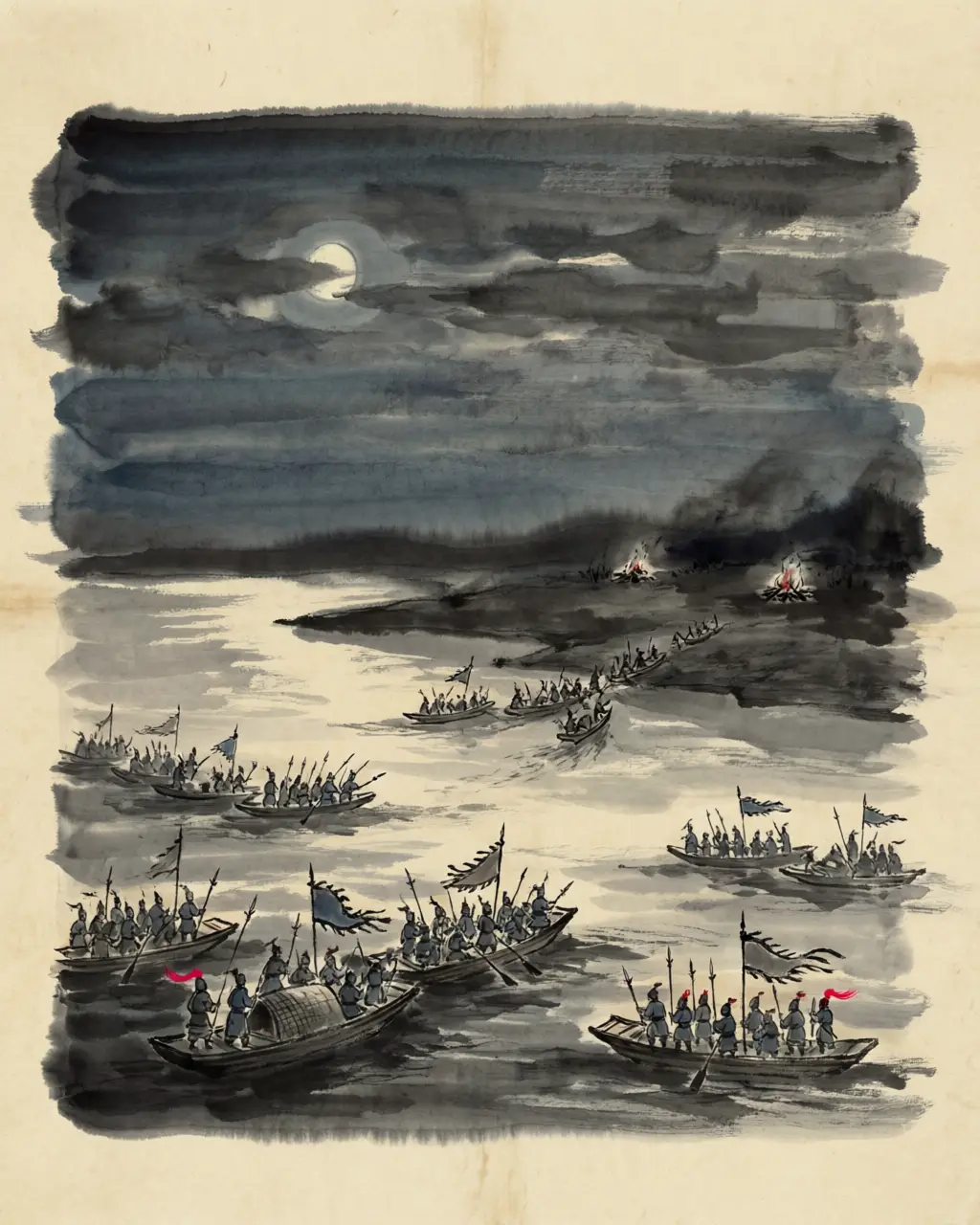
Panel 06: Far upstream at Puban, Xu Huang and Zhu Ling crossed the river in the night and raised a camp on the west bank before the coalition knew of them.
Far upstream at Puban, Xu Huang and Zhu Ling crossed the river in the night and raised a camp on the west bank before the coalition knew of them.
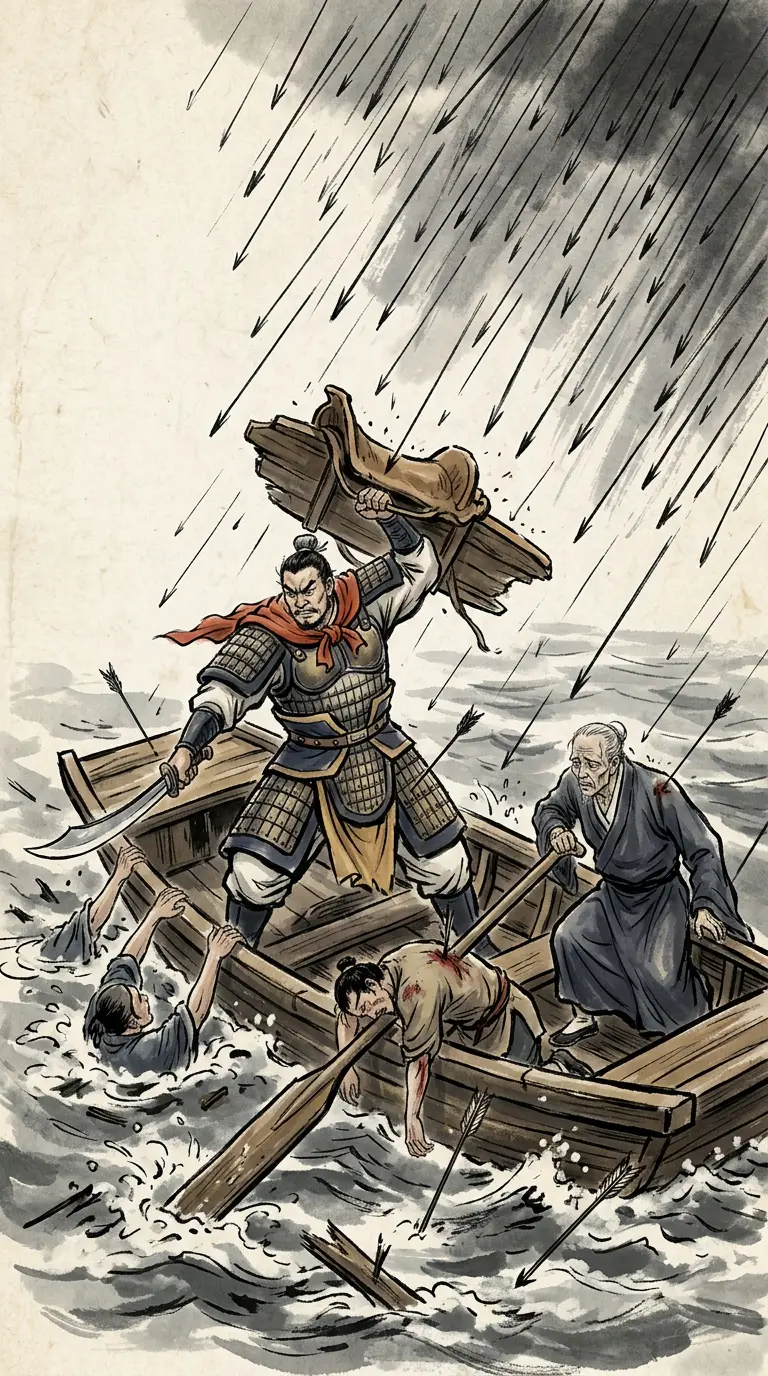
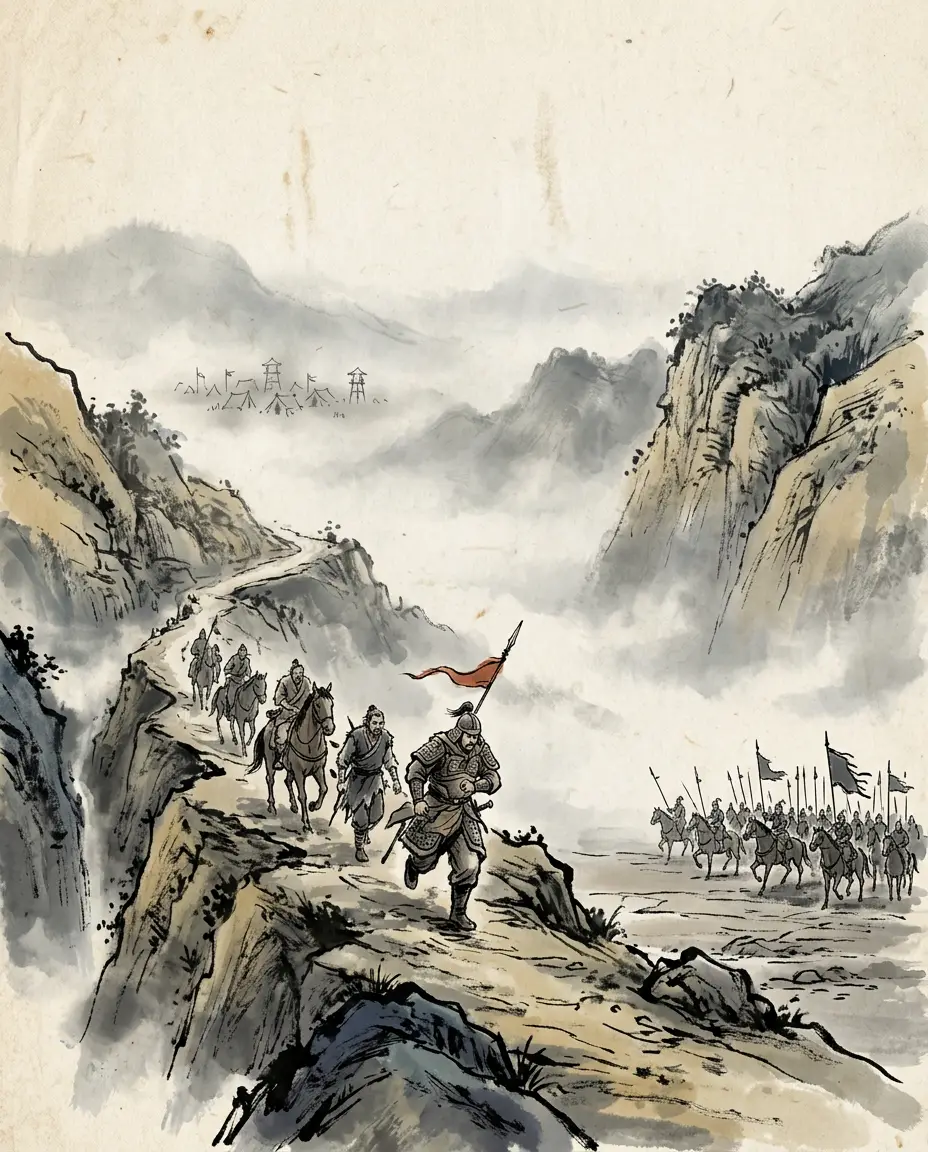
Panel 07: Then Cao Cao himself crossed, with a hundred horsemen and no more. Ma Chao's cavalry came down on him and the arrows fell like rain. Xu Chu lifted him aboard, held up a saddle against the arrows with one hand, and with the other cut down his own men clinging to the hull.
Cao Cao Today I nearly fell into the hands of a little bandit.
Then Cao Cao himself crossed, with a hundred horsemen and no more. Ma Chao's cavalry came down on him and the arrows fell like rain. Xu Chu lifted him aboard, held up a saddle against the arrows with one hand, and with the other cut down his own men clinging to the hull.
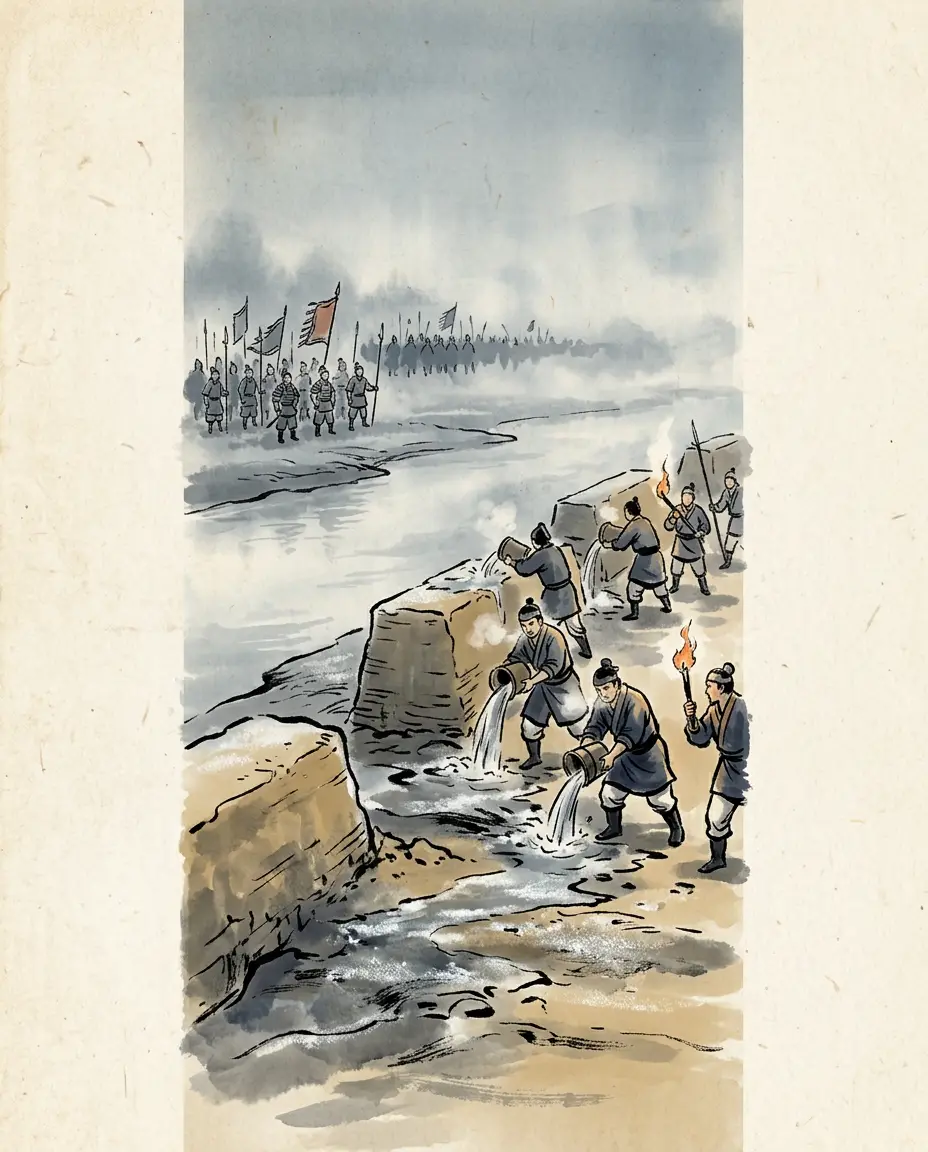
Panel 08: On the west bank there was neither stone nor wood to build with. Lou Gui made walls of sand and had water poured over them in the night cold — and morning showed a camp of ice.
On the west bank there was neither stone nor wood to build with. Lou Gui made walls of sand and had water poured over them in the night cold — and morning showed a camp of ice.
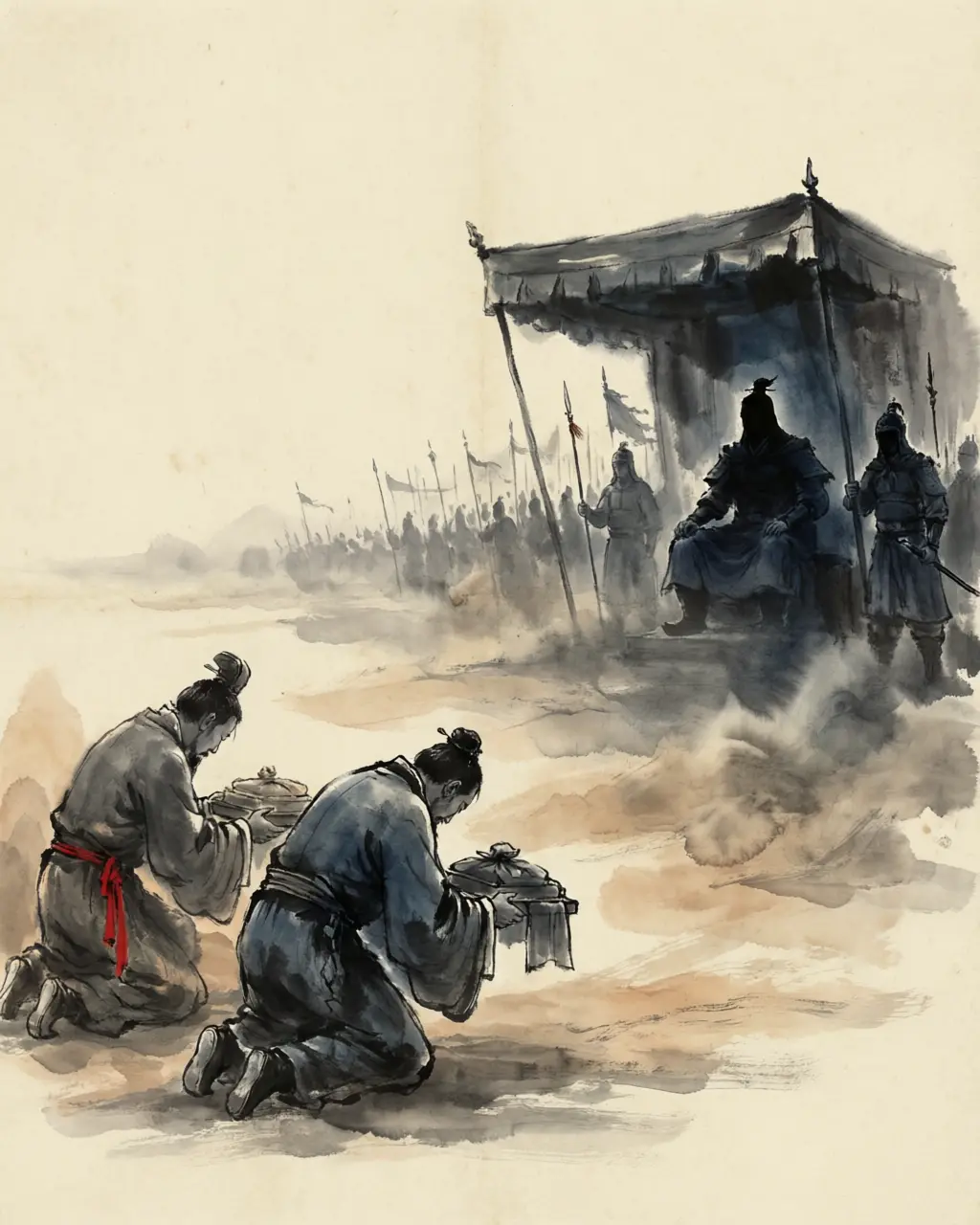
Panel 09: Ma Chao sent an offer: all the land west of the river in exchange for peace, and his sons as hostages. The first answer was no.
Ma Chao sent an offer: all the land west of the river in exchange for peace, and his sons as hostages. The first answer was no.
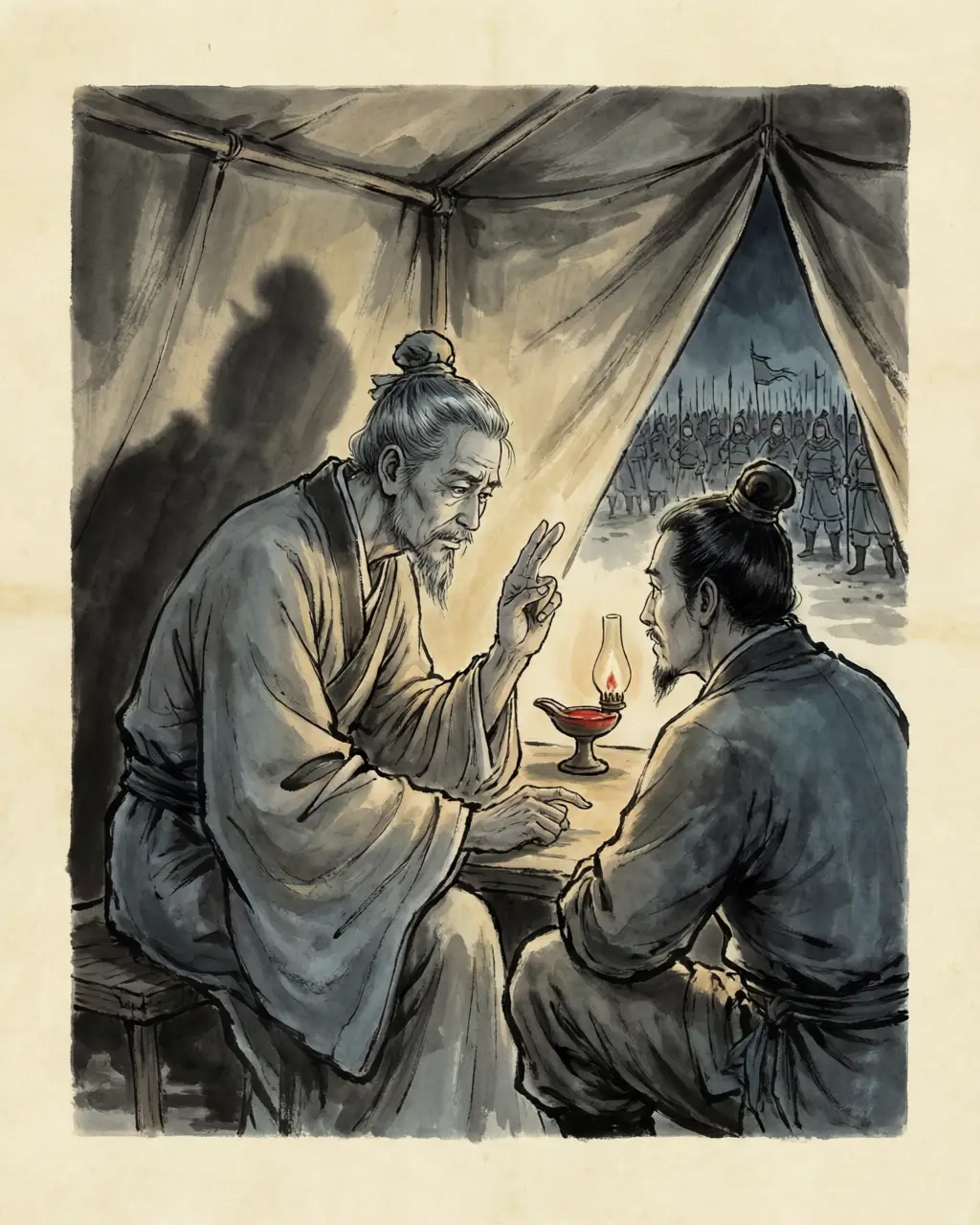
Panel 10: When the request came again, Cao Cao asked Jia Xu for a plan. Jia Xu's answer was two words: part them. The coalition's strength was its numbers; its weakness was that the numbers had no single head.
When the request came again, Cao Cao asked Jia Xu for a plan. Jia Xu's answer was two words: part them. The coalition's strength was its numbers; its weakness was that the numbers had no single head.
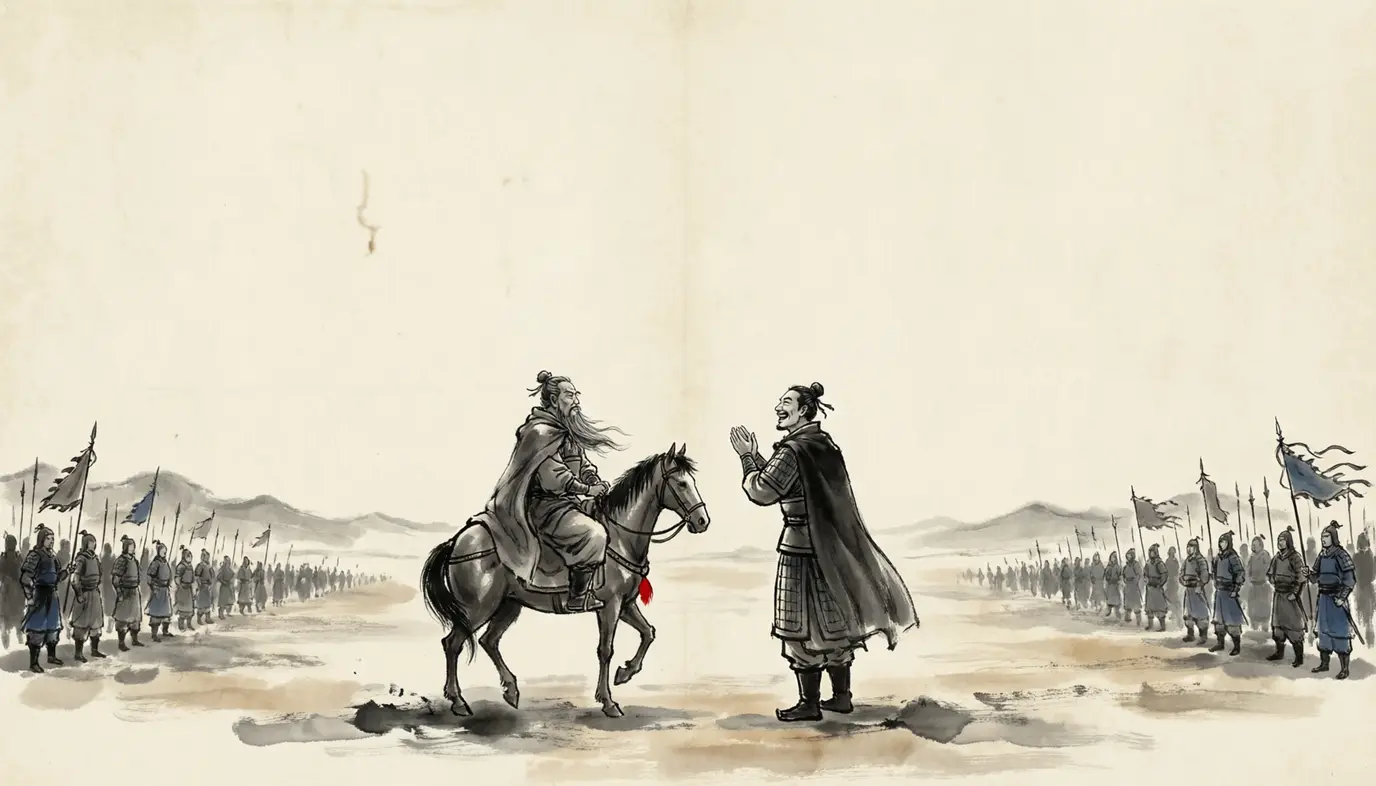
Panel 11: Han Sui rode out between the armies to meet Cao Cao. Their fathers had been recommended in the same year; their youth had been spent in the same streets of Luoyang. They spoke only of old times in the capital, clapped their hands and laughed. No word of war.
Han Sui rode out between the armies to meet Cao Cao. Their fathers had been recommended in the same year; their youth had been spent in the same streets of Luoyang. They spoke only of old times in the capital, clapped their hands and laughed. No word of war.
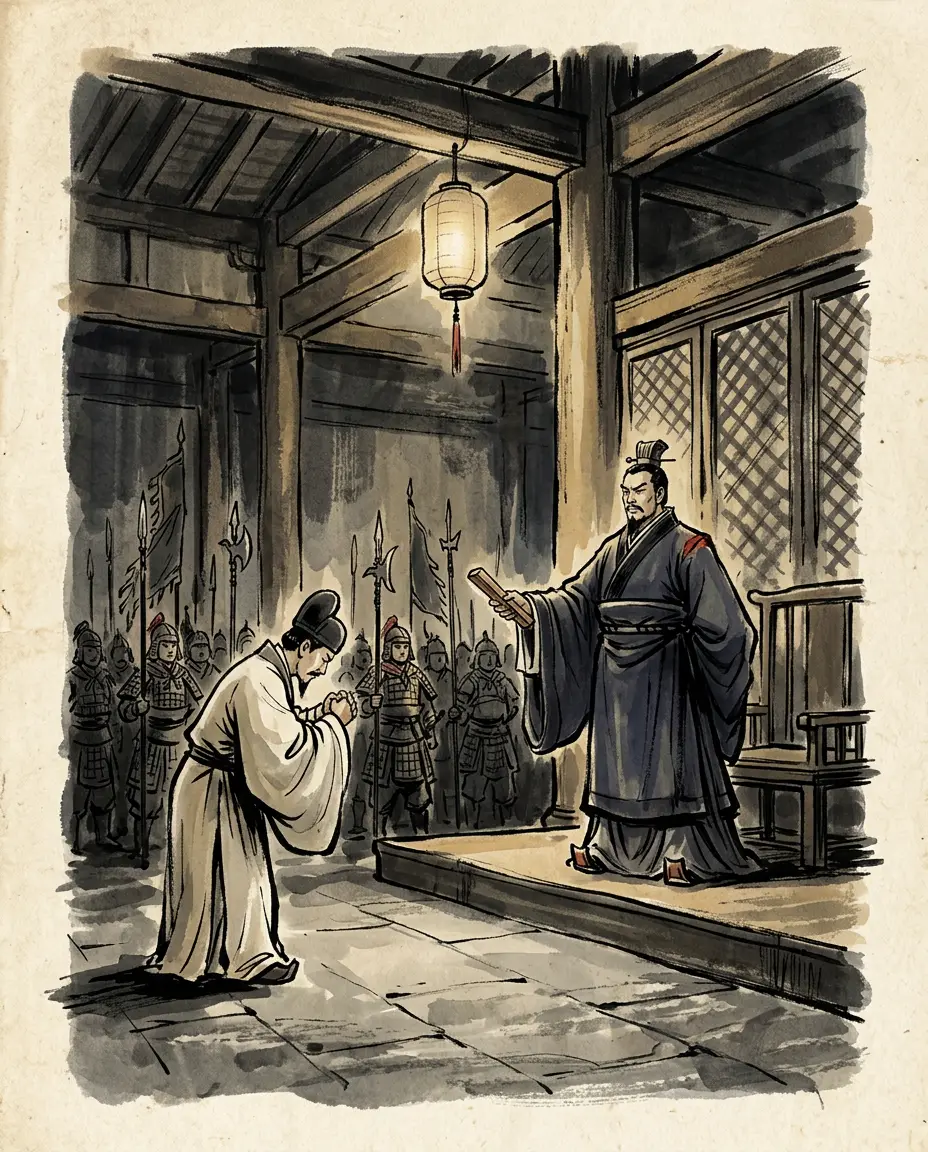
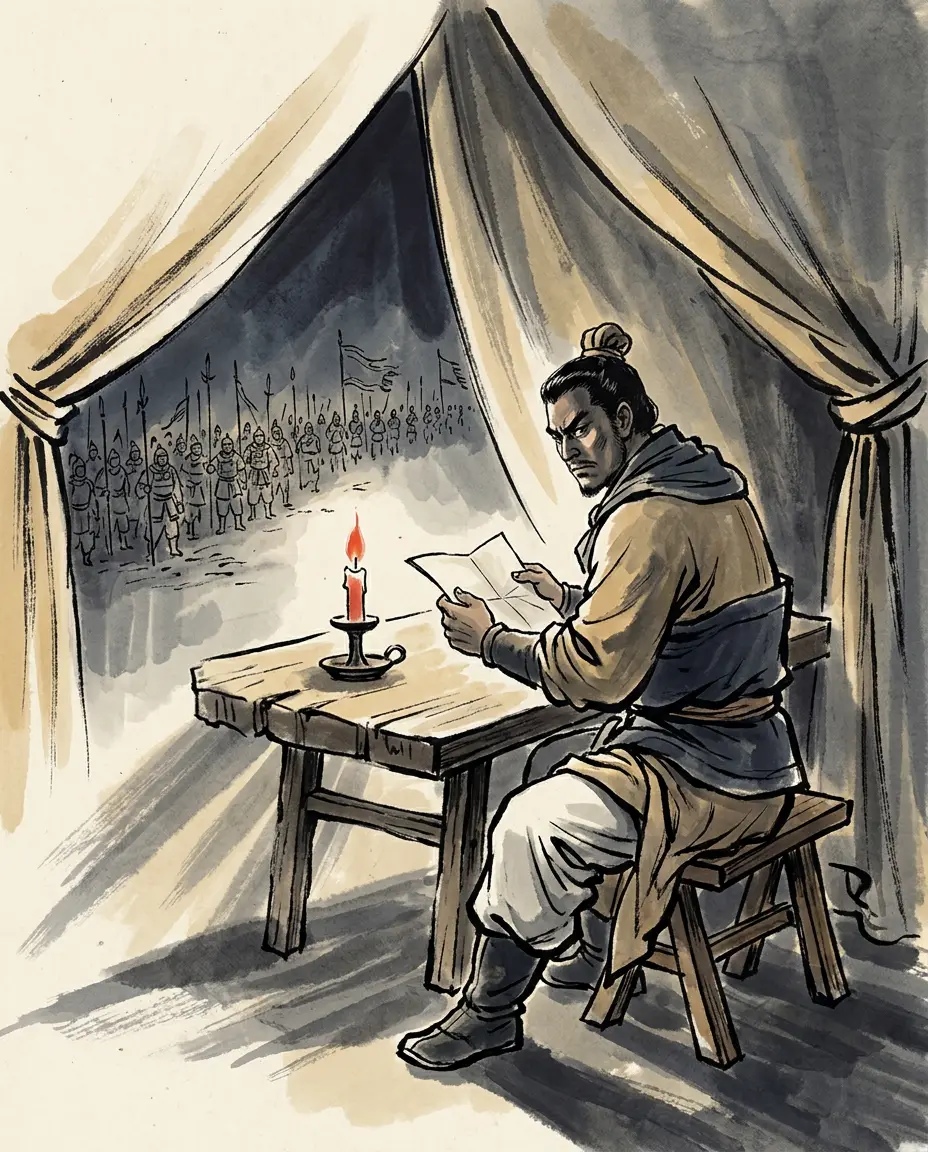
Panel 12: Then came a letter from Cao Cao to Han Sui, crossed out and altered here and there, to look as if the receiver had changed it. Ma Chao read it, and nothing became something.
Then came a letter from Cao Cao to Han Sui, crossed out and altered here and there, to look as if the receiver had changed it. Ma Chao read it, and nothing became something.
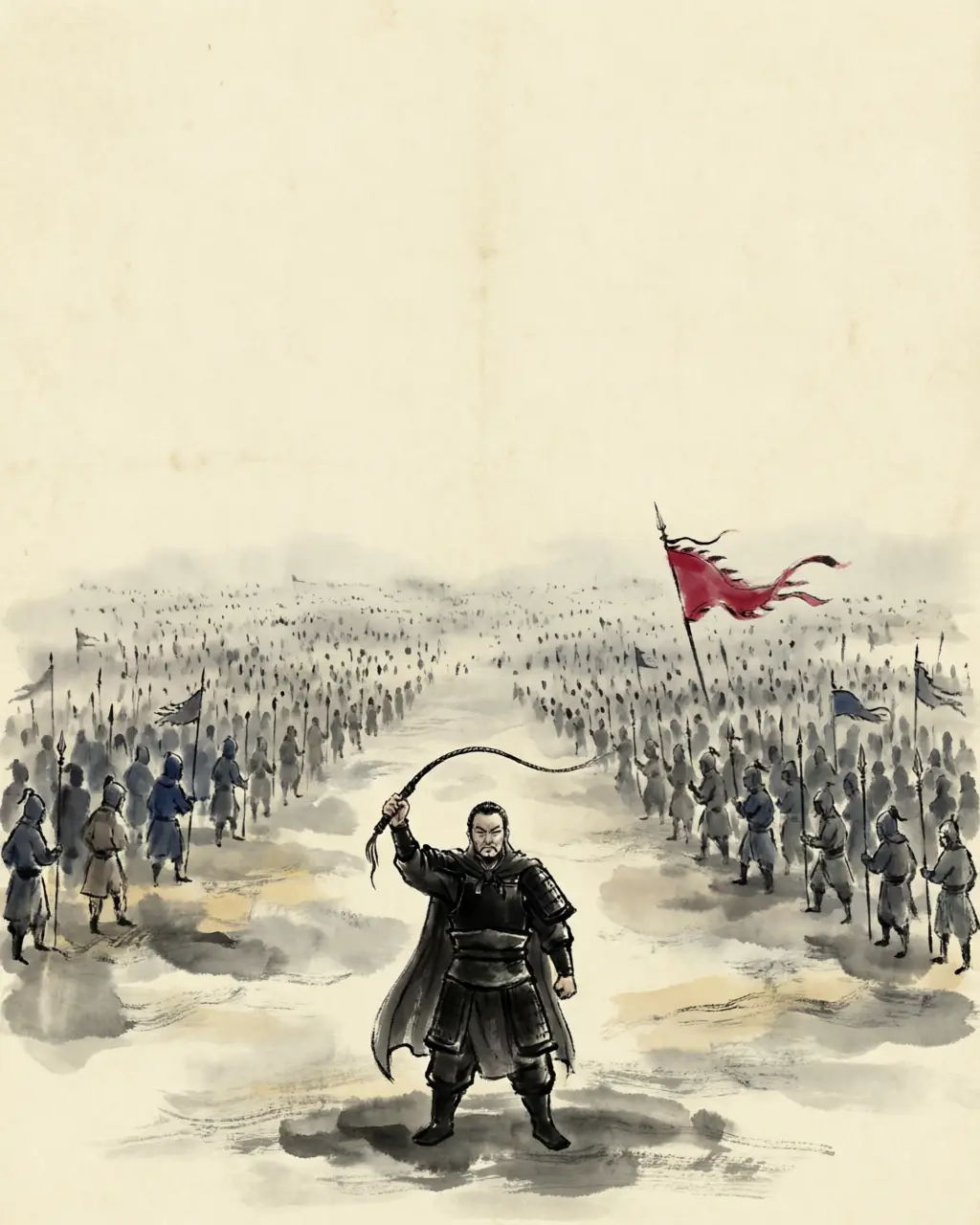
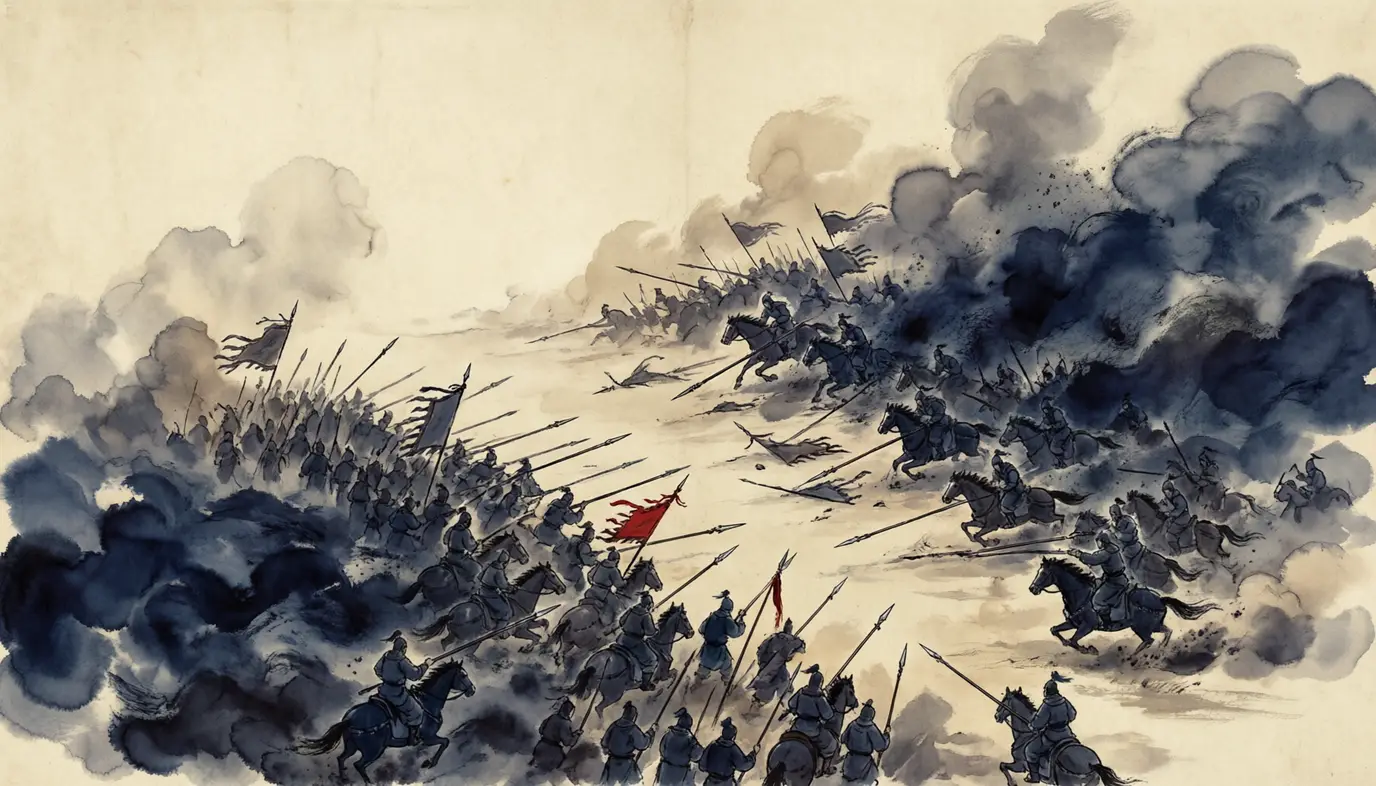
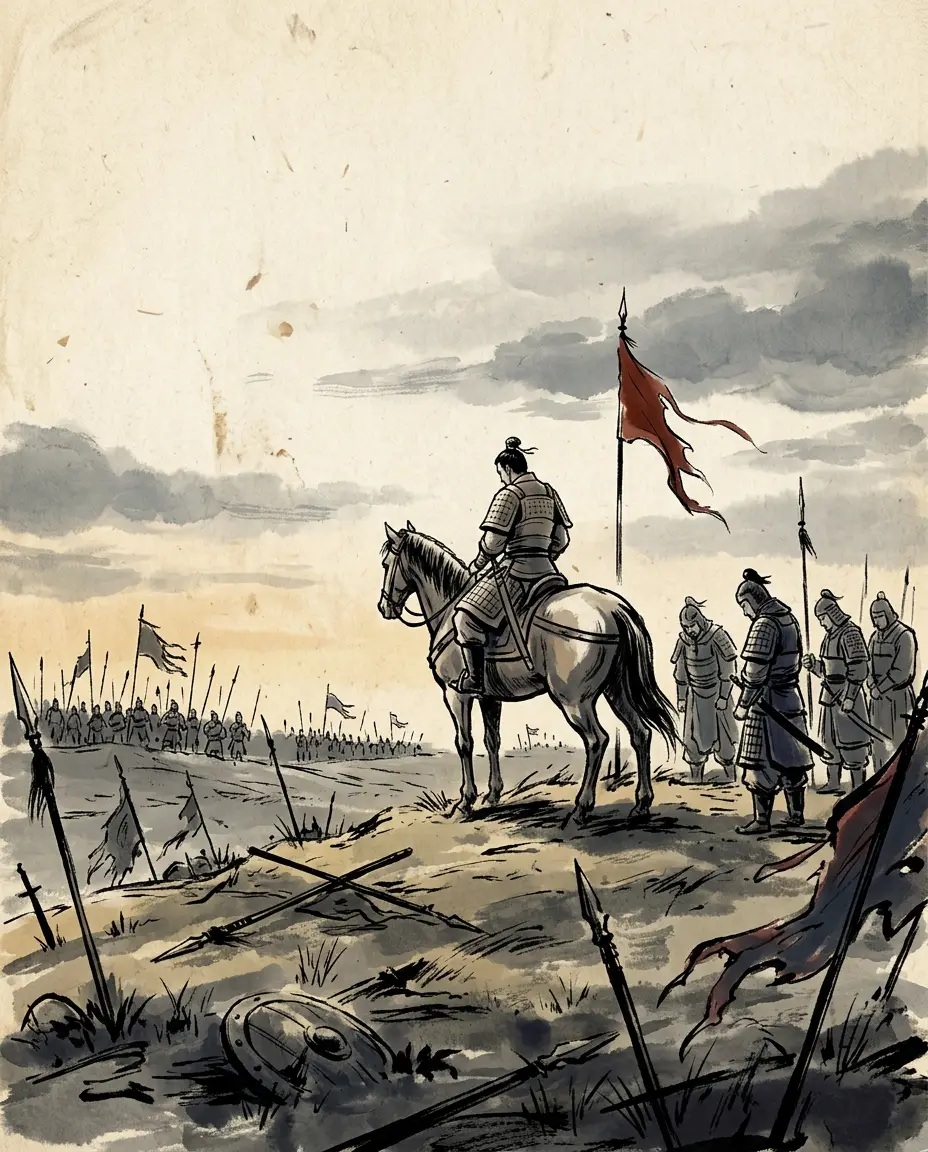
Panel 13: A day was set for battle. Cao Cao sent light troops forward to provoke, and let them fight long; then he loosed his tiger warriors in a pincer from both wings, and the coalition broke.
A day was set for battle. Cao Cao sent light troops forward to provoke, and let them fight long; then he loosed his tiger warriors in a pincer from both wings, and the coalition broke.
Panel 14: Cao Cao pursued to Anding, then turned his chariot east. Yang Fu warned him before he went: Ma Chao had the courage of Xin Qingji and Meng Ben, and the hearts of the Qiang and Hu; leave the west unguarded, and Longshang would not stay Wei's. It happened.
Cao Cao pursued to Anding, then turned his chariot east. Yang Fu warned him before he went: Ma Chao had the courage of Xin Qingji and Meng Ben, and the hearts of the Qiang and Hu; leave the west unguarded, and Longshang would not stay Wei's. It happened.
Panel 15: His generals asked him afterwards how it had been done: the pass held, the river crossed, the letters written, the battle won. Show the enemy what he expects, he told them, until he believes it; then be somewhere else. War, he said, has no fixed shape.
His generals asked him afterwards how it had been done: the pass held, the river crossed, the letters written, the battle won. Show the enemy what he expects, he told them, until he believes it; then be somewhere else. War, he said, has no fixed shape.
Panel 16: Guanzhong belonged to Wei. Yang Qiu gave up Anding and kept his commandery; the rest of the coalition were dead, fled, or waiting for their hour. The road to Hanzhong, opened as a pretext in 211, would be walked in earnest four years later.
Guanzhong belonged to Wei. Yang Qiu gave up Anding and kept his commandery; the rest of the coalition were dead, fled, or waiting for their hour. The road to Hanzhong, opened as a pretext in 211, would be walked in earnest four years later.

In this episode

The people who carried this year. The sources disagree about almost everything else.

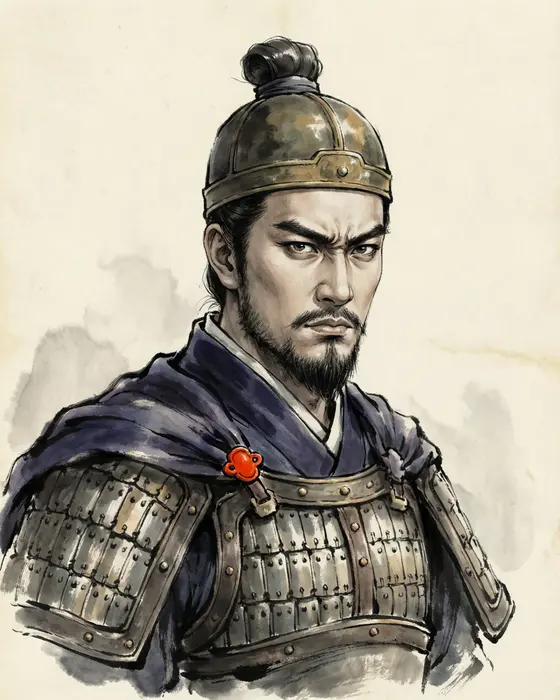
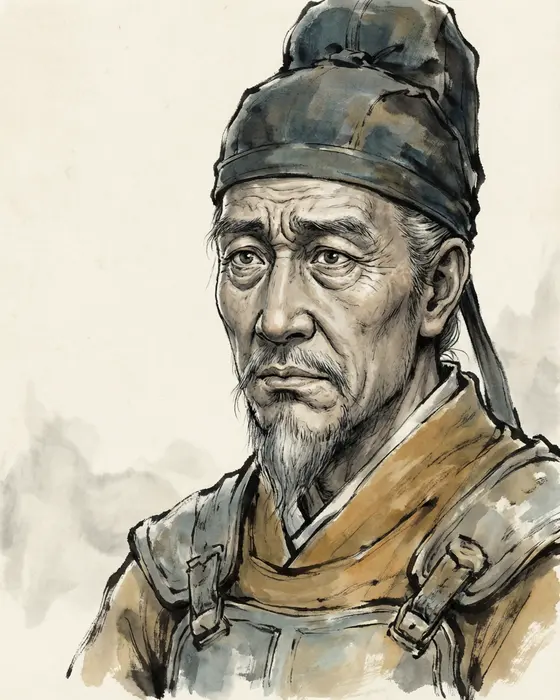
Portrait of Cao Cao
Cao Cao曹操
155–220 CE
Announced a march against Zhang Lu through Guanzhong, and received the rising he could use. Crossed the river under arrows, and won the war with one letter.
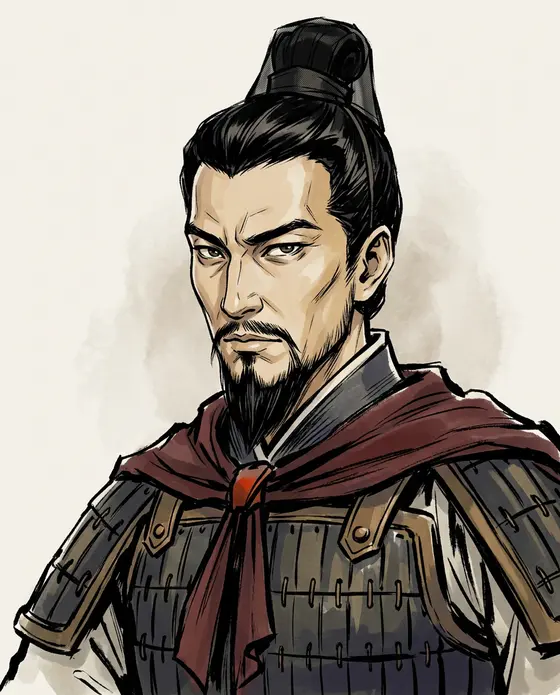
Portrait of Ma Chao
Ma Chao馬超
176–222 CE
Frontier warlord of Liang Province, head of the coalition at thirty-five. Rose while his father sat hostage at Ye, broke at Tong Pass, and died in Shu.
Portrait of Han Sui
Han Sui韓遂
d. 215 CE
Old fox of the western frontier, thirty years in arms. His long acquaintance with Cao Cao became the wedge that split the coalition.
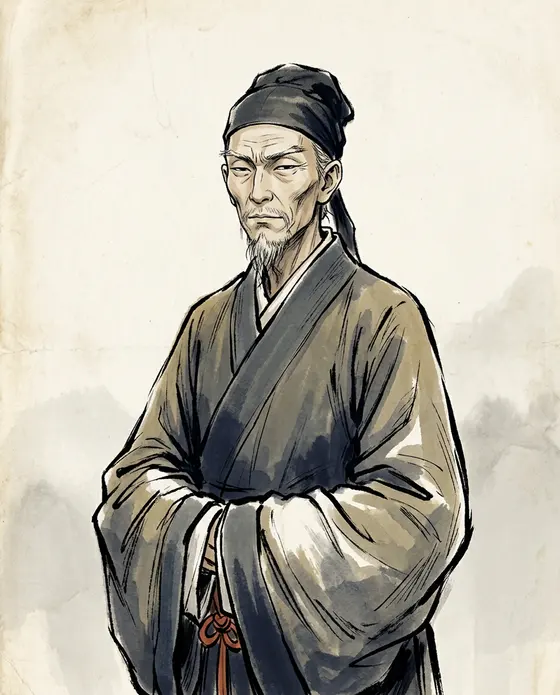
Portrait of Jia Xu
Jia Xu賈詡
147–223 CE
The coldest counsellor of the age. Answered a request for a battle plan with two words — part them — and won the war with a doctored letter.
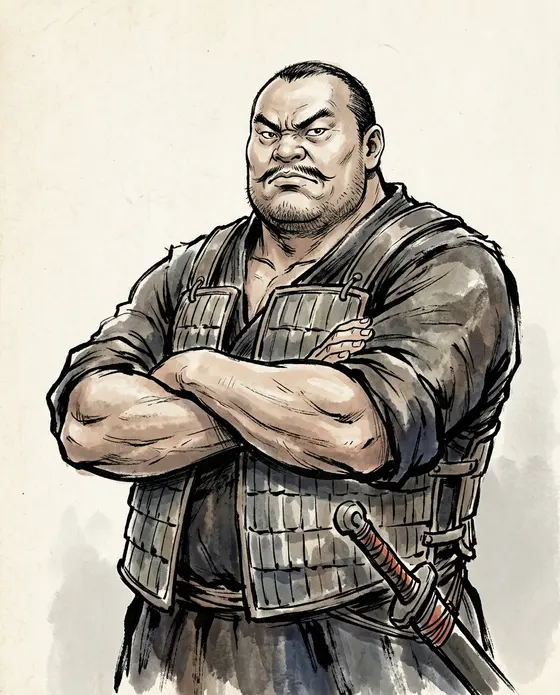
Portrait of Xu Chu
Xu Chu許褚
d. c. 230 CE
Cao Cao's bodyguard, a man strong enough to drag an ox by the tail. At the river crossing he held up a saddle against the arrows and cut the clinging men from the boat.

Myth Check

The novel Romance of the Three Kingdoms is a masterpiece — and not a source. Where its famous scenes depart from the histories, we leave them out of the story and put them here.

The story you may know

Cao Cao cut off his beard and cast off his robe to escape Ma Chao.

What the sources say

No official history has it. What the records give for the crossing is dramatic enough without it: arrows like rain, a dead boatman, Xu Chu raising a saddle as a shield and cutting the clinging men from the hull, Ding Fei scattering cattle and horses as a bait. The beard and the robe are chapter 58 of the novel.

Romance of the Three Kingdoms, ch. 58; absent from Sanguozhi, Wei shu 1 and Wei shu 18
The story you may know

Xu Chu stripped off his armour and fought Ma Chao in single combat.

What the sources say

The duel of chapter 59 is the novel's. Xu Chu's recorded part at Tong Pass was defensive — carrying his lord across under arrows — and no single combat between the two appears in any history.

Sanguozhi, Wei shu 18, Biography of Xu Chu
The story you may know

Ma Chao rebelled to avenge his father, whom Cao Cao lured to the capital and murdered.

What the sources say

The order in the histories is the reverse: Ma Teng had lived at Ye since 208 as a court officer and hostage; it was Ma Chao's rising that forfeited his family, and Ma Teng was executed in 212, the year after the rebellion began. Later historians blamed Ma Chao for staking his father on a war.

Sanguozhi, Wei shu 1 & Shu shu 6; Zizhi Tongjian, scrolls 66–67
The story you may know

Han Sui turned traitor at Tong Pass and surrendered to Cao Cao.

What the sources say

No defection is recorded at the battle: the coalition quarrelled, broke, and its two heads fled together. Han Sui fought on as a freebooter of the west for three more years and was killed by his own generals in 215; what reached Cao Cao's court was his head, not his submission.

Sanguozhi, Wei shu 1; Dianlüe, in Pei Songzhi's commentary

Sources

Every caption and quotation in this episode traces to one of these. Where scholars disagree, the panel says so.

Next

Before this: Episode 4 · The Last Campaign (Wuzhang Plains, 234 CE). Next: Episode 6 · The City and the Ford (Hefei, 215 CE). Or meet the cast, or read the chronology of the age.