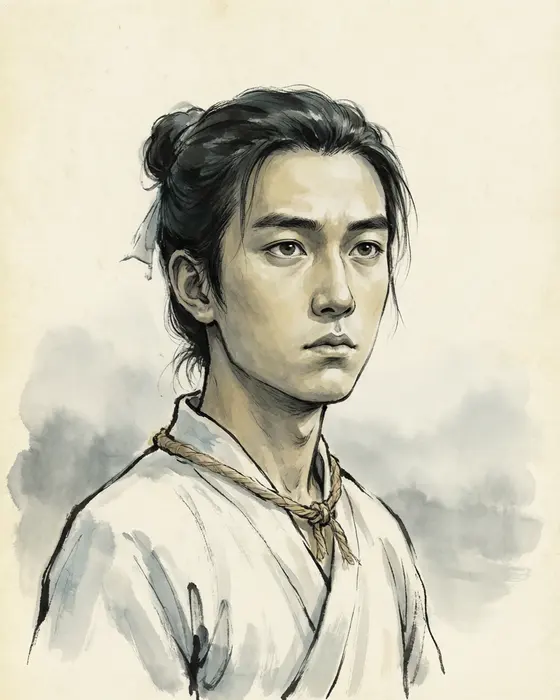
Forty-six days King of Qin. He killed the minister who had enthroned him, then came out in a plain cart with a cord about his neck.
The Chancellor killed the Second Emperor at the Wangyi Palace, and, afraid the ministers would avenge him, pretended to set me up. Now he has me fasted and going to the temple — he means to kill me there.Ziying to his two sons on Zhao Gao's summons to fast at the ancestral temple, late 207 BCE; Shiji, juan 6, Basic Annals of the First Emperor of Qin (the killing itself in juan 87, Biography of Li Si)
Appears in
Relations
- Liu Bang enemies — He came out in a white horse and an unadorned cart at Zhi Road with a cord round his neck, and Liu Bang took the surrender and handed him to the palace officials with nothing done to him.
- Xiang Yu enemies — The seals and tallies he gave up were those of an empire he had been demoted from forty-six days earlier; Xiang Yu's entry into the capital put him to death.
Myth vs record
He was the last emperor of Qin, and he gave up the empire meekly in a rope.
He was the last king. Zhao Gao put him at the head of the house in late 207, took the imperial style away and called him King of Qin, and the histories keep that title for his forty-six days (Shiji, juan 6; juan 8; Hanshu, juan 1). He was also not a passive man: those forty-six days were spent killing the chancellor who had enthroned him, by a feigned illness, a eunuch's blade in the ablutions palace, and three kin-groups exterminated behind it — and the speech on this card is the reason he gave his sons for the plot (juan 6; juan 87). The cord at the neck and the sealed tallies at Zhi Road are in the annals of Gaozu; the killing came later, and the man who did it was Xiang Yu.