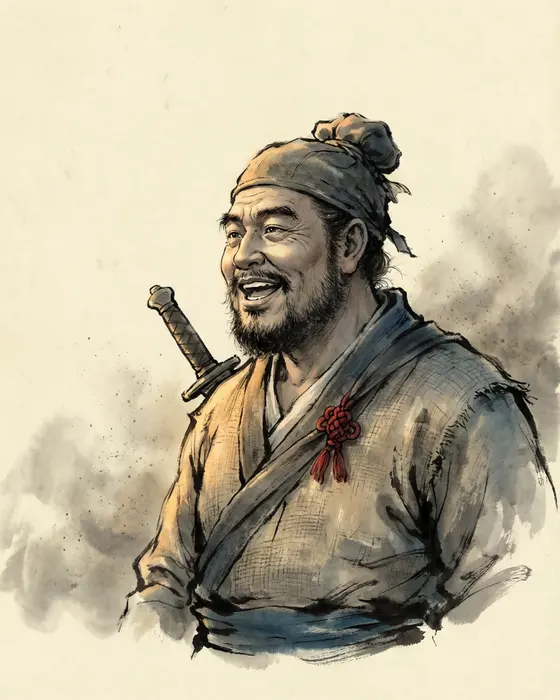
His elder brother, Bo Sheng, who liked retainers and hard drinkers more than ploughing and who actually raised the rising. Killed by the emperor the family had made, in 23 CE; honoured by his brother twenty-odd years later.
The young men of the clan hid when they heard the rising had begun, saying that Bo Sheng was going to get them killed; then they saw Liu Xiu in the crimson robe and the tall cap of an officer and were startled into settling down.The clan's own words about him, kept in his brother's annal — Hou Han shu, juan 1 upper
Appears in
Relations
- Emperor Guangwu brother — He liked retainers and hard drinkers more than ploughing, and the annal says he kept mocking his careful younger brother over farm work, comparing him to the first emperor's elder brother — the nobody of the family story. He raised the rising; his brother took the throne.
- Wang Mang enemies — He began in the ninth month of 23 CE on an ox, and got a horse only by killing the commandant of Xinye — the commandant of the emperor whose ruin he judged already visible. Years before that he had ridden to Yan You to plead a rent-arrears case for the marquis of his own village.
Myth vs record
The restoration was planned and started by the future emperor, the careful student of the Book of Documents who never did anything by accident.
The record gives the rising to the elder brother and the caution to the younger. Bo Sheng kept company with brave men and fed retainers; when Nanyang starved he was selling grain at Wan, which is where the episode's politics start; the annal says the future emperor at first did not accept the plan, and only weighed that his brother would certainly raise something great and that Wang Mang's ruin was already visible. When the loot was shared out unevenly and the crowd turned on the Liu family, it was the elder who collected what his own kinsmen had taken and gave that away too. He was killed in 23 CE by the emperor his family had made, and was named the martial duke of Qi in 39 CE.