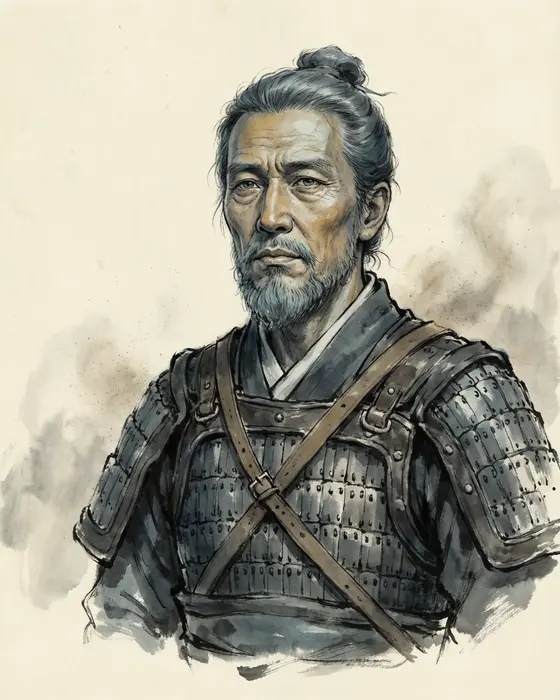
Left Commandant of the Guards, sent west into Yingchuan with Zhu Jun. He won that war in one night's fire and the north in a dawn assault, and in the year after, an accusation from two Regular Attendants he had offended took his general's seal and six thousand of his households.
Not yet. In such a thing there is a change that cannot be seen before it comes. Let us hold our walls and give him nothing to fight.Huangfu Song to his officers at Changshe before the night attack, sixth month 184 CE; Hou Han shu, juan 66, Memoir of Huangfu Song — the memoir's speech, compressed
Appears in
Relations
- Zhu Jun colleagues — The two central-intelligence generals sent west into Yingchuan in 184; one won the war with a night's fire, the other with an opened ring.
- Lu Zhi allies — Each saved the other from the court they were serving: the general who had been accused testified for him, and came for him in chains' way.
- Zhang Rang enemies — The inner court stripped him of his marquisate on a charge his own memoir calls invented, after he had taken the movement's head in the field.
Myth vs record
The generals who crushed the Yellow Turbans were rewarded, and the dynasty was saved in 184 by its officers' victory.
He won the war and was punished for it. Held at Changshe while outnumbered, he read that the enemy's works were brush and that the wind stood at their back, sent bands of five hundred out in the dark with fire, threw flame on the wall to make the place look betrayed, and broke the host in the morning — then was fined and stripped of his marquisate on an accusation from the inner court, and had to be called back to finish the fighting. His memorial put the cause where the court would not look: men buy their governorships and must make the money back out of their provinces.