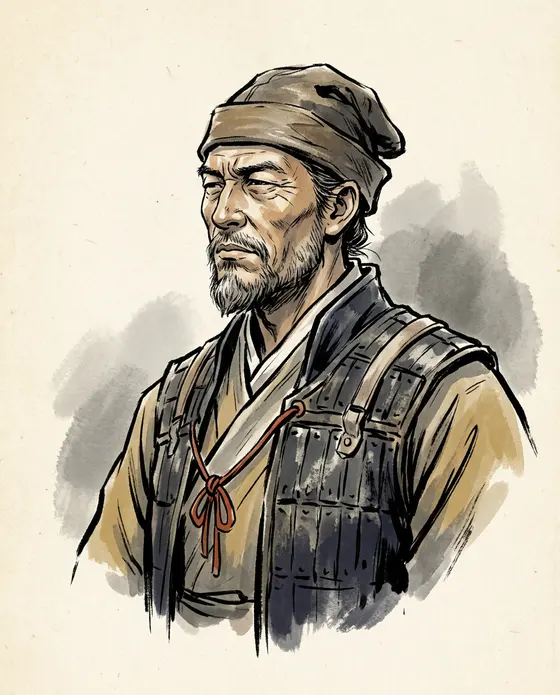
A fugitive horse-dealer from the far north-east who had sold grain on the road; Marshal-in-Chief for twenty years, the man who burned Chengdu after it had surrendered, and the one whose wife was scolded for buying land while the soldiers had none.
But I told you a thousand things, and here you go throwing yourself into a battle.The emperor's own letter reproving him after Chengdu in 36 CE — Hou Han shu, juan 18, Biography of Wu Han; juan 1 lower
Appears in
Relations
- Emperor Guangwu commander — A fugitive horse-dealer from the far north-east who had sold grain on the road; he was Marshal-in-Chief for twenty years, and the cavalry that saved the Hebei flight in the winter of 24 CE was his and Kou Xun's.
- Feng Yi colleagues — The record puts the two of them in the same month of the same settlement: the horse-dealer as Marshal-in-Chief beside a twenty-four-year-old as Grand Minister over the Masses and a district official of Yewang as Grand Minister of Works.
Myth vs record
The soft way meant the restoration's government was gentle with its own officials.
The same pages that keep the emperor's word ruo dao keep his letters to his own commanders. He read Wu Han out in writing for throwing himself into a battle at Chengdu in 36 CE, after the city had surrendered and been burned; and in front of the court he scolded the same man's wife for buying land and houses while the soldiers had none. The man being reproved had been a fugitive selling grain on the road, and had held the highest military post of the empire for twenty years.