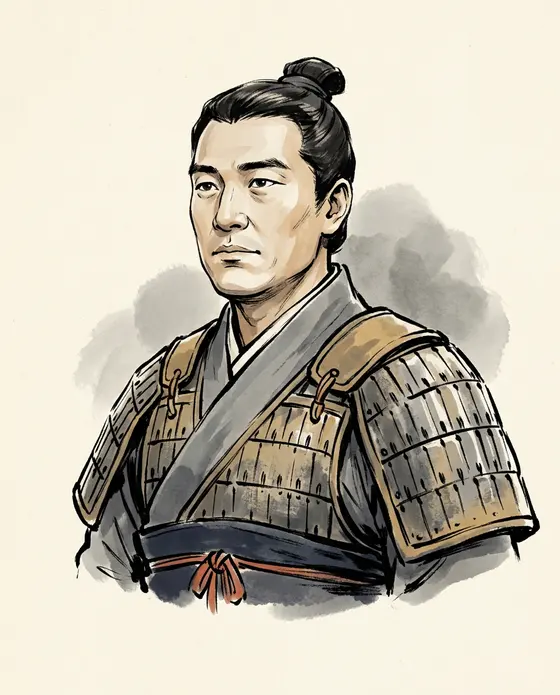
A marquis's household servant who called himself a slave's son, and rose to General-in-Chief. Formed his waggons into a ring, fought the Chanyu in a sandstorm, and never again received an increase of his fief.
When the Marquises of Wuyi and Wu'an kept thick houses of retainers, emperors ground their teeth over it. A minister need only keep to the law and his duties — what has he to do with recruiting men?Wei Qing's answer when Su Jian asked why he did not recommend men and take disciples while he had the power; Shiji, juan 111, Biographies of the General and the Brilliant Rider
Appears in
Relations
- Huo Qubing colleagues — His sister's son and his fellow Grand Marshal after 119 BCE, with rank and stipend fixed as equal because neither could be set above the other.
- Ren An client — He took Ren An into his household, and Ren An was the only one of his men who would not leave for the brighter rising star.
- Emperor Wu patron — He was made General-in-Chief out of a marquis's stables, and after he circled the Chanyu he received no increase of fief and none of his officers were made marquises.
Myth vs record
Wei Qing was a great general quietly frozen out by court intrigue at the height of his honours.
The chapter knows a change of favour, not a purge. An office was invented big enough for two unbeatable generals, the two Grand Marshal seats, with equal stipends; Wei Qing retired further day by day while his nephew grew more honoured, and most of his household men went across to the better-paid command — the record names only Ren An as the man who would not. Sima Qian's judgment is unflattering and specific: a man of good and yielding nature who won the emperor by being soft, and there was no one in the empire who praised him. He died in his bed fourteen years after the Mobei; the extermination of his kindred came in 91 BCE with the crown prince's rising (Hanshu, juan 55).