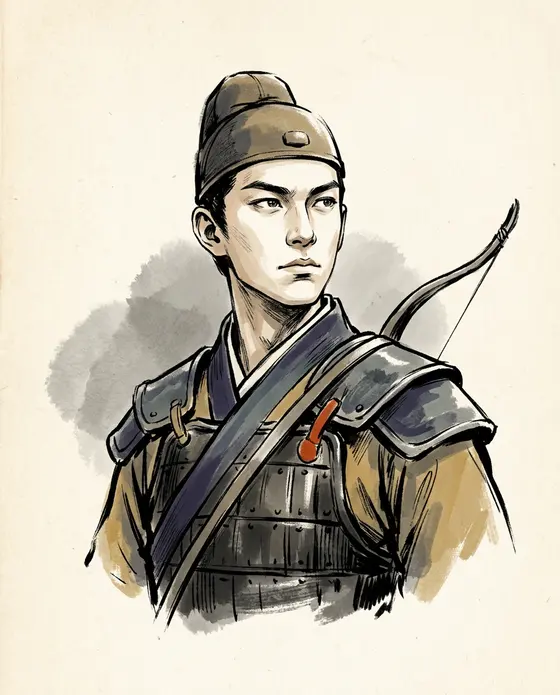
Son of the empress's elder sister and nephew of his own commander, a palace attendant at eighteen. Given the picked men and no subordinate generals; buried with a tomb shaped like the mountains he took.
What matters is a general's own methods; there is no need to learn the old manuals of war. The Xiongnu are not destroyed: there is no room for a household yet.Huo Qubing declining the emperor's offer of the Sunzi and the Wuqi, and answering the house that was built and shown to him; Shiji, juan 111, Biographies of the General and the Brilliant Rider; Hanshu, juan 55
Appears in
Relations
- Wei Qing uncle — His mother was Wei Qing's elder sister, and his uncle was the commander whose division he was given, with the men who dared to go deep all attached to him.
- Emperor Wu patron — A palace attendant at eighteen, he was given the picked troops, no subordinate generals, an edict citing his own merits, and a tomb shaped like the mountains he took.
Myth vs record
Huo Qubing rode light with a handful of picked horse, lived off the land, and needed no supply train — and the line about the Xiongnu not being destroyed proves how unselfish he was.
The record gives him fifty thousand cavalry in 119 BCE with transferring infantry numbering several hundred thousand at the army's heels, and a baggage equal to the General-in-Chief's; the emperor's own citation of merits says he travelled light and provisioned thin, which means there was a line behind him that he chose not to wait on. Sima Qian keeps the counterweight in the same paragraph as the famous answer: the imperial kitchen's cartloads of provisions thrown away half-eaten on the homeward march while soldiers went hungry, and the cuju ground he marked out and played on when his men lacked food and could not stand. He died in 117 BCE; his son held the marquisate six years and died in 110 with no heir, and the fief was struck out.