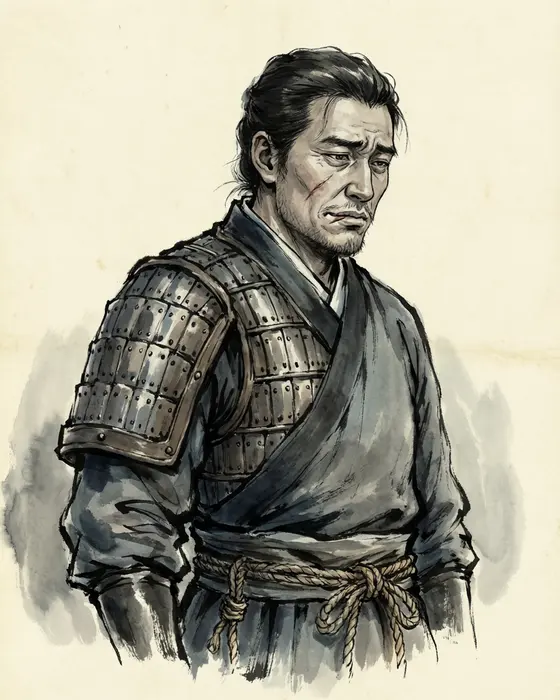
Strong-Crossbow Commandant, ordered to meet Li Ling halfway. Ashamed to be another man's rear, he asked to postpone the stroke to spring; the emperor read the plea as treachery and marched the five thousand out.
It is autumn and the Xiongnu's horses are fat; we cannot fight. Let me keep Ling until spring, then ride out Jiuquan and Zhangye, five thousand horse apiece, and fall on the east and west Junji together — the Chanyu can certainly be taken.Lu Bode's memorial to Emperor Wu against marching in autumn, made after he was shamed at being ordered to ride out as Li Ling's rear; the plea the emperor read as treachery — Hanshu, juan 54, Memoir of Li Guang and Su Jian; the shame of being placed under Ling is also carried in Shiji, juan 111
Appears in
Relations
- Li Ling commander — The throne ordered him to meet and serve as Li Ling's rear, and as an older frontier commandant he was ashamed to ride under the grandson of Li Guang, a man set over the palace stables.
- Emperor Wu enemies — He asked the emperor to wait for spring rather than march under Ling, and the emperor took the plea for treachery and suspected Ling of writing it.
Myth vs record
The obstructive officer whose pride withheld the reinforcements and let Li Ling's five thousand be surrounded and destroyed.
The record gives him an argument, not a shirking. Ordered to be Li Ling's rear in 99 BCE, the commandant who had built the Juyan frontier works in 102 BCE (Shiji, juan 110; Hanshu, juan 94 upper) countered with a real plan — hold till spring, then ride out of Jiuquan and Zhangye with five thousand horse each and take the Chanyu — and the clause on his motive is simply that, an older officer, he was ashamed to be placed behind Ling. It was the emperor who marched the five thousand out alone and sent Bode off to the West River, and his own column that season met no enemy and got nothing. Emperor Wu later admitted the error himself, saying he had been wrong to write Bode into the edict at all (Hanshu, juan 54; juan 62).