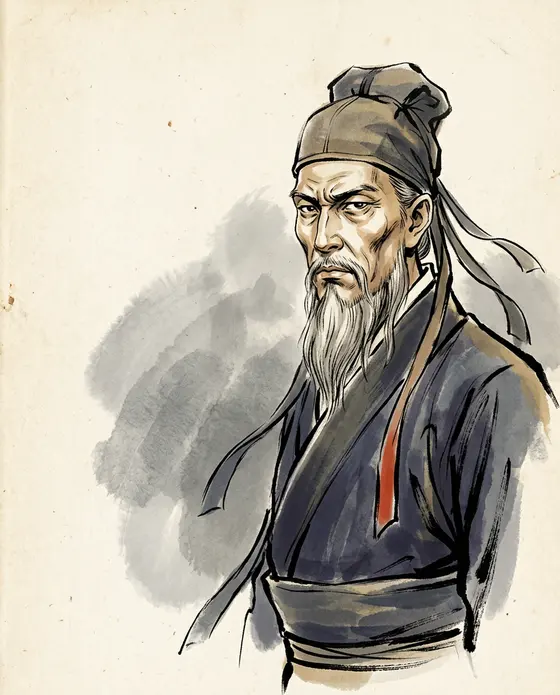
The judge whose severity made the eunuchs' kin afraid to leave their gates. The first name on the faction's lists, and the first great name it killed.
Death is a turn of the season and I do not count the years. I grieve only that the ruin of the Han is at hand, and that I am to be cut down on a name while it waits.Li Ying under question in the imperial jail, 166–167 CE; Hou Han shu, juan 67, Memoir of the Partisan Prohibitions — the memoir's own compressed sentence, rendered compressed
Appears in
Relations
- Fan Pang colleagues — His death became the standard another man's mother held up for her son: now, she said, he might die beside Li Ying without shame.
- Du Mi colleagues — The two names at the head of the second list, taken on the same invented case and dead in the same year.
- Zhang Rang enemies — He governed so strictly that the inner court's kin would not leave their gates, which is why the ring wrote his name first on both prohibitions.
Myth vs record
The story you may know
Gentle scholars of the classics, meek as students, murdered by malice.
What the sources say
Li Ying was a governor who ruled by the letter and by the prison, and the quarrel that opened the prohibitions came out of one of his executions: a man who had read an amnesty in advance and drilled his son to kill under cover of it was caught, pardoned, and put to death anyway by the governor who could not stomach it. That was lawful on the statute for the great crime; it was not diplomatic. The histories mourn the party's fall as the empire's loss and never pretend its members were harmless men.