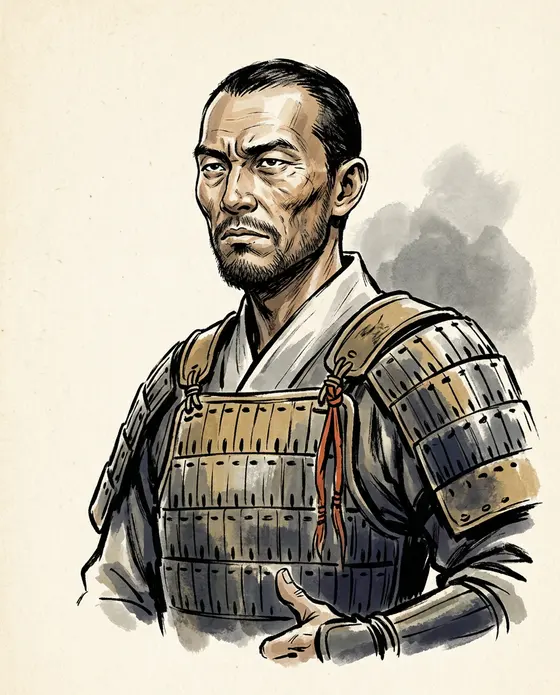
Deputy commander: poor, always borrowing, disliked in his home district, twice in gaol. He forged the edict, the garrison colonies marched on his signature, and he spent the rest of his life defending it.
Hang his head in the Haojie street among the barbarian hostels, to show it ten thousand li, and make plain that whoever dares offend our strong Han, though far away, will surely be punished.Chen Tang's memorial to the throne sent back with the taking of Zhizhi's city, 36 BCE; Hanshu, juan 70, Biography of Chen Tang
Appears in
Relations
- Gan Yanshou colleagues — The deputy who forged the edict and pressed the sword on his sick superior, then shared with him the city, the head, the marquisate and the indictment.
- Zhizhi Chanyu enemies — He argued the raid before it was lawful and led the columns that took the city, and asked that its chanyu's skull be hung in the foreign quarter to be read at a distance.
Myth vs record
The boast that whoever offends the strong Han, though far away, will be punished was hurled at the enemy across the battlefield.
It is no battle-cry but the closing clause of a written memorial sent back to the throne with the head, asking that it be hung in the barbarian hostel street to show it ten thousand li (Hanshu, juan 70). The raid behind it was a capital crime, the forging of an imperial edict, and the reward sat unresolved for months while Kuang Heng and Shi Xian argued one bounty buys a war on every frontier; Liu Xiang and Gu Yong had to plead the men through. Poor, always borrowing, twice in gaol over the spoils, Chen Tang spent the rest of his life defending what he had done, and Ban Gu's own judgment is that he was reckless and did not keep himself in hand.